

C&D : ค้นหาหนังสือธรรมะ หน้า 295 / 507
หน้าหนังสือทั้งหมด
36
References to 'Dhammakāya' in the Pāli Canon
III. References to 'Dhammakāya' in the Pāli Canon
In the Pali canon, the term dhammakāya appears four times: once in the Aggiāṇā-sutta of the Dīgha-nikāya and three more times in Apadāna literature.
In the Pāli Canon, the term 'dhammakāya' is found four times, significantly in the Aggiāṇā-sutta and Apadāna literature. It serves various roles including a designation for the Tathāgata and associati
41
Understanding Dhammakāya: A Scholarly Interpretation
Points to Consider
It may be observed that the difference in previous scholarly interpretations of the term dhammakāya in this passage mainly pertains to the inter-relatedness of two distinctive meani
This text delves into scholarly interpretations of the term 'dhammakāya', emphasizing the need for a nuanced understanding of 'dhamma' as both a realized reality and a verbal expression. It identifies
42
Saddhā: The Criterion of Being the Tathāgata's Son
Saddhā: Criterion of being the Tathāgata's Son
The first point to be looked at is the criterion of being the Buddha’s ‘true son’ which is, in this passage, defined by means of his
irremovable confiden
This text discusses the criterion of being the Tathāgata's son, emphasizing the irremovable confidence (saddhā) in the Buddha. It defines this confidence as settled and unchangeable despite external i
43
Understanding the Noble Discipleship in Buddhism
Vin.II.192, A.IV.186, 210, 213
Just as a piece of clean cloth that is deprived of dirt would well-absorb the dye, the pure and clear eye of dhamma (dhammacakku) arose to the man, on that current seat
The text discusses the qualities of noble disciples in Buddhism, emphasizing the importance of clear perception of dhamma and the eradication of doubts and fetters. It describes the transformation exp
47
Implications of Parallel Descriptions of Monks and Brahmins
Implications of Parallel Descriptions of Monks and Brahmins
As Gombrich points out, the passage in question is comparable to the Brahmins’ claim:46
brahmanā va brahmuo putṭā orasā mukhato jāta brahma
The text delves into how Gombrich compares the descriptions of Brahmins and Monks, emphasizing the dual interpretations of the term 'brahma-' as both the masculine creator and the neuter ultimate real
48
Brahmins and Noble Disciples: A Comparative Analysis
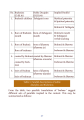
No. | Brahmins (D.III.81) | Noble Disciples (D.III.84) | Implied Parallel
---|------------------------|---------------------------|------------------------
1. | Brahma's children | Tathägata's sons |
The text presents a comparative analysis between Brahmins and Noble Disciples, highlighting their similarities in mythical and spiritual parental origins. It details how both are seen as offsprings of
49
The Tathāgata and Brahmā: A Semantic Analysis
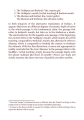
1. The Tathāgata and Brahmā,48 the creator god
2. The Tathāgata's mouth (verbal teaching) & Brahmā mouth.
3. The dhamma and Brahmā, the creator god; or
The dhamma and Brahman, the ultimate reality.
I
This passage delves into the nuanced relationships between the Tathāgata and Brahmā, highlighting the semantic layers present in verbal teachings. It contrasts the Tathāgata's mouth with Brahmā's, ind
50
Understanding the Connotation of Dhamma in Relation to Brahma
In the case that ‘brahma-’ refers to the masculine ‘Brahma’
In case of the term ‘brahma-’ in the three compounds50 being
translated as a masculine ‘Brahma,’51 the comparison of the first and
the third
In this text, the term 'brahma-' is analyzed in the context of its translation as the masculine 'Brahma.' It discusses how the comparison between the Tathāgata and the Brahma, the creator, illustrates
51
The Transformative Power of the Noble Eightfold Path in Buddhism
refer to something which 'transforms' the person into noble states, so that itself is comparable to the creator. At the same time, it must refer also to the shared or same kind of qualities or essence
This text delves into the concept of transformation in Buddhist philosophy, specifically through the Noble Eightfold Path. It highlights how this path aids in the eradication of defilements, enabling
53
Understanding Dhamma and Nibbāna in Buddhism
With regard to dhamma as the 'essence' of the Buddha and Arhat disciples, however, it may be more appropriate to refer to 'Nibbāna,' for once they have attained Buddhahood and Arhatship their spiritua
This text explores the concept of dhamma in relation to the Buddha and Arhat disciples, particularly the notion of Nibbāna as the essence of their enlightenment. It argues that dhamma, especially in t
54
Understanding Dhamma and Brahman in Buddhism
In the case that 'brahma-' refers to the neuter 'brahman'
In the other case in which the term brahma- is translated as 'brahman'63 the ultimate,64 the third parallel65 suggests that the term dhamma in
This text clarifies that the term 'brahma-' can refer to either the masculine 'Brahmā' or the neuter 'brahman,' ultimately leading to the view that dhamma signifies transcendental realities. It sugges
56
Understanding Brahmabhūta and the Path to Nibbāna
where all fetters are unrooted, or at least they signify the ‘best’ state.
The same may be said for the parallel of dhammacarĺa and brahmacarĺa. Although these two compounds are normally used in dif
The text discusses how 'brahmabhūta' refers to the state of having eradicated all defilements, allowing one to experience ultimate peace and happiness. It parallels 'dhammacarĺa' and 'brahmacarĺa' as
58
Understanding the Concept of Body and Collection in Dhamma
Functionally, however, both terms seem to imply a different relationship between individual members and the ‘totality’ of the whole ‘body’ or ‘collection.’ As a ‘body,’ the ‘totality’ of the whole org
This text analyzes the distinctions between the terms 'body' and 'collection' within the framework of Dhamma, particularly focusing on functional dependence. It argues that while a 'body' maintains es
60
Understanding Dhammakāya: The Essence of Transcendental Dhamma
Arhatship (arahattamagga).86 Therefore, the particular path is not a mere ‘collective title’ of the path-constituents but the ‘essential totality’ by which a ‘body’ is defined.
The dependence of funct
This text discusses the concept of Arhatship and the definition of Dhammakāya in the context of Buddhist philosophy. It argues that the path should be seen as an essential totality, forming a 'body,'
61
Exploring the Concept of Dhammakaya
First, as a *kammadhāra* compound, the translation of the term *dhammākāya* will be ‘the body that is transcendental (lokuttara) dhamma’ or ‘the body that is Nibbāna.’ This gives a similar sense as th
The term Dhammakaya can be viewed in two ways: as a kammadhāra compound translated to mean 'the body that is transcendental dhamma' or as a tappurisa compound meaning 'body pertaining to transcendenta
63
Understanding Paccekabuddhas in Buddhist Philosophy
V. Reference 2: Dhammakāya and Paccekabuddhas
A Paccekabuddha is counted as one of the two types of Buddhas. According to Buddhist philosophy, a Paccekabuddha is a person who is of the highest wisdom
This text discusses the concept of Paccekabuddhas, individuals of high wisdom who achieve self-enlightenment but lack the ability to teach. It explores scholarly arguments about the pre-Buddhist origi
64
Understanding Paccekabuddhas in Buddhism
91 While it is possible for a Paccekabuddha to teach an individual which finally leads to that person's enlightenment, he does not teach to a multitude of people in the same way as a Buddha does. Henc
The text discusses the distinct nature of Paccekabuddhas, who can guide individuals toward enlightenment but do not teach the masses like Buddhas. Their teachings emphasize solitude and are succinct,
65
The Characteristics of Paccekabuddhas in Apadāna Literature
In the Apadāna literature, besides the life history of the Buddha and his disciples, a section is devoted to a depiction of the characteristics of Paccekabuddhas. This - section is entitled 'Paccekabu
The Apadāna literature highlights the characteristics of Paccekabuddhas, emphasizing their significant dhammas and independent mind. Verse 52 describes them as having great dhammas, being free from su
66
Understanding Paccekabuddhas: Characteristics and Dhamma
These verses describe the Paccekabuddhas as ones possessed of supreme purity, wisdom, wakefulness, composure, and having the ability for seeing and knowing. In other words, they are full of realizing
These verses highlight the qualities of Paccekabuddhas, emphasizing their supreme purity, wisdom, and self-enlightenment capacity. The term ‘mahatadhamma’ refers to the great dhammas that relate to th
68
Dhammakāya and Noble Disciples
VI. Reference 3: Dhammakāya and Noble Disciples
Besides the term’s relation to the Buddha and Paccekabuddhas, a Pāli canonical reference mentions also the relation of dhammakāya with noble disciples.
In the context of Pāli texts, the term dhammakāya is linked to noble disciples as evidenced in the story of Gotamī, the great nun and Buddha's foster mother. As she approaches her passing, Gotamī refl