

Buddha-Nature : ค้นหาหนังสือธรรมะ หน้า 7 / 99
หน้าหนังสือทั้งหมด
205
Meditation Centers in the USA and Europe
Minnesota
Minnesota Meditation Center
242 Northdale Blvd NW, Coon Rapids,
MN 55448 USA
Tel.+(763) 682-4623
Fax.+(763) 862-6123
Email: [email protected],
[email protected]
New Jersey
Dhammakaya Int
This document lists various meditation centers located across the USA and Europe, including addresses and contact information for centers in Minnesota, New Jersey, Oregon, Texas, Virginia, Seattle, Ha
32
The Role of Mahā pajā pati Gotaṃi in Early Buddhism
21 Mahā pajā pati Gotaṃi was the younger sister of Queen Mahā mā yā the Buddha’s mother, and was also the wife of King Suddhodana. After Mahā mā yā’s death, she became the Buddha’s foster mother. The
Mahā pajā pati Gotaṃi, sister of Queen Mahā mā yā and wife of King Suddhodana, became the Buddha's foster mother after the queen's death. During the early days of the Buddha's teachings, she advocated
24
The Motives and Challenges of Ordination
Even when the individual knows about the benefits of ordination, it is no small task to give up family and worldly possessions for the sake of Dhamma. The individual must have a strong inner desire, l
The text discusses the difficulties faced by individuals when choosing ordination, which requires strong inner desire and familial support. It recounts the story of Lord Buddha's own decision to ordai
34
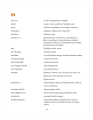
ศึกษาเกี่ยวกับพระพุทธศาสนาและสัญลักษณ์ต่าง ๆ
พยาบาท ill-will; vengefulness; vengeful
พรรษา a year; rains residence, Buddhist Lent
พรม (Brahma) inhabitant of the higher heavens
พรหมจรรย์ celibacy; celibate life; chaste life
พรหมโลก B
บทความนี้กล่าวถึงแนวคิดในพระพุทธศาสนาเช่น พยาบาทและพรรษา พร้อมให้ข้อมูลเกี่ยวกับการที่พระพุทธศาสนาช่วยส่งเสริมคุณธรรมในชีวิต เช่น ความรักและความเมตตาผ่านพระวิหาร 4 และการรับรู้ถึงพระธรรมภายในตัว. นอกจ
56
The Story of the Disciples of Non-Buddhist Teachers
6 The Story of the Disciples of Non-Buddhist Teachers
While residing at the Jetavana Monastery, the Buddha spoke these verses, with reference to some disciples of the Titthis (non-Buddhist ascetics).
In the context of the Jetavana Monastery, the Buddha narrates a tale involving disciples of non-Buddhist ascetics known as Titthis. These disciples prohibited their children from mingling with those o

58
The Story of the Disciples of Non-Buddhist Teachers
56
Clear-minded Youths - 6 The Story of the Disciples of Non-Buddhist Teachers
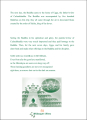
The Buddha then told the boy to tell the non-Buddhist boys to come and have water at the monastery.
The parents of th
This passage discusses an encounter where the Buddha encourages non-Buddhist youths to embrace his teachings. Their parents, initially distressed by their disloyalty, are persuaded to send the boys to
60
The Visit of the Buddha to Ugga's Home
The next day, the Buddha came to the house of Ugga, the father-in-law of Culasubbadda. The Buddha was accompanied by five hundred bhikkhus on this trip; they all came through the air in decorated floa
The Buddha, accompanied by five hundred bhikkhus, visited Ugga, the father-in-law of Culasubbadda. They traveled through the air on decorated floats created by the king of devas, Sakka. The sight of t

19
Celebration of Vesak Day Amid Pandemic
Devotees gather via Zoom during Vesak Day, an annual celebration of Buddha's birth, enlightenment and death. More photos: reut.rs/3tfn5t7
@Akhil_P
Celebrating Buddha's birthday during COVID
Buddhist
On May 29, 2021, celebrations for Vesak Day took place with Buddhist monks and devotees joining both in person and via Zoom due to the COVID-19 pandemic. Monks at Wat Dhammakaya Temple in Rangsit, Tha
3
Garudhamma 8: Exploring Gender Issues in Buddhism
Garudhamma 8
What did the Lord Buddha Establish?
Wilaiporn SUCHARITTHAMMAKUL
Abstract
This paper deals with the Buddhist outlook on gender issues. Contemporary feminists have extrapolated moder
This paper examines the Buddhist perspective on gender issues, particularly the eight garudhamma, which have been contested in modern debates around gender equality. It investigates whether these teac
18
Congratulations on the 55th Anniversary of Wat Phra Dhammakaya
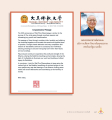
Congratulations Message
The 55th anniversary of Wat Phra Dhammakaya is similar to the journey of life, while going through countless seasons and witnessing joy, growth and transformation.
The passage
The 55th anniversary of Wat Phra Dhammakaya signifies a journey through various challenges, resulting in a sacred place for practice. This celebration emphasizes the importance of shared dedication an
33
The Buddha's Teachings on Sensory Pleasures
6. Eating a poisonous fruit: The pleasures of the five senses can be compared to a poisonous fruit. The hedonist, in his greed eats the fruit and must endure the ensuing pain and upset as the poison t
The Buddha uses various metaphors to illustrate the dangers of indulgence in sensory pleasures. He likens them to poisonous fruits, sharp weapons, and children's toys, highlighting the inevitable suff
103
The Noble Eightfold Path and Buddhist Sainthood
fold Path diligently to the extent they are prepared to lay down their life for their practice, have the chance to uproot craving from the mind by transcendental extinction — by attaining the various
This text discusses the profound dedication of practitioners of the Noble Eightfold Path, illustrating how some are willing to sacrifice their lives for their spiritual journey. It highlights notable
156
The Tale of Sujāta and the Seven Types of Wives
by the tale of Sujāta, the younger sister of Viṣākha. This lady was the sister in law of Aṇṭhapiṇḍika but was very haughty because she inherited from a wealthy family. She had consideration neither fo
This narrative recounts the tale of Sujāta, who, despite her wealth, was arrogant and disrespectful in her relationships. When invited by Aṇṭhapiṇḍika, the Buddha hears of her conflicts and uses the o
162
Teachings of the Buddha on Nobility and Right Action
ter asking all the monks’ names, the Buddha would ask his. The Buddha knew what he was thinking and asked the man his name. “Ariya” replied the man. In fact, the Buddah didn’t need to be told the man’
In this text, the Buddha teaches that true nobility is defined by one's actions towards living beings. Ariya learns that harming others disqualifies him from being 'noble', resulting in his attainment
182
The Path to Nirvana: Konḍaṇṅa's Journey
It is interesting to consider that although the Buddha taught the same sermon to all five monks in the Pañcavaggiya, it was only Konḍaṇṅa who attained stream-entry as a result. The reason for the diff
In the Pañcavaggiya, the Buddha's teachings resonated uniquely with Konḍaṇṅa, who attained stream-entry due to his extensive past merits and dedication. Born as Mahākāla, a rice-farmer during Vipassi

95
การบำเพ็ญบารมีของพระโพธิสัตว์
calculables and a hundred thousand aeons."
(ขณะที่เป็นพระโพธิสัตว์ พระพุทธองค์ทรงบำเพ็ญทศบารมีมานาน ถึงสื่อสงไขยกับแสน
มหากัปป์)
“Now do you agree that having fulfiled the ten Perfections, the bodhisa
(ขณะที่เป็นพระโพธิสัตว์ พระพุทธองค์ทรงบำเพ็ญทศบารมีมานาน ถึงสื่อสงไขยกับแสน มหากัปป์) “Now do you agree that having fulfiled the ten Perfections, the bodhisatta became Enlightened as the Lord Buddha,
52
Raising Smart and Virtuous Children
families, have everything they want, but receive little parental
supervision. These children have the highest chance of
becoming unwholesome.
Children of Type IV families receive continuous
knowledge
บทนำของการเลี้ยงดูเด็กที่เน้นการพัฒนาคุณธรรมและภูมิปัญญา จากหลักธรรมทางพุทธศาสนา ที่เสนอวิธีการสร้างเด็กดี โดยมีคุณสมบัติ 3 ประการ ได้แก่ ความดี ความฉลาด และความเห็นอกเห็นใจ ซึ่งเป็นพื้นฐานที่สำคัญในก
52
Raising Children to Be Smart and Virtuous
families, have everything they want, but receive little parental supervision. These children have the highest chance of becoming unwholesome.
Children of Type IV families receive continuous knowledge
เนื้อหานี้เกี่ยวกับการเลี้ยงดูเด็กตามหลักธรรมของพระพุทธเจ้า โดยนำเสนอคำสอนที่ช่วยให้เด็กเติบโตเป็นคนดี โดยเน้น 3 คุณสมบัติสำคัญ ได้แก่ ไม่มีความยุ่งยาก, มีสติปัญญา และมีความเมตตา ผู้ปกครองควรพิจารณาคุ
75
The Early Years of the Buddha
www.dharmmakaya.or.th
THE BUDDHA'S LIFE
The Early Years
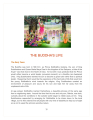
The Buddha was born in 566 B.C. as Prince Siddhattha Gotama, the son of King Suddhodana and Queen Maha Maya Dewi in the kingdom of the Sakyans,
The Buddha, born as Prince Siddhattha Gotama in 566 B.C., was the son of King Suddhodana and Queen Maha Maya in the Sakyans kingdom of North India. Predicted to become either a world leader or a Buddh
223
Exploring Dhammakāya and the Eightfold Path
Dhammakāya, Sotāpana: Effort, Right (see Right Effort)
Coarse, 108, 134; defilements of
Eightfold Path: arises internally as 136-7; Subtle, 108, 134
sphere 105; components 20, 117,
Dhammakāya Traditi
This text delves into the Dhammakāya tradition, highlighting key components of the Eightfold Path and its teachings on defilements, enlightenment, and the nature of suffering. Concepts are illustrated