

UN : ค้นหาหนังสือธรรมะ หน้า 140 / 162
หน้าหนังสือทั้งหมด
131
Mindfulness and Right Concentration in Buddhism
…e inner bodies, he will also see their associated spheres of Dhamma. With each new attainment, the understanding of reality at that level will arise too, allowing wisdom to develop successively — the w…
Dieser Abschnitt behandelt die Achtsamkeit gegenüber Dhammas und die richtige Konzentration im Buddhismus. Die Achtsamkeit richtete sich sowohl auf innere als auch…
133
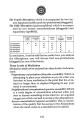
Understanding the Levels of Absorption in Meditation
…ration of the quality that has access to the Absorptions when the mind comes to a standstill and is unified.
131
…sion toward deeper states of absorption. Each level represents a step towards achieving focused and unified mind states, ultimately facilitating access to the absorptions. This guide serves as a roadmap…
134
The Importance of Meditation in Buddhism
…ism.
The Noble Eightfold Path arises at All Levels of Advancement
The Noble Eightfold Path can be found at all levels of advancement, whether it be the Sensual Sphere [kāmavacara-bhūmi], the Form Sphere…
…f Nirvana for arahants are contingent upon meditation. The Noble Eightfold Path, essential in both mundane and transcendental contexts, guides practitioners in cultivating wholesomeness through actions …
135
Understanding the Pathama Magga Sphere
…dium-sized, it will be
the size of the full moon. At its largest it will be the size of
the midday sun. The Pathama Magga Sphere arises when
all eight components of the Noble Eightfold Path are present
…
…nfluences through deep meditative practices. The sphere can vary in size from a star to the midday sun, and represents the integrative state achieved by a committed meditator. Further, it emphasizes the…
136
Understanding the Inner Bodies on the Path to Enlightenment
them and go further through the centre until attaining the Body of Enlightenment — the most subtle of the inner bodies.
The inner bodies betw…
…he Subtle Human Body, Angelic Body, and several Brahma Bodies, all composed of the Five Aggregates. Unlike these mundane forms, the Body of Enlightenment is constituted of 'Pure Aggregates' which are fr…
137
Understanding the Bodies of Enlightenment
ment, the Arahatta Body of Enlightenment [Dhammakāya Arahat] and the Subtle Arahatta Body of Enlightenment.
Thus there are ten types of Bodies of Enlightenment.
The Benefits of Attaining the Inner Bod
…ness, hatred, and delusion, leading them toward Nirvana. The process fosters equanimity and wisdom, unlocking deeper insights and personal revelation.
139
Understanding the Body of Enlightenment in Buddhism
…ible by means of attaining the Dhamakäya. The
meditator has attained the various bodies in sequence until
บทความนี้สำรวจระดับต่างๆ ของการตรัสรู้ในพุทธศาสนา โดยเน้นถึงการใช้ร่างกายของการตรัสรู้ เช่น Sakidägämi, Anägämi และ Arahant ซึ่งผู้ปฏิบัติธรรมจะสามารถปล่อยวางข้อผูกพันต่างๆ เพื่อเข้าถึงความรู้สูงและกา
140
Understanding the Dhammakāya and Its Mind
…ditation and insight further, the meditator will attain increasingly subtle forms of the Dhammakāya until reaching the Subtle Arahat Dhammakāya body. The meditator will attain the condition of ‘coolness…
…nd can expand significantly, allowing the meditator to observe the eight inner bodies. This process unveils the Three Signs of Existence—impermanence, suffering, and not-self—through the eye of the Dham…
141
Understanding Impermanence, Suffering, and Not-Self
…o prevent the Aggregates from changing, we meet with no success because the Five Aggregates are not under our control. Furthermore, in these Five Aggregates there is no real ‘self’ because the Aggregate…
This text delves into the fundamental Buddhist concepts of impermanence (aniccān), suffering (dukkham), and not-self (anattā) as …
142
The Path to Enlightenment: Understanding Dhammakāya
…se from this meditation seat.
The bodhisatva then strove in meditation making continu-
ous progress until reaching his avowed goal. In the first
watch of the night, the bodhisatva attained recollection …
…ments during the night, showcasing the bodhisatva's progression through recollection of past lives, understanding rebirth according to karma, and eradicating mental defilements before achieving Buddhaho…
144
The Components of the Eightfold Path
The Components of the Eightfold Path all arise together
When the factors of the Eightfold Path arise, they do so to-
gether — just as the elder monk Koṇḍañña, after listening
to the Dhammacakkapavatta
…monk Koṇḍañña's attainment of Stream-Entry. It explains the importance of Right View, which enables understanding of the Four Noble Truths, and highlights the processes of releasing oneself from Wrong t…
145
Understanding the Eightfold Path: Right Mindfulness and Right Concentration
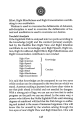
…rception) [saññā] and mental formations [sankhāra] are of a nature of not-self because they are not under our control.
As for Right Concentration, this would arise immediately and definitively by the st…
…e Eightfold Path, specifically focusing on Right Mindfulness and Right Concentration. It emphasizes understanding the aggregates of existence as they relate to the Three Signs: impermanence, suffering, …
147
The Eightfold Path: Knowledge and Conduct in Meditation
…ogress on the path we can see ahead. In the same way, a person who follows the Noble Eightfold Path until attaining degrees of sainthood will find that the Path brings no suffering and indeed is the cau…
This text discusses the importance of Right Mindfulness and Right Concentration in meditation, as components of the Noble Eightfold Path. The Eightfold Path is divided into two areas: knowledge (Right

149
The Noble Eightfold Path on the Mundane Level
8
The Noble Eightfold Path
on the Mundane Level
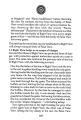
Practising the Noble Eightfold Path is not just the duty of the saint or the monk strivi…
…cietal harmony. This path consists of eight components, beginning with Right View, which encourages understanding the virtue of the Triple Gem. The commentary, illustrated by a tale of two boys from dif…
150
The Power of Right View
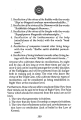
…in point. The same tale continues the previous tale of the boy of Right View with the following account:
One day the father of the boy of Right View took the boy in the cart to gather kindling wood out…
…s the virtues of the Buddha, ensuring his safety against malevolent spirits. Ultimately, this story underscores the importance of Right View in overcoming challenges and dangers in life.
152
The Significance of the Triple Gem and Six Recollections
…recollections, by night and by day, all day long or even three times per day or once-a-day can be counted amongst the worthy disciples of the Tathāgata and will be protected from all danger both in waki…
…out generosity and the consequences of actions. By adhering to the principles of the Triple Gem and understanding the Law of Karma, one can attain a more profound and meaningful spiritual life. For furt…
153
Understanding Right View and Right Intention in Buddhism
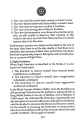
…ne’s father is fruitless;
8. The view that monastics, even those who practise properly, are still unable to attain by their wisdom, in this world or the next, any fruit from their practice or to teach…
…spiritual perfection, showcasing the balance between worldly responsibilities and the pursuit of renunciation. For further insights, visit dmc.tv.
154
The Renunciation of the Bodhisatva
"Oh! When will I be able to leave this prosperous Mithila with its castles and towers, abundance of the four requisites?"
The bodhisatva thought in this way for four months before he was ab…
In his quest for enlightenment, the bodhisatva grapples with renouncing the comforts of Mithila, contemplating his intentions for four months. Upon retreating into the…
155
King Asoka: Patron of Buddhism
…pect to a fully-enlightened Buddha and with this end in mind, invited the Naga King to come up from under the ground and to transform himself into the appearance of a Buddha so that the king could have …
…uddhism was evident as he ordained his son Mahindra and daughter Saṅghamitä, sponsoring the Third Council and spreading Buddhism to Sri Lanka through Mahindra Thera. He acted as an exemplary layman, tak…
156
The Tale of Sujāta and the Seven Types of Wives
by the tale of Sujāta, the younger sister of Viṣākha. This lady was the sister in law of Aṇṭhapiṇḍika but was very haughty because …
This narrative recounts the tale of Sujāta, who, despite her wealth, was arrogant and disrespectful in her relationships.…