

merit-making : ค้นหาหนังสือธรรมะ หน้า 36 / 40
หน้าหนังสือทั้งหมด
32
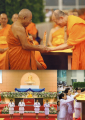
Ceremony of Recognition Among Monks
- The first image (top) shows two monks, one handing an award or plaque to the other, with other monks in the background.
- The second image (bottom left) depicts a formal event with a seated monk in
This content describes a set of images depicting a ceremonial event with monks. The first image portrays one monk awarding another, indicating a recognition of merit. The second image features a monk

28
U-Star Activitv
Complex 9
ฐานกิจกรรมความดีตา
Global Merit 5 ( ม. 5 )
36
This Life Next Life
Here is the extracted text from the image:
---
**This Life Next Life** (in red, italics)
34
she met with ruin and disaster.
Even so you, Prince, foolish and thoughtless that you
are, will meet
ข้อความนี้พูดถึงความสำคัญของการใช้ชีวิตอย่างมีคุณธรรมและความฉลาดในการค้นหาความหมายของชีวิตและชีวิตถัดไป โดยยกตัวอย่างถึงพระราชาที่มีแนวคิดผิด ๆ และความสำคัญของการรอคอยและเติบโตอย่างชาญฉลาดเพื่อประโยชน
26
The Virtue of Almsgiving
26
The Virtue of Almsgiving
5. Chalaṅgadāna Sutta
Even before giving the mind is pleased,
while giving is pleased,
Having given is pleased, this is the
accomplishment in giving a gift.
Th
The Chalaṅgadāna Sutta outlines the significance of almsgiving, highlighting how the act of giving brings joy both before, during, and after the act. It emphasizes that those who lead a restrained and
50
Understanding the Concept of Membership in the Sangha
37 MA. "Members of the clan" (gotrabuno) are those who are monks merely in name. They will go about with a piece of yellow cloth tied around their necks or arms, and will support their wives and child
This text discusses the notion of 'members of the clan' (gotrabuno), highlighting those who are monks in name only while still engaged in worldly activities like trade and farming. It emphasizes the s
66
The Virtue of Approving in Velāma Sutta
66
The Virtue of Approving
7. Velāma Sutta
"Now, householder, if the thought should occur to you,
'Perhaps it was someone else who at that time was
Velāma the brahman, who gave that gift, t
In the Velāma Sutta, the householder is reminded that true merit comes not from the quantity or grandeur of gifts, but from the character and realization of those who receive them. The teaching emphas

70
The Viktor of Absorbing: Insights from Velama Sutta
The Viktor of Absorbing
7. Velama Sutta
"If one were to have a dwelling built and dedicated
to the Community of the four directions, that would be
more fruitful than... if one were to feed a communit
The Velama Sutta emphasizes that the true fruits of spiritual practice are found in building a strong foundation in faith and ethical conduct. Constructing a dwelling for the community is commendable,
86
The Voice of Acquiring: Insights on Giving
The Voice of Acquiring
9. Dana Sutta
9. Dana Sutta:
Giving
Sariputta60,
1. "Having given this gift seeking his own profit - with a mind attached [to the reward], seeking to store up for himself, [with
In this text, Sariputta discusses the nature of giving, contrasting two motivations behind altruistic acts. Those who give for personal gain and with attachment to rewards are reborn among the Four Gr
88
The Vitality of Absorbing Gifts
The Vitality of Absorbing
9. Dana Sutta
3. "he gives a gift with the thought, 'This was given
in the past, done in the past, by my father & grandfather.
It would not be right for me to let
The text delves into the Dana Sutta, emphasizing the importance of giving as a custom passed down through generations. It highlights two perspectives on gift-giving: one derived from family tradition
100
The Virtue of Abstaining
100
The Virtue of Abstaining
10. Pūrṇā - Kiriya - vatthu
Here, bhikkhus,
a certain person has done meritorious actions
founded on giving gifts significantly, meritorious
actions founded on virtues si
In this discourse, the Buddha explains the benefits of meritorious actions such as giving and virtuous living. A certain individual who practices these actions is reborn among the Titan gods, illustra

16
With our deep gratitude and heartfelt thank to all of our sponsors and hard-working team who made this marvellous event become a reality. Thank you so much and rejoice in your merit.
... MMI Team
12
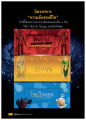
นิทรรศการ
"ความลับของชีวิต"
ในนิทรรศการแบ่งการจัดแสดงออกเป็น 3 โซน
ได้แก่ โซนบาป โซนบุญ และโซนใจหยุด
โซนบาป
DEMERIT ZONE
THE SECRETS OF UNHAPPINESS
โซนบุญ
Merit: The Secrets behind Happiness
โซนใจห
15
84 Meditation Benefits
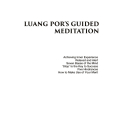
92 Luang Por's Guided Meditation
Inner Experience
Relaxed and Alert
Seven Bases of the Mind
'Stop' Is the Key to Success
Five Hindrances
Calling Upon Your Merit
140 How to Medit
37
Luang Por's Legacy of Leadership and Accomplishments
During the forty-four years under Luang Por’s leadership, the world has witnessed some of the most astounding accomplishments any one person can achieve in one lifetime. There are more than one hundre
During his 44 years of leadership, Luang Por has initiated over 100 projects that revolutionized Buddhism across the globe. With the establishment of eighty Dhammakaya centers in thirty countries and
55
Chand's Journey to the Afterlife and Meditation Mastery
in meditation.
Having achieved this high level of meditative attainment, Chand asked Thongsuk
to show her how to traverse to the afterlife realms so that she could find her father.
With Thongsuk’s hel
The text narrates the spiritual journey of Chand, who, through her meditative attainment, learns to navigate the afterlife realms to aid her father's redemption from hell. Utilizing her Dhammakaya Bod
97
LUANG POR'S GUIDED MEDITATION
Achieving Inner Experience
Relaxed and Alert
Seven Bases of the Mind
'Stop' Is the Key to Success
Five Hindrances
How to Make Use of Your Merit
17
Insights from Luang Por: Buddha, Jesus, and Meditation
Suzanne Jeffrey
within you!"
Jon, obviously not afraid of the hard questions, asks, "Could you tell me what you think is the difference between Buddha and Jesus?"
Luang Por says, "Buddha teaches th
In this engaging discussion, Luang Por provides insights on the differences between Buddha and Jesus, emphasizing Buddha's teachings on proving everything versus Jesus' acceptance. He articulates the
24
The Motives and Challenges of Ordination
Even when the individual knows about the benefits of ordination, it is no small task to give up family and worldly possessions for the sake of Dhamma. The individual must have a strong inner desire, l
The text discusses the difficulties faced by individuals when choosing ordination, which requires strong inner desire and familial support. It recounts the story of Lord Buddha's own decision to ordai
55
The Importance of Cleanliness in Buddhism
they also love cleanliness. There is a story about a monk who would often meditate in the woods. He would often use the base of trees for relieving himself. One night, as the monk sat there meditating
เนื้อหาบทเรียนนี้เล่าถึงความสำคัญของความสะอาดในพุทธศาสนา โดยมีเรื่องเล่าของพระที่นั่งสมาธิในป่า และการสนทนาของทูตสวรรค์เกี่ยวกับความสะอาด เมื่อปฏิบัติความสะอาด จะมีผลต่อจิตใจและร่างกายอย่างลึกซึ้ง ให้
69
Caring for Health as a Monk and Layperson
one’s life. As a monk, if you break these rules, then the consequences are even more severe than for laypeople.
Not only should you care for your possessions—you must care for your body and health as
การดูแลสุขภาพและร่างกายเป็นสิ่งสำคัญสำหรับพระและฆราวาส หากสุขภาพย่ำแย่ จะส่งผลกระทบต่อการทำสมาธิและการศึกษาธรรมะ การละเลยสุขภาพอาจทำให้ปัญหาทางกายเกิดขึ้น เช่น แผลในกระเพาะอาหาร การใช้สมาธิในการรักษาต