

C : ค้นหาหนังสือธรรมะ หน้า 295 / 507
หน้าหนังสือทั้งหมด

30
Nong Pa Fa Cave Manuscripts: A Historical Insight
The Nong Pa Fa Cave manuscripts are quite old and one of them dates back to 2112 BE (1569 CE), or 441 years, which i…
The Nong Pa Fa Cave manuscripts are ancient, with one dating back to 2112 BE (1569 CE). The oldest, from 1520 CE, re…

31
Dhammakāya
in the Pali Canon¹
Chanida Jantrasisalai
33
Reinterpreting Dhammarāya in the Pali Canon
Most of them refer only to the Aggañña-sutta passage, 4 missing out the three Apadāna references. 5 The reason could be either that the scholars concerned have taken the aforementioned text as r…
This paper examines the overlooked references to dhammarāya in the Pali canon, emphasizing a context not previously presented. It critiques the…
34
Understanding Dhammakāya in Early Buddhist Thought
II. The Different Approach
A fairly established academic understanding has settled regarding the term dhammakāya in the Pali …
The term 'dhammakāya' in the Pali canon is understood as representing the Buddha's teachings. It is established through several canonic…
36
References to 'Dhammakāya' in the Pāli Canon
III. References to 'Dhammakāya' in the Pāli Canon
In the Pali canon, the term dhammakāya appears four times: onc…
In the Pāli Canon, the term 'dhammakāya' is found four times, significantly in the Aggiāṇā-sutta and Apadāna lite…
41
Understanding Dhammakāya: A Scholarly Interpretation
Points to Consider
It may be observed that the difference in previous scholarly interpretations of the term dha…
This text delves into scholarly interpretations of the term 'dhammakāya', emphasizing the need for a nuanced understanding o…
42
Saddhā: The Criterion of Being the Tathāgata's Son
Saddhā: Criterion of being the Tathāgata's Son
The first point to be looked at is the criterion of being the …
This text discusses the criterion of being the Tathāgata's son, emphasizing the irremovable confidence (saddhā) in…
43
Understanding the Noble Discipleship in Buddhism
Vin.II.192, A.IV.186, 210, 213
Just as a piece of clean cloth that is deprived of dirt would well-absorb the dye, the pure and clear eye of dhamm…
The text discusses the qualities of noble disciples in Buddhism, emphasizing the importance of clear perception o…
47
Implications of Parallel Descriptions of Monks and Brahmins
Implications of Parallel Descriptions of Monks and Brahmins
As Gombrich points out, the passage in questio…
The text delves into how Gombrich compares the descriptions of Brahmins and Monks, emphasizing the dual interpretations of the term …
48
Brahmins and Noble Disciples: A Comparative Analysis
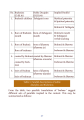
No. | Brahmins (D.III.81) | Noble Disciples (D.III.84) | Implied Parallel
---|------------------------|---------------------------|-------…
The text presents a comparative analysis between Brahmins and Noble Disciples, highlighting their similarities in mythica…
49
The Tathāgata and Brahmā: A Semantic Analysis
1. The Tathāgata and Brahmā,48 the creator god
2. The Tathāgata's mouth (verbal teaching) & Brahmā mouth.
3. The dhamma and Brahmā, the …
This passage delves into the nuanced relationships between the Tathāgata and Brahmā, highlighting the semantic layers present in verba…
50
Understanding the Connotation of Dhamma in Relation to Brahma
In the case that ‘brahma-’ refers to the masculine ‘Brahma’
In case of the term ‘brahma-’ in the three compo…
In this text, the term 'brahma-' is analyzed in the context of its translation as the masculine 'Brahma.' It discusses how the comparison between the Tat…
51
The Transformative Power of the Noble Eightfold Path in Buddhism
refer to something which 'transforms' the person into noble states, so that itself is comparable to the creator. At the sam…
This text delves into the concept of transformation in Buddhist philosophy, specifically through the Noble Eightfold Path. It h…
53
Understanding Dhamma and Nibbāna in Buddhism
With regard to dhamma as the 'essence' of the Buddha and Arhat disciples, however, it may be more appropriate to refer to 'Nibbāna,' for…
This text explores the concept of dhamma in relation to the Buddha and Arhat disciples, particularly the notion of Nibbāna a…
54
Understanding Dhamma and Brahman in Buddhism
In the case that 'brahma-' refers to the neuter 'brahman'
In the other case in which the term brahma- is tra…
This text clarifies that the term 'brahma-' can refer to either the masculine 'Brahmā' or the neuter 'brahman,'…
56
Understanding Brahmabhūta and the Path to Nibbāna
…rooted, or at least they signify the ‘best’ state.
The same may be said for the parallel of dhammacarĺa and brahmacarĺa. Although these two compounds are normally used in different senses, in the pas…
The text discusses how 'brahmabhūta' refers to the state of having eradicated all defilements, allowing one to ex…
58
Understanding the Concept of Body and Collection in Dhamma
Functionally, however, both terms seem to imply a different relationship between individual members and …
This text analyzes the distinctions between the terms 'body' and 'collection' within the framework of Dhamma, particularly focusin…
60
Understanding Dhammakāya: The Essence of Transcendental Dhamma
Arhatship (arahattamagga).86 Therefore, the particular path is not a mere ‘collective title’ of the path-constituents but the ‘essential totality’ by …
This text discusses the concept of Arhatship and the definition of Dhammakāya in the context of Buddhist philosoph…
61
Exploring the Concept of Dhammakaya
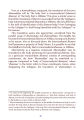
First, as a *kammadhāra* compound, the translation of the term *dhammākāya* will be ‘the body that is transcendental (lokuttar…
The term Dhammakaya can be viewed in two ways: as a kammadhāra compound translated to mean 'the body that is transcendent…
63
Understanding Paccekabuddhas in Buddhist Philosophy
V. Reference 2: Dhammakāya and Paccekabuddhas
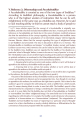
A Paccekabuddha is counted as one of the two types of Buddhas. Ac…
This text discusses the concept of Paccekabuddhas, individuals of high wisdom who achieve self-enlightenment but l…