

D : ค้นหาหนังสือธรรมะ หน้า 834 / 1150
หน้าหนังสือทั้งหมด
39
Interpretations of Dhammakāya in Early Pāli Texts
Gombrich, while differently translating the term in this passage as a bahubbiha compound 'dhamma-bodied,' similarly i…
This text delves into various scholars' interpretations of the term 'dhammakāya' within the context of early Pā…
40
Understanding Dhammakāya in Aṅgāṇā-sutta
In brief, contemporary academics refer to the term dhammakāya in the Aṅgāṇā-sutta either as a noun or an adjective. As a noun, …
The term dhammakāya is interpreted in contemporary academia as both a noun and an adjective. As a noun, it den…
42
Saddhā: The Criterion of Being the Tathāgata's Son
Saddhā: Criterion of being the Tathāgata's Son
The first point to be looked at is the criterion of bein…
This text discusses the criterion of being the Tathāgata's son, emphasizing the irremovable confidence (saddhā)…
43
Understanding the Noble Discipleship in Buddhism
Vin.II.192, A.IV.186, 210, 213
Just as a piece of clean cloth that is deprived of dirt would well-absorb the dye, the pure and clear eye of dhamma (dhammacakku) arose to t…
The text discusses the qualities of noble disciples in Buddhism, emphasizing the importance of clear perceptio…
44
Qualities of a Stream-Attainer in Buddhism
mentioned in the canon.40
The title ‘son of the Blessed one’ suggests that, through the
Buddha, the person wa…
This text delves into the characteristics of a Stream-attainer, identified as a noble disciple who is reborn to…
45
Understanding Dhamma and Spiritual Realization
This corresponds to the set of four activities41 belonging to a Stream-attainer (sotāpattiyānga) which brings about…
This content discusses the process of spiritual attainment through dhamma, emphasizing four key activities that le…
46
Buddhism and the Concept of Nirvāṇa
**43** This is, perhaps, as Eliade observes, ‘for the Buddha, one can be ‘saved’ only by attaining nirvāṇa - that is, by going beyond…
Eliade suggests that for the Buddha, salvation comes through attaining nirvāṇa, transcending the mundane …
47
Implications of Parallel Descriptions of Monks and Brahmins
Implications of Parallel Descriptions of Monks and Brahmins
As Gombrich points out, the passage in question is comparable to t…
The text delves into how Gombrich compares the descriptions of Brahmins and Monks, emphasizing the dual interp…
48
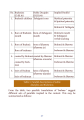
Brahmins and Noble Disciples: A Comparative Analysis
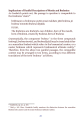
No. | Brahmins (D.III.81) | Noble Disciples (D.III.84) | Implied Parallel
---|------------------------|--------------…
The text presents a comparative analysis between Brahmins and Noble Disciples, highlighting their similarities in mythical and spiritual parental origins. It det…
49
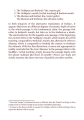
The Tathāgata and Brahmā: A Semantic Analysis
1. The Tathāgata and Brahmā,48 the creator god
2. The Tathāgata's mouth (verbal teaching) & Brahmā mouth.
3. The dhamma …
This passage delves into the nuanced relationships between the Tathāgata and Brahmā, highlighting the semantic lay…
50
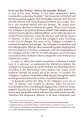
Understanding the Connotation of Dhamma in Relation to Brahma
…e that ‘brahma-’ refers to the masculine ‘Brahma’
In case of the term ‘brahma-’ in the three compounds50 being
translated as a masculine ‘Brahma,’51 the comparison of the first and
the third parallels …
In this text, the term 'brahma-' is analyzed in the context of its translation as the masculine 'Brahma.' It discusses how the comparison betwee…
51
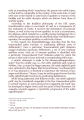
The Transformative Power of the Noble Eightfold Path in Buddhism
…ates, so that itself is comparable to the creator. At the same time, it must refer also to the shared or same kind of qualities or essence of the Buddha and his noble disciples which are distinct from …
This text delves into the concept of transformation in Buddhist philosophy, specifically through the Noble Eigh…
52
Understanding the Noble Eightfold Path and Threefold Path in Buddhism
[Right concentration, again, becomes the basis of right views, right aspirations, and other steps of the noble eightfold path, which is now experienced on a higher level, and this spira…
This text elaborates on the interrelationship between Right Concentration, Right Views, and Right Aspirations as pivotal elements of the Noble Eightfold Path leading to liberation. It discuss…
53
Understanding Dhamma and Nibbāna in Buddhism
With regard to dhamma as the 'essence' of the Buddha and Arhat disciples, however, it may be more appropriate t…
This text explores the concept of dhamma in relation to the Buddha and Arhat disciples, particularly the notion of Nibbāna as the essen…
57
The Concept of Dhamma and Kāya in Buddhist Philosophy
On the whole, it appears that the terms dhamma and brahma constituting four designations of the Tathāgāta are used in the sense of the ‘highe…
This study examines the terms dhamma and brahma, suggesting that they refer to the highest aspect of Tathāgāt…
61
Exploring the Concept of Dhammakaya
First, as a *kammadhāra* compound, the translation of the term *dhammākāya* will be ‘the body that is transcendental (l…
The term Dhammakaya can be viewed in two ways: as a kammadhāra compound translated to mean 'the body that is t…

62
Understanding Dhammakāya and the Tathāgata
this sense conveys the meaning that the Tathāgata is the body pertaining to transcendental dhamma or Nibbāna, or he is the body of those transcendent qualities.…
บทความนี้ตรวจสอบแนวคิดของ ‘dhammakāya’ และการเชื่อมโยงกับ Tathāgata ซึ่งหมายถึงร่างกายของธรรมชาติที่ไพศาลหรือ Nibbāna การศึกษาเส…
64
Understanding Paccekabuddhas in Buddhism
91 While it is possible for a Paccekabuddha to teach an individual which finally leads to that person's enlightenment, he does not teach to …
The text discusses the distinct nature of Paccekabuddhas, who can guide individuals toward enlightenment but d…
65
The Characteristics of Paccekabuddhas in Apadāna Literature
In the Apadāna literature, besides the life history of the Buddha and his disciples, a section is devoted to a …
The Apadāna literature highlights the characteristics of Paccekabuddhas, emphasizing their significant dhamm…
66
Understanding Paccekabuddhas: Characteristics and Dhamma
These verses describe the Paccekabuddhas as ones possessed of supreme purity, wisdom, wakefulness, composure, and …
These verses highlight the qualities of Paccekabuddhas, emphasizing their supreme purity, wisdom, and self-enlightenment capacity. The term ‘mahatadha…