

D : ค้นหาหนังสือธรรมะ หน้า 833 / 1150
หน้าหนังสือทั้งหมด

11
I am pleased to congratulate the Dhammachai International Research Institute on this new initiative and look for…
13
Inaugural Volume of Buddhist Research by Dhammachai International Research Institute
Inpirational Message
On the 44th Anniversary of the Ordination of Most Venerable Founder Luang Phaw Dhammajayo on 27th August 2012 and also in the historic…
On August 27, 2012, the Dhammachai International Research Institute (DIRI) marked the 44th anniversary of Luang Phaw Dhammaja…
14
Advancements in Buddhist Studies through Collaboration
cooperation throughout the last ten and five years respectively.
Appreciation to the Social Research Institute, Chiang Mai University
for t…
This text appreciates the collaboration over the last ten and five years, particularly acknowledging the Social Research Institute of Chiang Mai University for t…
16
Launch of the Journal of the Dhammachai International Research Institute
Introduction
This collection of articles marks the launch of the Journal of the Dhammachai International …
This collection of articles marks the launch of the JDIRI, showcasing perspectives on Early Buddhism and meditation studies. The journal aims to publish r…
17
Exploration of Pāli Manuscripts in Laos
The journal begins with Anatole-Roger Peltier's article on his investigations of a wooden chest containing palm-leaf manuscripts that were recently discovered in a cave in the Khammouan p…
This journal features an article by Anatole-Roger Peltier on a wooden chest containing palm-leaf manuscripts found in Laos. The texts, dated to the sixteenth century, …
19
Exploring Ancient Thai Meditation Manuscripts and Their Influence
of the original content of the palm-leaf manuscript is provided along with a translation into modern Thai and English. It consists of a correlation of body parts…
This content discusses the significance of ancient Thai palm-leaf manuscripts, especially those of the bŏran kamm…
20
Exploring the Cakras and Early Buddhism
the cakras are located, a location that suggests comparisons with Tantra.
While the primary focus of this journal is dhamm…
This journal focuses on the study of cakras and early Buddhism, emphasizing neutrality across Buddhist schools. Under the direction …
21
Exploring Buddhist Manuscripts and Teachings
JDIRI
Contents
The Most Venerable Phrathepyanmahami (Luang Phaw Dhammajayo)
*Homily* …
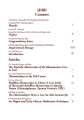
This text presents a collection of scholarly articles on Buddhist manuscripts and teachings, focusing on contributions from various experts. It includes studies…
25
Historical Artifacts from Nong Pa Fa Cave
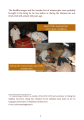
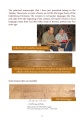
The Buddha images and the wooden box of manuscripts were probably brought to the Nong Pa Fa Cave before or …
The Buddha images and wooden box of manuscripts discovered in Nong Pa Fa Cave were likely brought there bef…
26
Exploring the Tipiṭaka Manuscripts
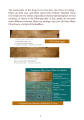
The palm-leaf manuscripts that I have just presented belong to the Tipiṭaka. These texts, or parts of texts, are in Pāli, the lingua franca of the Indoc…
The palm-leaf manuscripts presented belong to the Tipiṭaka, primarily in Pāli, the lingua franca of the Indochinese Peninsula. While th…
27
Exploring the Manuscripts of Nong Pa Fa Cave
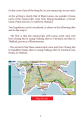
The manuscripts of the Nong Pa Fa Cave have two forms of writing: Dham Lao from Laos, and Dham Lanna from northern Thailand. These two scripts are very similar, especi…
The manuscripts of the Nong Pa Fa Cave showcase two primary forms of writing: Dham Lao from Laos and Dham Lanna from northern Thailand. While these scripts exhibit notable similar…
29
Exploring the Origins of the Nong Pa Fa Cave Manuscripts
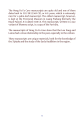
On the cover of one of the Nong Pa Fa Cave manuscript, we can read:
As the writing is clearly that of Dham Lanna, one wonders if some parts of the manuscripts come f…
This text examines the Nong Pa Fa Cave manuscripts, highlighting their writing style as Dham Lanna. It raises questions about their origins, specifically whether part of these manuscripts o…
30
Nong Pa Fa Cave Manuscripts: A Historical Insight
The Nong Pa Fa Cave manuscripts are quite old and one of them dates back to 2112 BE (1569 CE), or 441 years, which is extremely rare for a palm-l…
The Nong Pa Fa Cave manuscripts are ancient, with one dating back to 2112 BE (1569 CE). The oldest, from 1520 CE, resides in Luang Prabang. These writings …
31
Dhammakāya
in the Pali Canon¹
Chanida Jantrasisalai
32
Dhamma-kāya in the Pali Canon
Dhamma-kāya in the Pali Canon¹
Chanida Jantrasrisalai
I. Why ‘Dhamma-kāya’ in the ‘Pali Canon’?
The…
The study investigates the term dhamma-kāya as presented in the Pali Canon, aiming to provide a comprehensiv…
34
Understanding Dhammakāya in Early Buddhist Thought
II. The Different Approach
A fairly established academic understanding has settled regarding the term dhammak…
The term 'dhammakāya' in the Pali canon is understood as representing the Buddha's teachings. It is established…
35
Exploring the Concept of Dhammakāya in Pali Canonical Texts
Of the three canonical passages mentioned above, only the first, namely the Aggañña-sutta passage, contains the term dhammakāya, while the ot…
This study reexamines the term dhammakāya in specific Pali canonical passages, notably the Aggañña-sutta, con…
36
References to 'Dhammakāya' in the Pāli Canon
III. References to 'Dhammakāya' in the Pāli Canon
In the Pali canon, the term dhammakāya appears four times: once in the…
In the Pāli Canon, the term 'dhammakāya' is found four times, significantly in the Aggiāṇā-sutta and Apadāna literature. It serves…
37
Exploring the Concept of Dhammakāya in the Aggañña-sutta
IV. Reference 1: Dhammakāya as the Tathāgata’s Designation
The first Pali reference to the term dhammakāya that is wel…
This text discusses the term 'dhammakāya' as referenced in the Aggañña-sutta, emphasizing its importance in def…
38
Understanding the Concept of Dhammakāya in Buddhist Thought
D.III.84
Vāsettha and Bhāradvāja, he whose confidence in the
Tathāgata is settled, rooted, establish…
In this passage, Vāsettha and Bhāradvāja discuss the unwavering confidence in the Tathāgata, stating that those deeply rooted in …