

EM : ค้นหาหนังสือธรรมะ หน้า 59 / 108
หน้าหนังสือทั้งหมด
7
Exploring Buddhist Meditation and Its Significance
…on’s leader. For, through the Dhammachai International Research Institute (DIRI), many relevant academic units of scholarship throughout the world have been funded and valuable high-level conferences ve…
…rts of Venerable Phrakrupaladnayokwarawat (Sudhammo Bhikkhu) in promoting scholarly exploration. It emphasizes the need for deeper understanding of meditative practices in Buddhist teachings and highlig…
8
The Importance of Indigenous Scholarly Voices in Buddhist Studies
… varied 'indigenous scholarly voices' - of those who can speak more and more confidently within contemporary academic forums and who are seeking to acquire critical skills of exposition and analysis in …
…ship. With contributions from Garry W. Trompf and editorial guidance from Dr. Jeff Wilson, the text emphasizes the promising future of this academic endeavor aimed at enhancing understanding in meditati…
13
Inaugural Volume of Buddhist Research by Dhammachai International Research Institute
…ration of the Buddha's Enlightenment, Dhammachai International Research Institute (DIRI), as an academic organization preserving Early Buddhist teaching, proudly publish the inaugural volume of their re…
…Phaw Dhammajayo's ordination and the significant Buddhajayanti 2600. This inaugural research volume embodies DIRI's commitment to preserving early Buddhist teachings and expanding academic awareness and…
16
Launch of the Journal of the Dhammachai International Research Institute
… will feature articles that investigate all aspects of studies into Early Buddhism, with particular emphasis on the discovery and study of old manuscripts. Some of these manuscripts are copies of discou…
…ipt Project. Notable contributors include Dr. Chanida Jantrasiralai, a participant in this project, emphasizing the journal's academic collaboration and research impact in the field of Buddhism.
17
Exploration of Pāli Manuscripts in Laos
…ly sent to this location from Chiang Mai. These scripts were very similar at that time, as Peltier demonstrates, a fact that further strengthens the claim of a sixteenth century origin. It also adds to …
This journal features an article by Anatole-Roger Peltier on a wooden chest containing palm-leaf manuscripts found in Laos. The texts, dated to the sixteenth century, reveal their roots in the Pāli ca
18
Understanding Dhammakāya and Theravāda Manuscripts
…eravāda perspective. Zhou Ya discusses the geographical sources of the manuscripts, the writing systems used, the materials employed as well as the particular sections of the Theravāda canon emphasised …
…cepts found in the Agañña-sutta, illustrating a transformative rebirth to a transcendental state resembling Buddha-like qualities. Dr. Joe Zhou Ya discusses Theravāda manuscripts from Sipsongpanna, emph…
19
Exploring Ancient Thai Meditation Manuscripts and Their Influence
… of the subtle body or bodies. The text presented here shows that the notion of dhammakāya was also emphasized in the esoteric Theravāda practices common in Thailand before the mid-nineteenth century.
T…
…ist practice. Research by Urkasame highlights links between these Thai texts and Khmer manuscripts, emphasizing concepts such as the subtle body ('Nāng Cittakumārī') and the 'dhamma sphere'. The article…
20
Exploring the Cakras and Early Buddhism
…r understanding of the notion of 'early Buddhism.' Previously undiscovered Buddhist manuscripts are emerging all the time, and each one adds another piece to the jigsaw of Buddhist knowledge. The DIRI i…
This journal focuses on the study of cakras and early Buddhism, emphasizing neutrality across Buddhist schools. Under the direction of Luang Phaw Dhammajayo, the Dire…
21
Exploring Buddhist Manuscripts and Teachings
…g Phaw Dhammajayo)
*Homily* I
Garry W. Trompf
Emeritus Professor in the History of Ideas and
*Preface* …
…n the Pali Canon, Theravāda Buddhist manuscripts in China, and a unique Lan Na Thai manuscript. Esteemed scholars such as Dr. Anatole-Roger Peltier, Dr. Chanida Jantrasrisalai, and Dr. Joe Zhou Ya provi…
26
Exploring the Tipiṭaka Manuscripts
…es from Tai Khûn (Shan State of Burma), printed only five years ago.
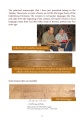
Reading manuscripts with Mr Khemphon Sengpatham, the officer of the Bureau of Culture, Khammouan Province
Some manuscripts are read…
…, the lingua franca of the Indochinese Peninsula. While the local vernacular translations like Thai emerged only in the early 20th century, the most recent version was produced just five years ago in Ta…
27
Exploring the Manuscripts of Nong Pa Fa Cave
…ing table. In fact, people do not make much difference between these two writings, they just call them Dham Phra Chao or « Scripts of the Buddha ».
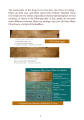
Pāli Mahāvagga
977 Pi Ka Mao Pāli Mahā Vagga
977 (Cu…
…ese writings not only sheds light on the rich cultural interplay between Laos and Thailand but also emphasizes their shared spiritual heritage in the Buddhist tradition. Dhamma alphabets of Laos highlig…
32
Dhamma-kāya in the Pali Canon
…presented in the Annual Conference of the Australasian Association of Buddhist Studies (AABS) in December 2007 at the University of Western Sydney and once again in the International Seminar on Early Bu…
…has been overlooked in previous studies. While many references have been made, significant aspects remain unexplored, warranting a closer examination of its occurrences and implications. This research b…
33
Reinterpreting Dhammarāya in the Pali Canon
Most of them refer only to the Aggañña-sutta passage, 4 missing out the three Apadāna references. 5 The reason c…
This paper examines the overlooked references to dhammarāya in the Pali canon, emphasizing a context not previously presented. It critiques the tendency to categorize texts strictly…
34
Understanding Dhammakāya in Early Buddhist Thought
II. The Different Approach
A fairly established academic understanding has settled regarding the term dhammakāya in the Pali canon, that it was used merel…
…uate the Buddha with dhamma. Notable references include the Aggāṇa-sutta and Mahāparinibbāna-sutta, emphasizing that the dhamma becomes the teacher after the Buddha's passing. However, reliance on the P…
36
References to 'Dhammakāya' in the Pāli Canon
…vious scholarly works that refer to the term dhammakāya in the Pali canon, while the latter three seem to have been unknown to them. The present study takes all these references as a whole to reflect th…
…es predominantly cite only the first occurrence, leaving the latter three underexplored. This study emphasizes an integrated approach to understanding these references within the context of the early Th…
37
Exploring the Concept of Dhammakāya in the Aggañña-sutta
…es both vāsetṭha and bhāradvāja. (The latter is a reduced form of a dvanda compound in which there remain only one component and the plural number.) the present paper takes this to be plural, as it is s…
This text discusses the term 'dhammakāya' as referenced in the Aggañña-sutta, emphasizing its importance in defining an heir of dhamma and the Tathāgata’s true son. The conversatio…
39
Interpretations of Dhammakāya in Early Pāli Texts
…the interpretation of the first component, 'dhamma,' in the sense of text.^29 Similarly, Reynolds seems to suggest that the interpretation of 'dhammakāya' in the early Pāli suttas as 'teaching' or scrip…
…he term 'dhammakāya' within the context of early Pāli suttas. Gombrich views it as 'dhamma-bodied,' emphasizing that the essence of the Buddha lies in his teachings rather than his personality. Harrison…
40
Understanding Dhammakāya in Aṅgāṇā-sutta
In brief, contemporary academics refer to the term dhammakāya in the Aṅgāṇā-sutta either as a noun or an adjective. …
The term dhammakāya is interpreted in contemporary academia as both a noun and an adjective. As a noun, it denotes the Buddha’s teachings, while…
41
Understanding Dhammakāya: A Scholarly Interpretation
Points to Consider
It may be observed that the difference in previous scholarly interpretations of the term dhammakāya in this passage mainly pertains to the inter-relatedness of two distinctive meani
This text delves into scholarly interpretations of the term 'dhammakāya', emphasizing the need for a nuanced understanding of 'dhamma' as both a realized reality and a verbal e…
42
Saddhā: The Criterion of Being the Tathāgata's Son
…he criterion of being the Buddha’s ‘true son’ which is, in this passage, defined by means of his
irremovable confidence in the Tathāgata. The degree of saddhā is
described here as ‘settled, rooted, esta…
This text discusses the criterion of being the Tathāgata's son, emphasizing the irremovable confidence (saddhā) in the Buddha. It defines this confidence as settled a…