

EM : ค้นหาหนังสือธรรมะ หน้า 60 / 108
หน้าหนังสือทั้งหมด
43
Understanding the Noble Discipleship in Buddhism
…nd e) an heir by (of) dhamma. These titles refer to different aspects of the same person. Each of them corresponds, in one way or another, to the activities and qualities of a Stream-attainer
38 See …
The text discusses the qualities of noble disciples in Buddhism, emphasizing the importance of clear perception of dhamma and the eradication of doubts and fetters. It…
45
Understanding Dhamma and Spiritual Realization
…hamma, and the consequent transformation of the person. Having listened to the teaching, having contemplated on it, and practised according to it, the person then attains or spiritually realizes the rea…
This content discusses the process of spiritual attainment through dhamma, emphasizing four key activities that lead to the emergence of noble qualities. It highlights how liste…
47
Implications of Parallel Descriptions of Monks and Brahmins
Implications of Parallel Descriptions of Monks and Brahmins
As Gombrich points out, the passage in question is comparable to the Brahmins’ claim:46
brahmanā va brahmuo putṭā orasā mukhato jāta brahma
The text delves into how Gombrich compares the descriptions of Brahmins and Monks, emphasizing the dual interpretations of the term 'brahma-' as both the masculine creator and the neute…
48
Brahmins and Noble Disciples: A Comparative Analysis
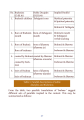
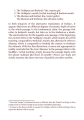
No. | Brahmins (D.III.81) | Noble Disciples (D.III.84) | Implied Parallel
---|------------------------|---------------------------|------------------------
1. | Brahma's children | Tathägata's sons |
…f divine origins—Brahma for Brahmins and Tathägata for Noble Disciples. Furthermore, the discussion emphasizes their teachings, with Brahmins associated with verbal teachings and Noble Disciples linked …
49
The Tathāgata and Brahmā: A Semantic Analysis
…stances of the alternative translations of brahma-, it
appears that there are different degrees of semantic depth of terms
in the whole passage. In the brahmanical claim, the passage first
refers to Bra…
…s passage delves into the nuanced relationships between the Tathāgata and Brahmā, highlighting the semantic layers present in verbal teachings. It contrasts the Tathāgata's mouth with Brahmā's, indicati…
50
Understanding the Connotation of Dhamma in Relation to Brahma
In the case that ‘brahma-’ refers to the masculine ‘Brahma’
In case of the term ‘brahma-’ in the three compounds50 being
translated as a masculine ‘Brahma,’51 the comparison of the first and
the third
…amma' and 'heirs of dhamma.' This reflects a transformation from a worldling to a noble individual, emphasizing the difference between Brahma's role in creation and the Tathāgata's teachings. The essenc…
51
The Transformative Power of the Noble Eightfold Path in Buddhism
… worldly human (puthujjana) into a noble disciple (ariya·sāvaka) may be identified either with defilement-uprooter, the resultant qualities or with both of them.
In this regard, the Patisambhidāmagga de…
…cally through the Noble Eightfold Path. It highlights how this path aids in the eradication of defilements, enabling worldly individuals to become noble disciples. Drawing from the Pāli canon, it assert…
52
Understanding the Noble Eightfold Path and Threefold Path in Buddhism
…at certain points along the way.59 The four transcendent maggas, in functioning by eradicating defilements, must be constitutive of the eight elements of the noble path that are instrumental to enlighte…
… the interrelationship between Right Concentration, Right Views, and Right Aspirations as pivotal elements of the Noble Eightfold Path leading to liberation. It discusses the spiral progression toward h…
54
Understanding Dhamma and Brahman in Buddhism
…s, dhamma which is the shared qualities of the Buddha and his noble disciples which distinguishes them from worldly people, and dhamma the ‘verbal expression’ of which is regarded as the Buddha’s verbal…
…imately leading to the view that dhamma signifies transcendental realities. It suggests that dhamma embodies the incorruptible essence of the Buddha and the noble qualities shared between the Buddha and…
56
Understanding Brahmabhūta and the Path to Nibbāna
…the Agañña-sutta can be understood in the same way. The notion of ‘brah mā bhūta’ found elsewhere seems to reinforce this. It always refers to an Arahat, who has eradicated all defilements. Sometimes, a…
The text discusses how 'brahmabhūta' refers to the state of having eradicated all defilements, allowing one to experience ultimate peace and happiness. It parallels 'dhammacarĺa' and 'brahm…
57
The Concept of Dhamma and Kāya in Buddhist Philosophy
…erred to also as the ‘highest’ or ‘ultimate,’ as they transcend the realm of samsāra. These are systematized later as the ninefold transcendental dhamma (navadīgha lokuttaradhamma), subsuming the four s…
…e of the Buddha. The text also analyzes the term kāya, translated as either ‘body’ or ‘collection,’ emphasizing their structural and functional similarities and differences. Both terms encapsulate a col…
58
Understanding the Concept of Body and Collection in Dhamma
Functionally, however, both terms seem to imply a different relationship between individual members and the ‘totality’ of the whole ‘body’…
…'body' maintains essential relationships with functional organs, a 'collection' allows individual elements to retain identity independently. The importance of the term kāya in 'dhammakāya' is also explo…
59
Understanding Dhamma and Nibbāna
…nificance of such a conception of ‘dhamma’ is determined by ‘its function’ as ‘transfomer’ or ‘defilement eradicator,’ the meaning of ‘kāya’ as ‘body’ is more appropriate.
Each transcendental path or …
…bbāna, positing that dhamma refers to transcendental dhamma, which serves as a transformer and defilement eradicator. It explores how the realization of Nibbāna transforms individuals from worldly to no…
60
Understanding Dhammakāya: The Essence of Transcendental Dhamma
Arhatship (arahattamagga).86 Therefore, the particular path is not a mere ‘collective title’ of the path-constituents but the ‘essential totality’ by which a ‘body’ is defined.
The dependence of funct
… mere collection of its constituents. The interpretation of 'dhammakāya' is explored, suggesting it embodies the transcendental dhamma and Nibbāna as the Buddha's 'body.' The analysis considers differen…
61
Exploring the Concept of Dhammakaya
…*Tathāgata*’ to ‘itself being (identified with) the *Tathāgata*’ or his essence.
This translation seems also appropriate, considered from the parallel usage of *dhammakāya* and *dhammabhūta.* The Buddha…
…significance of Dhammakaya in identifying the nature of the Tathāgata, illustrating that the Buddha embodies transcendental dhamma or Nibbāna. The discussion highlights the Buddha's essence and the rela…
64
Understanding Paccekabuddhas in Buddhism
91 While it is possible for a Paccekabuddha to teach an individual which finally leads to that person's enlightenment, he does not teach to a multitude of people in the same way as a Buddha does. Henc
…an guide individuals toward enlightenment but do not teach the masses like Buddhas. Their teachings emphasize solitude and are succinct, lacking detailed instructions for spiritual practice. The term 'k…
65
The Characteristics of Paccekabuddhas in Apadāna Literature
…ut attachment), have crossed beyond the flood of all sufferings, delighted minded, the seers of supreme welfare, comparable to siha (the king of forest), and the horn of a rhinoceros.
In this verse, ma…
The Apadāna literature highlights the characteristics of Paccekabuddhas, emphasizing their significant dhammas and independent mind. Verse 52 describes them as having great dh…
66
Understanding Paccekabuddhas: Characteristics and Dhamma
These verses describe the Paccekabuddhas as ones possessed of supreme purity, wisdom, wakefulness, composure, and having the ability for seeing and knowing. In other wo…
These verses highlight the qualities of Paccekabuddhas, emphasizing their supreme purity, wisdom, and self-enlightenment capacity. The term ‘mahatadhamma’ ref…
67
Understanding Dhammakāya in Relation to Paccekabuddhas and Enlightenment
…'(bahu)dhammakāya' referring to Paccekabuddhas, for Paccekabuddhas do not need a teacher and they themselves are not 'teachers.' They are 'enlightened beings.' This then reinforces the notion that the t…
…ment. Dhammakāya is presented as a singular concept applying to both the Buddha and Paccekabuddhas, emphasizing that 'dhamma' refers to transcendental aspects rather than mere teachings. This clarifies …
68
Dhammakāya and Noble Disciples
…went to see the Buddha for the last time. On the way to the Buddha’s residence, her declaration to female lay supporters who lamented on her parting indicates that Gotamī was an Arhat, who has completel…
… reflects on her role as a mother to the Buddha and acknowledges the spiritual connection between them. Throughout her final moments, she articulates her realizations and the completion of her spiritual…