

Understanding : ค้นหาหนังสือธรรมะ หน้า 29 / 55
หน้าหนังสือทั้งหมด
42
Saddhā: The Criterion of Being the Tathāgata's Son
Saddhā: Criterion of being the Tathāgata's Son
The first point to be looked at is the criterion of being the Buddha’s ‘true son’ which is, in this passage, defined by means of his
irremovable confiden
…t. The passage highlights the spiritual achievement of a Stream-enterer, illustrating this profound understanding and commitment to the teachings of the Buddha. For more on Buddhist teachings, explore dmc.tv.
43
Understanding the Noble Discipleship in Buddhism
Vin.II.192, A.IV.186, 210, 213
Just as a piece of clean cloth that is deprived of dirt would well-absorb the dye, the pure and clear eye of dhamma (dhammacakku) arose to the man, on that current seat
…confidence in the teachings, establishing themselves as Stream-enterers on the Holy Eightfold Path. Understanding their state aids in recognizing genuine practitioners of Buddhism, as opposed to mere claimants. Fu…
45
Understanding Dhamma and Spiritual Realization
…hout other preparatory activities, it can be explained that, during the time of their listening and understanding of the discourse, their mental qualities have been gradually purified and thus prepared. All their …
This content discusses the process of spiritual attainment through dhamma, emphasizing four key activities that lead to the emergence of noble qualities. It highlights how listening to the Buddha's te
48
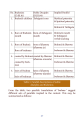
Brahmins and Noble Disciples: A Comparative Analysis
No. | Brahmins (D.III.81) | Noble Disciples (D.III.84) | Implied Parallel
---|------------------------|---------------------------|------------------------
1. | Brahma's children | Tathägata's sons |
…allow for deeper exploration of their roles in spiritual philosophy over time, opening pathways for understanding the significance of these two groups in religious contexts.
49
The Tathāgata and Brahmā: A Semantic Analysis
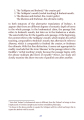
1. The Tathāgata and Brahmā,48 the creator god
2. The Tathāgata's mouth (verbal teaching) & Brahmā mouth.
3. The dhamma and Brahmā, the creator god; or
The dhamma and Brahman, the ultimate reality.
I
… to how 'dhamma' is referred to in Buddhist and Brahmanical contexts, emphasizing the importance of understanding these distinctions in Buddhist philosophy. Notably, 'Brahmā' refers specifically to the creator god…
54
Understanding Dhamma and Brahman in Buddhism
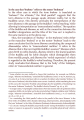
In the case that 'brahma-' refers to the neuter 'brahman'
In the other case in which the term brahma- is translated as 'brahman'63 the ultimate,64 the third parallel65 suggests that the term dhamma in
…disciples. The discussion references various scholars' insights, indicating a scholarly approach to understanding these concepts within Buddhist philosophy. It concludes that the ‘body’ of the Tathāgata encapsulat…
55
Implications of Dhamma and Brahma in Buddhist Teachings
…cations from the parallel usage of the term 'dhamma' and 'brahma' elsewhere, for it may add further understanding to the present conclusion regarding the four designations of the Buddha.
Implications from Paralle…
เนื้อหานี้สำรวจการใช้คำว่า 'ดัมมะ' และ 'บราเหมะ' ในวรรณกรรมพุทธศาสนา และการตีความความหมายที่เชื่อมโยงกันของทั้งสองคำ เป็นการศึกษาความสำคัญของการใช้คำที่ขนานกัน ซึ่งสะท้อนถึงสถานะความบริสุทธิ์สูงสุดที่
58
Understanding the Concept of Body and Collection in Dhamma
Functionally, however, both terms seem to imply a different relationship between individual members and the ‘totality’ of the whole ‘body’ or ‘collection.’ As a ‘body,’ the ‘totality’ of the whole org
…amma and serves as the creator of noble disciples who inherit this dhamma. This establishes a clear understanding of the functional aspect of these terms and their implications in spiritual development.
59
Understanding Dhamma and Nibbāna
The parallel usage of dhammakāya and dhammabhūta with brahmakāya and brahmmabhūta suggests further that the term dhamma in the passage should refer to Nibbāna. Indeed, it is possible also to say that
…ties that collectively influence the elimination of defilements. The text illustrates a spectrum of understanding the four noble truths across different levels of realization, asserting that the journey from Strea…
60
Understanding Dhammakāya: The Essence of Transcendental Dhamma
Arhatship (arahattamagga).86 Therefore, the particular path is not a mere ‘collective title’ of the path-constituents but the ‘essential totality’ by which a ‘body’ is defined.
The dependence of funct
…'s 'body.' The analysis considers different grammatical forms of Dhammakāya and its implications in understanding the Buddha's designations, indicating that it can serve both as an adjective and a noun. For more i…
61
Exploring the Concept of Dhammakaya
First, as a *kammadhāra* compound, the translation of the term *dhammākāya* will be ‘the body that is transcendental (lokuttara) dhamma’ or ‘the body that is Nibbāna.’ This gives a similar sense as th
…, shedding light on the depth of these terms in Buddhist teachings. This exploration concludes that understanding Dhammakaya is crucial in comprehending the nature of the Buddha as the embodiment of ultimate truth…
65
The Characteristics of Paccekabuddhas in Apadāna Literature
In the Apadāna literature, besides the life history of the Buddha and his disciples, a section is devoted to a depiction of the characteristics of Paccekabuddhas. This - section is entitled 'Paccekabu
…f self-enlightenment, becoming Paccekabuddhas instead of following the Buddha's teachings directly. Understanding 'dhamma' within this context reveals deeper insights into the nature of these spiritual beings. For…
68
Dhammakāya and Noble Disciples
VI. Reference 3: Dhammakāya and Noble Disciples
Besides the term’s relation to the Buddha and Paccekabuddhas, a Pāli canonical reference mentions also the relation of dhammakāya with noble disciples.
…derscoring her status as an Arhat who has eradicated all fetters. The narrative emphasizes her deep understanding of the four noble truths and her ultimate liberation, highlighting the profound bond between dhamma…
70
The Essence of Dhamma-Milk in Spiritual Growth
related also to the happiness arisen from the realisation of truths, as
mentioned in the previous verse.
In verse 33, Gotami is said to have been fed on the ‘dhamma-milk.’105 Because it is fed to her
…sights underscore the importance of dhamma-milk in achieving true fulfillment and happiness through understanding and experience.
78
Understanding Dhammakāya in Early Theravādin Context
… all point to the same direction and reinforce each other. This, in a way, shows the consistency of understanding regarding the term dhammakāya in the early Theravādin community. As a whole, the study has shown th…
This study analyzes the term dhammakāya through close readings of Pali canonical passages, revealing that it relates not only to the Buddha but also to other noble figures like Paccakabuddhas and disc
79
Understanding Dhammakāya: A Noble Identity
As a noun, the term refers to the new identity of a noble person once he/she is transubstantiated either from the worldly plane to a supramundane plane or from a lower transcendent state to a higher.
…ewing Dhammakāya as a complete, functional body in every transcendent state. It symbolizes a deeper understanding of Buddhist doctrine rather than merely a compilation of teachings, marking a significant aspect of…
80
Understanding Dhammakāya and its Significance in Buddhism
mental qualities128 or purity,129 or identifies it with realities to be
attained or experienced spiritually by noble disciples through the
penetration of the noble paths.130 In one instance, he connec
…nnects dhammakāya with the Buddha's work in overcoming defilements and emphasizes the importance of understanding Buddhist aggregations correctly. For in-depth insights, visit dmc.tv.
81
Understanding Dhammikāya in Buddhist Philosophy
Dhammapāla, like Buddhaghosa, employs the term dhammikāya
mostly as a noun, and relates it either with the Buddha’s mental
qualities and purity,134 with the Enlightenment either of the Buddha135
or hi
…achings of the Buddha and the ultimate spiritual realization. Explore these concepts to deepen your understanding of Buddhist philosophy and teachings on enlightenment. Visit dmc.tv for more insights.
84
Bibliography of Buddhist Studies
Bibliography
Dutt, Nalinaksha. Mahayana Buddhism. Delhi: Motilal Banarsidass, 1978.
Geiger, Wilhelm. “Dhamma and Brahman.” Zeitschrift flour buddhismus (1921): 73-83.
Gombrich, Richard. “The Buddha’s
…rd Gombrich. The works listed provide foundational knowledge and diverse perspectives essential for understanding the complexities of Buddhist thought and practice. This collection includes both historical texts a…
90
Buddhist Manuscripts from Sipsong Panna Region
Buddhist manuscripts from the Sipsong Panna region can be divided into four categories. The first category consists of the Dai Pāli Tripiṭaka and Tripiṭaka commentary (三藏琢) which is represented by fiv
…ons listing over 100 Theravada Buddhist manuscripts divided into five categories, further enriching understanding of this region's unique spiritual heritage.