

dmc : ค้นหาหนังสือธรรมะ หน้า 432 / 617
หน้าหนังสือทั้งหมด
121
รายนามเจ้าภาพเดือนมีนาคม
รายนามเจ้าภาพ ฉบับเดือนมีนาคม
เจ้าภาพอุปถัมภ์
• กัลยาณจิต-ลำดวน อ้อมนต์
• ด.ช.กล้าหาญ บุญจิต
• กัลยาณี สุขโร่-คุณพ่อ-คุณแม่ และพี่ๆทุกคน
• กัลยาณี ศรีโล่
• ถวัลย์ใจ-ขวัญเรือน-ชิต เจนแสนแสง
• กัลยา
…ง ๆ ซึ่งทั้งหมดนี้มีส่วนสำคัญในการสร้างสรรค์และส่งเสริมกิจกรรมทางศาสนาและสังคมในชุมชน กรุณาเยี่ยมชม dmc.tv สำหรับข้อมูลเพิ่มเติมเกี่ยวกับกิจกรรมและการสนับสนุนในอนาคต

124
อุปสมบทหมู่และโครงการบวชฤดูร้อน
อุปสมบทหมู่
ครูแก้ว
ครูผู้ให้แสงสว่างทั่วโลกและทางธรรม
*สำหรับครู, อาจารย์
อบรมตั้งแต่วันที่ ๑๑ ม.ค. – ๒ พ.ค. ๒๕๖๖
อุปสมบทหมู่ ๑๐๐,๐๐๐ รูปทุกหมู่บ้านทั่วไทย
นวชฏตท่านคุณ
หน้าที่ที่ยิ่งใหญ่ของลูกผู้ชา
…เม.ย. ๒๕๖๕ โดยต้องมีผู้ปกครองสนับสนุนค่าผ้าไตรจีวร สำหรับผู้ที่สนใจเข้าร่วมสามารถติดต่อสอบถามได้ที่ dmc.tv
2
Dhammachai International Research Institute (DIRI) Overview
The Dhammachai International Research Institute (DIRI) is a research institute that traces the roots of the Buddha’s teachings back to original manuscripts with the aim of finding true and clear evide
…ding of genuine Buddhist practice, fostering pure knowledge for the betterment of human life. Visit dmc.tv for more details.
7
Exploring Buddhist Meditation and Its Significance
Preface
Not a month goes by these days without another important article being published on some newly uncovered Buddhist text, and among the discoveries are ancient materials about Buddhist meditati
…ers is articulated as essential for the growth of Buddhist scholarship. For more information, visit dmc.tv.
21
Exploring Buddhist Manuscripts and Teachings
JDIRI
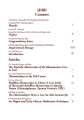
Contents
The Most Venerable Phrathepyanmahami (Luang Phaw Dhammajayo)
*Homily* I
Garry W. Trompf
Emeritus Professor in the History of Ideas
…he pursuit of knowledge and meditation practices. For further insights and detailed analysis, visit dmc.tv.
23
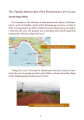
The Tipitaka Manuscripts of the Khammouan Cave in Laos
The Tipitaka Manuscripts of the Khammouan Cave in Laos
Anatole-Roger Peltier
On invitation of the Ministry of Information and Culture (Vientiane, Laos), I went to Thakhek, capital of the Khammouan p
…hts the contributions of local communities to cultural heritage. For more information, please visit dmc.tv.
25
Historical Artifacts from Nong Pa Fa Cave
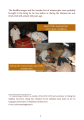
The Buddha images and the wooden box of manuscripts were probably brought to the Nong Pa Fa Cave before or during the Siamese-Lao war (1826-1828 AD), almost 200 years ago.
Most of the manuscripts are
… the understanding of the cultural history surrounding these artifacts. For more information, visit dmc.tv.
29
Exploring the Origins of the Nong Pa Fa Cave Manuscripts
On the cover of one of the Nong Pa Fa Cave manuscript, we can read:
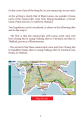
As the writing is clearly that of Dham Lanna, one wonders if some parts of the manuscripts come from Muang Nandaburi, a former name
…suggesting a more direct route to Nandaburi before continuing on. For detailed maps and more, visit dmc.tv.
30
Nong Pa Fa Cave Manuscripts: A Historical Insight
The Nong Pa Fa Cave manuscripts are quite old and one of them dates back to 2112 BE (1569 CE), or 441 years, which is extremely rare for a palm-leaf manuscript. The oldest manuscript, however, is kept
…ital for understanding the Tipiṭaka and Early Buddhism in the region. More insights can be found at dmc.tv.
32
Dhamma-kāya in the Pali Canon
Dhamma-kāya in the Pali Canon¹
Chanida Jantrasrisalai
I. Why ‘Dhamma-kāya’ in the ‘Pali Canon’?
The term dhamma-kāya/dharmakāya appears in Buddhist literature of different schools. Previous scholars
…er contributing to the ongoing discourse on Buddhist philosophy. For deeper understanding, refer to dmc.tv.
33
Reinterpreting Dhammarāya in the Pali Canon
Most of them refer only to the Aggañña-sutta passage, 4 missing out the three Apadāna references. 5 The reason could be either that the scholars concerned have taken the aforementioned text as represe
…tudies, shedding light on a crucial aspect of Buddhist literature. More information can be found at dmc.tv.
34
Understanding Dhammakāya in Early Buddhist Thought
II. The Different Approach
A fairly established academic understanding has settled regarding the term dhammakāya in the Pali canon, that it was used merely in the sense of the ‘Buddha’s teachings.’ In
…olarly discourse and traditional understanding, emphasize its complex significance within Buddhism. DMC.tv offers insights into these themes and the evolving nature of Buddhist teachings.
35
Exploring the Concept of Dhammakāya in Pali Canonical Texts
Of the three canonical passages mentioned above, only the first, namely the Aggañña-sutta passage, contains the term dhammakāya, while the other two do not. The reason for which all these passages are
…tanding, while referencing contemporary academic works for deeper insights. For more details, visit dmc.tv.
36
References to 'Dhammakāya' in the Pāli Canon
III. References to 'Dhammakāya' in the Pāli Canon
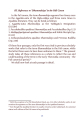
In the Pali canon, the term dhammakāya appears four times: once in the Aggiāṇā-sutta of the Dīgha-nikāya and three more times in Apadāna literature.
…iterature's canonical status despite being perceived as later additions. For deeper insights, visit dmc.tv.
38
Understanding the Concept of Dhammakāya in Buddhist Thought
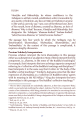
D.III.84
Vāsettha and Bhāradvāja, he whose confidence in the
Tathāgata is settled, rooted, established, solid, irremovable by
any ascetic or brahmin, any deva or Māra or Brahmā or anyone
in the world
…athāgata and the varying scholarly interpretations surrounding them. For further information, visit dmc.tv.
39
Interpretations of Dhammakāya in Early Pāli Texts
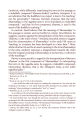
Gombrich, while differently translating the term in this passage as a bahubbiha compound 'dhamma-bodied,' similarly interprets it as an indication that the Buddha's true import is due to 'his teaching
…g the nuanced understanding of the Buddha's essence and teachings. More information can be found at dmc.tv.
41
Understanding Dhammakāya: A Scholarly Interpretation
Points to Consider
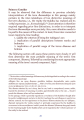
It may be observed that the difference in previous scholarly interpretations of the term dhammakāya in this passage mainly pertains to the inter-relatedness of two distinctive meani
…cally how deep and profound dhamma is perceived and articulated. For further insights, please visit dmc.tv.
42
Saddhā: The Criterion of Being the Tathāgata's Son
Saddhā: Criterion of being the Tathāgata's Son
The first point to be looked at is the criterion of being the Buddha’s ‘true son’ which is, in this passage, defined by means of his
irremovable confiden
…nderstanding and commitment to the teachings of the Buddha. For more on Buddhist teachings, explore dmc.tv.
43
Understanding the Noble Discipleship in Buddhism
Vin.II.192, A.IV.186, 210, 213
Just as a piece of clean cloth that is deprived of dirt would well-absorb the dye, the pure and clear eye of dhamma (dhammacakku) arose to the man, on that current seat
…rther analysis is given on the role of saddhā in distinguishing a person’s spiritual stature. Visit dmc.tv for more insights.
44
Qualities of a Stream-Attainer in Buddhism
mentioned in the canon.40
The title ‘son of the Blessed one’ suggests that, through the
Buddha, the person was (re)born to the same plane (bhūmi) to which
the Buddha belongs, i.e., passing beyond the
…ehind dependent causation, leading to liberation from worldly attachments. For more insights, visit dmc.tv.