

lokuttara : ค้นหาหนังสือธรรมะ
หน้าหนังสือทั้งหมด

39
การอัญเชิญ
Ukāsa, Ka pra putta jao kor aratana, pra nopa lokuttara tam-
ma jao, kao prakarn, nai adittakarn tee luang lap bai laew, ja
nap ja pramarn mii dai, pra nop…
Ukāsa, Ka pra putta jao kor aratana, pra nopa lokuttara tam- ma jao, kao prakarn, nai adittakarn tee luang lap bai laew, ja nap ja pramarn mii dai, pra nop…
51
The Transformative Power of the Noble Eightfold Path in Buddhism
… function in eradicating different sorts of defilements53. Once a particular 'transcendental path' (lokuttara magga) eradicates particular defilements, a set of new resultant qualities arises. Each set of ensu…
This text delves into the concept of transformation in Buddhist philosophy, specifically through the Noble Eightfold Path. It highlights how this path aids in the eradication of defilements, enabling
53
Understanding Dhamma and Nibbāna in Buddhism
…vel than that possessed by the Buddha. But they must be of the same sort, which in this case means 'lokuttara,' that differs from those belonging to the worldlings.
As discussed above, the Tathāgata's design…
…hile establishing that they share the same type of transcendent dhamma. The analysis proposes that 'lokuttara' qualities differ from those of ordinary beings. The conclusion hints at the significance of 'trans…
23
Understanding the Path to Nirvana: The Buddha's Teachings
…k from Enlightenment or the wisdom to know the Sadhamma to the appoint of attaining transcendental [lokuttara] attainments.
The path of sense pleasure fools the beings of the world into being contented with de…
…stering the capacity to attain higher states of consciousness beyond the Cycle of Existence, called lokuttara attainments. Such wisdom is essential for monks and all seekers on the path to liberation from defi…

147
ระดับความสุขในสามภพ
…aññanasaññāyatana.
(6) These are the degrees of happiness on the three planes, including
[those of] lokuttara, but not counting [those of] Nibbana. This is the continuum
of happiness. Happiness seekers detest …
…aññanasaññāyatana. (6) These are the degrees of happiness on the three planes, including [those of] lokuttara, but not counting [those of] Nibbana. This is the continuum of happiness. Happiness seekers detest …

228
สารบัญ
L
. . 193 ..
Index
lokadhamma, 113.
Lokadhamma, 58, 62
lokāyatana, 17
lokuttara, 111
Lokuttaracitta, 23
lotus bud Ketu, 73
lotus-bud topknot, 48, 75, 76, 77, 79, 80, 101, 102, 103…
L Index lokadhamma, 113. Lokadhamma, 58, 62 lokāyatana, 17 lokuttara, 111 Lokuttaracitta, 23 lotus bud Ketu, 73 lotus-bud topknot, 48, 75, 76, 77, 79, 80, 101, 102, 103…
40
Understanding Dhammakāya in Aṅgāṇā-sutta
… component either as the Buddha’s verbal teaching or as the ninefold transcendent dhamma (navavidha lokuttaradhamma). The latter refers to the ninefold transcendent dhammas (nava-lokuttara-dhamma) as being the…
The term dhammakāya is interpreted in contemporary academia as both a noun and an adjective. As a noun, it denotes the Buddha’s teachings, while as an adjective, it refers to the nature of the Tathāga
44
Qualities of a Stream-Attainer in Buddhism
…Buddha belongs, i.e., passing beyond the worldly plane (lokiya-
bhūmi) to the transcendental plane (lokuttara-bhūmi). So the title
‘son of the Blessed one’ suggests that the person is a noble disciple
(ariya-s…
This text delves into the characteristics of a Stream-attainer, identified as a noble disciple who is reborn to a transcendental plane through the Buddha's teachings. Key qualities include association
57
The Concept of Dhamma and Kāya in Buddhist Philosophy
…tation that the term dhamma in the designations of the Buddha refers to ‘transcendental realities’ (lokuttara dhammas), the highest of which is that the essence of the Buddha is Nibbāna. According to Buddhist …
This study examines the terms dhamma and brahma, suggesting that they refer to the highest aspect of Tathāgāta, likely Nibbāna. The term dhamma denotes transcendental realities, transcending the realm
59
Understanding Dhamma and Nibbāna
…‘Nibbāna,’ the present study proposes a broader context of ‘dhammakāya’ as ‘transcendental dhamma’ (lokuttara dhamma) in order to avoid the preclusion of noble disciples of lower levels, e.g., the stream-attai…
This study delves into the concepts of dhamma and Nibbāna, positing that dhamma refers to transcendental dhamma, which serves as a transformer and defilement eradicator. It explores how the realizatio
60
Understanding Dhammakāya: The Essence of Transcendental Dhamma
…l path allows its definition as a kind of ‘body.’ The same could be said for transcendental fruits (lokuttara phala) and Nibbāna. Thus, the transcendental dhamma should be defined as a ‘body’ rather than being…
This text discusses the concept of Arhatship and the definition of Dhammakāya in the context of Buddhist philosophy. It argues that the path should be seen as an essential totality, forming a 'body,'
61
Exploring the Concept of Dhammakaya
…dhāra* compound, the translation of the term *dhammākāya* will be ‘the body that is transcendental (lokuttara) dhamma’ or ‘the body that is Nibbāna.’ This gives a similar sense as that of the translation of th…
The term Dhammakaya can be viewed in two ways: as a kammadhāra compound translated to mean 'the body that is transcendental dhamma' or as a tappurisa compound meaning 'body pertaining to transcendenta
81
Understanding Dhammikāya in Buddhist Philosophy
…, he
identifies the dhamma that is the Tathāgatas’ body as the ninefold
transcendental dhamma (nava-lokuttara-dhamma).139 In one instance,
he uses the term dhammikāya in the sense which may be interpreted
eith…
Dhammapāla discusses dhammikāya, relating it to the Buddha's mental qualities and Enlightenment. This term connects the Buddha's teachings and truths, illustrating his purity and extraordinary qualiti
83
Understanding Dhammakāya in Theravāda Buddhism
…when used as an adjective, it is used more in the sense of the ninefold transcendental dhamma (nava-lokuttara-dhamma) and less in the sense of the Buddha’s verbal teaching.
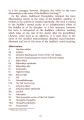
**Abbreviations**
A Anguttara-nik…
This passage examines the term 'dhammakāya' as interpreted in traditional Theravāda Buddhism. It discusses the general view of dhammakāya as reflecting the qualities of the Buddha and the spiritual re
71
The Suffering of Death
… no-one who doesn't fear oncoming death except for those who have managed to attain transcendental [lokuttara] mental states. This is why the Lord Buddha referred to death as suffering.
Death has been compared…
This text discusses the various aspects of suffering that accompany death, including the fear of hell, anxiety over possessions and loved ones, and the experiences of those who face execution. It high
76
Understanding the Aggregates of Clinging in Buddhism
…r aggregates — feelings, perception, mental formations and consciousness are all of transcendental [lokuttara] purity — and are no longer subject to clinging (which is why they are referred to as Pure Aggregat…
The Aggregates of Clinging plays a pivotal role in Buddhist teachings on suffering, highlighting how attachment to the Five Aggregates leads to various forms of suffering. While individuals reaching t
89
Understanding Craving and its Effects
…s with which craving attaches us is like a monk who has still not managed to attain transcendental [lokuttara] states of mind and who is thus still attached to his robes, bowl and other requisites. That living…
The text discusses how craving influences our perceptions and behaviors, comparing it to sticky resin that binds our minds to attachments and sense pleasures. It warns that indulging in cravings leads
111
Understanding the Dhammakāya in Insight Meditation
…atter two being the bodies of enlightenment of the arahant. The Dhammakāyas are all transcendental [lokuttara] in nature — that is they are not made up of conventional aggregates [khanda] but are made up of pu…
This text delves into the concept of Dhammakāya Arahant, distinguishing between the Coarse and Subtle Dhammakāya. It explains that these bodies are transcendental and consist of pure aggregates that a
112
Understanding the Dhamma Body and Overcoming Mental Defilements
…nchangability. Thus the Dhamma Body is every human’s body of enlightenment. It is a transcendental [lokuttara] body which is beyond the reach of defilements. It is a body which is to be found within every one …
The passage discusses the limitations of human senses in perceiving mental defilements such as greed, hatred, and delusion. It highlights the importance of the Dhamma Body in providing insight into th
116
Understanding Nirvana: The Realm Beyond Existence
… [bhava] and are hence mundane [lokiya]. Nirvana is outside the Three Spheres and is transcultural [lokuttara]. In Nirvana there is no movement, no coming or going. Those who have attained the path of Buddhist…
This text delves into the concepts of Āyatanā Nibbāna and Anupādisesa Nibbāna, explaining that Nirvana exists beyond the physical realm and is not bound by worldly elements. It describes Nirvana as a