

non-returner : ค้นหาหนังสือธรรมะ หน้า 1 / 15
หน้าหนังสือทั้งหมด
208
The Proclamation of Deities in Buddhist Cosmology
…e would become a Once-Returner. Once he had seen them in the (Form) Brahma-body, he would become an Non-Returner. Once he had seen them in the Formless Brahmā-body, he would become an Non-Returner. Once he had se…
…ing through the subtle realms, he can achieve higher states of enlightenment, ultimately leading to Non-Returner status.

92
The Victory of Abandoning: Insights from the Dana Sutta
…a's Retinue. Then, having exhausted that
action, that power, that status, that sovereignty, he is
a non-returner. He does not come back to this world.
"This, Sariputta, is the cause, this is the reason, why a
pe…
…d acts of generosity can influence their outcomes—whether one becomes a returner to this world or a non-returner to the spiritual realms. This teaching emphasizes that the quality of mind and intention behind act…
114
Understanding Dispassion and Detachment in Dhammakaya Meditation
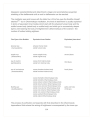
…er Dhammakaya body
coarse once-returner Dhammakaya body
subtle once-returner Dhammakaya body
coarse non-returner Dhammakaya body
subtle non-returner Dhammakaya body
coarse arahant Dhammakaya body
subtle arahant D…
This text delves into the significance of dispassion (ekantanibbida) and detachment (viraga) in the process of shedding defilements through meditation. It illustrates the attainment levels based on th
59
Understanding Dhamma and Nibbāna
…tal states. In other words, the trainee (sekha-pugiala) from the Stream-attainer (sotāpanna) to the Non-returner (anāgāmi) have realised Nibbāna also to their corresponding degrees.
84 Rather than limiting its …
…e truths across different levels of realization, asserting that the journey from Stream-attainer to Non-returner entails varying degrees of Nibbāna realization. The analysis suggests that dhammakāya should be int…
72
Understanding the Levels of Dhammakāya and Noble Disciples
In regard to the different levels of dhammakāya, the canon talks about the different states of trainees (sekha) and non-trainees (asekha). The former refers to states in which a further course is yet
The text elaborates on the different levels of dhammakāya, categorizing trainees and non-trainees based on their qualities and practices. Trainees are seen as individuals who still have further course

68
The Virtue of Absorbing in the Velama Sutta
68
The Virtue of Absorbing
7. Velama Sutta
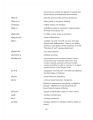
"If one were to feed one non - returner, that would be more fruitful than... if one were to feed 100 oncereturners.
"If one were to feed one arahant, that
…ct of offering food to individuals with high spiritual attainment. It asserts that feeding a single non-returner yields greater merit than feeding a hundred oncereturners. This principle continues as it juxtapose…
62
Understanding Buddhist Concepts: Key Terms and Definitions
…a Buddha to suffer a contusion or to bleed, causing division in the Sangha Order
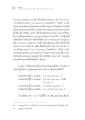
อนาคามิ (anagami) ‘non-returner’; one who has attained the third stage of holiness
อนิจจตา impermanence; transiency
อนิจจัง (anicca…
This text presents key Buddhist concepts such as 'อนัตตา' (non-self), emphasizing that there is no lasting essence, only the illusion of self that causes attachment. It discusses 'อนิจจตา' (impermanen
15
ธรรมาธารา: การวิเคราะห์การปฏิเสธในวรรณวารี
146
ธรรมาธารา
วรรณวารีวิชากรภาพพระพุทธศาสนา ปีที่ 4 ฉบับที่ 2 (ฉบับรวมเล่มที่ 7) พ.ศ. 2561
ก็จะเท่ากับยอมรับทางเลือกที่เหลือโดยปริยาย เช่น ถ้าถ่าว่า
"เขาไม่ใช่พรมาญ" (non-Brahmin) โดยถือคำว่า "ไม่ใช
เอกสารนี้สำรวจการปฏิเสธในวรรณกรรมทางพระพุทธศาสนา โดยเสนอการวิเคราะห์ความหมายของ 'ไม่ใช่' ผ่านกรอบการอธิบายทางภาษาศาสตร์ เช่น ประเภทการปฏิเสธที่ไม่แสดงการยืนยันวาททางเลือกที่เหลือและการวิเคราะห์โครงสร้

42
Understanding Personal Offerings in Buddhism
…f the fruit of arahantship;
this is the fourth kind of personal offering.
One gives a gift to a non-returner;
this is the fifth kind of personal offering.
One gives a gift to one who has entered upon the …
The text elaborates on different types of personal offerings within Buddhist practice, highlighting the spiritual importance of giving to individuals at various stages of realization, including arahan

46
The Significance of Giving to Spiritual Seekers
"By giving a gift to one who has entered upon the way to the realisation of the fruit of stream - entry, the offering may be expected to repay incalculably, immeasurably.
What, then, should be said a
This text examines the immense value of giving to those who are on the spiritual path, highlighting the exponential returns of such acts. From stream-enterers to Tathāgatas, offerings made to these en

72
Velama Sutta: The Power of Good Will
…onsummate in view, and were to feed one once-returner... 100 once - returners, and were to feed one non-returner... 100 non - returners, and were to feed one arahat... 100 arahants, and were to feed one Private B…
This text discusses the teachings of the Velama Sutta, emphasizing that developing even a small amount of good will is more fruitful than significant material offerings and merits. It illustrates how
236
Glossary of Buddhist Terms
…re
of practising the Noble Eightfold to hateful things
Path) Appamāṇābhā (P. realm of
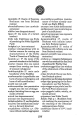
Anāgamī q.v. (non-returner) Brahmas with infinite lustre:
anālaya (extinguishing with no see form Brahma realms)
further conce…
…terms, including various realms, states of mind, and notable figures. Key concepts such as Anāgamī (non-returner), anatta (not-self), and arahant (worthy one) are discussed, offering insight into Buddhist philoso…

175
การฝึกฝนตนเองในความไม่ประมาท
Chapter 40
Training Oneself in Non-Recklessness by
Practicing Austerity (Dhūtanga)*
Life is full of uncertainties and danger awaits those who
are reckless with their lives. The Lord Buddha once said,
Chapter 40 Training Oneself in Non-Recklessness by Practicing Austerity (Dhūtanga)* Life is full of uncertainties and danger awaits those who are reckless with their lives. The Lord Buddha once said,
27
Dr. Michael Nobel's Commitment to Peace
Dr. Michael Nobel's Endorsement
I have myself some experience and background in
working for peace, I was born and raised in Swe-
den and lived most of my life in Switzerland, two
countries who have no
Dr. Michael Nobel reflects on his peace work and his heritage linked to the Nobel Peace Prize. He discusses his dedication to teaching non-violence to youth and highlights the significance of Phramong
39
Understanding Self-Mortification in Buddhism
It is for this reason that the Lord Buddha should want to start his sermon by instructing the ‘group of five’ that indulgence of the senses is unsuitable, base, ignoble, without benefit, unsuitable fo
In this text, Lord Buddha teaches that indulgence of the senses is unsuitable for a Buddhist monk and should be avoided. The practice of self-mortification, common among non-Buddhist ascetics, include
34
Buddhist Teachings on Sensual Pleasures
used to rinse a toilet or the toilet bowl itself, which is soiled with excrement. He also compared the pleasures of the senses to human faces which dogs like to spend their time sniffing.
Thus, the Lo
In this text, the Buddha emphasizes the folly of indulging in sensory pleasures, likening them to dangerous paths and harmful actions. This indulgence is viewed as detrimental, bringing suffering akin
246
Fundamental Concepts in Buddhist Psychology
rasa-saṅchetana (gasticatory volition: see sense volition)
rasa-saṃnā (gasticatory sense registration: see sense registration)
rasa-tanḥa (gasticatory craving: see sense craving)
rasa vicāra (ga
This text elaborates on significant concepts in Buddhist psychology, including gasticatory and visual perceptions such as rasa (taste) and rūpa (form). It addresses terms like gasticatory volition, se
175
Training Oneself in Non-Recklessness by Practicing Austerity
Chapter 40
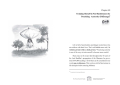
Training Oneself in Non-Recklessness by Practicing Austerity (Dhütanga) 4
Life is full of uncertainties and danger awaits those who are reckless with their lives. The Lord Buddha once sa
Chapter 40 emphasizes the significance of non-recklessness through the practice of austerity as taught by the Lord Buddha. It highlights that life is filled with uncertainties and that reckless behavi
63
Understanding Paccekabuddhas in Buddhist Philosophy
V. Reference 2: Dhammakāya and Paccekabuddhas
A Paccekabuddha is counted as one of the two types of Buddhas. According to Buddhist philosophy, a Paccekabuddha is a person who is of the highest wisdom
This text discusses the concept of Paccekabuddhas, individuals of high wisdom who achieve self-enlightenment but lack the ability to teach. It explores scholarly arguments about the pre-Buddhist origi
67
Dhammakaya Foundation's Role in Promoting Peace
United Nations: Non Governmental Organizations
Since August 1986 the Dhammakaya Foundation has become the United Nations - accredited Non-Governmental Organisation associated with the Department of P
The Dhammakaya Foundation has been a UN-accredited NGO since August 1986, actively participating in various peace initiatives, including the Millennium People's Assembly and the International Year for