

self-responsibility : ค้นหาหนังสือธรรมะ หน้า 2 / 36
หน้าหนังสือทั้งหมด
28
Four Keys to Avoiding Marriage Problems
Part One: Family Life
Chapter 4
Four Keys to Avoiding
Marriage Problems
SACCA: Truthfulness
Sacca means truthfulness, sincerity, responsibility and
a strong sense of trust toward one another. In analy
ในบทนี้มีการสำรวจถึงคุณค่าของความจริงใจและความรับผิดชอบในชีวิตสมรส ซึ่งเป็นปัจจัยสำคัญในการหลีกเลี่ยงปัญหาในความสัมพันธ์ของคู่รัก การขาดความรับผิดชอบอาจนำไปสู่ความไม่ไว้วางใจในครอบครัว ดังนั้นหากต้องก
143
Truth for the Family: Understanding Precepts and Human Nature
Part Five: Truth for the Family
stockpile of behavioral (social, emotional and spiritual)
problems, creating a generation of people who are only
interested in themselves. Ignorance is the force behind
In this section, we discuss how behavioral problems contribute to a self-centered generation and the role ignorance plays in social issues. Parents often blame external factors for their children's st
45
The Importance of Moral Education in Teaching
Only with moral education can human beings eliminate conflicts, selfish and greedy tendencies and practices so that man may truly coexist with mindful and peaceful consideration for each other. This s
This text emphasizes the necessity of moral education to eliminate selfish and greedy tendencies, enabling peaceful coexistence. It discusses the role of various types of teachers—parents, school teac
15
Self-Training and Endurance in Family Life
Those who have full knowledge, ability and goodness
must follow only this path in order to train themselves to keep
up with the world and its people, and not surrender to
defilements.
Surely, if you f
This text emphasizes the significance of self-training and self-control in leading a fulfilling life. By acknowledging the need to change negative habits, individuals can foster a healthier family env
184
Glossary of Key Concepts in Buddhist Philosophy
Part Seven: Appendixes
Glossary
Anattata: Non-self; nothing in the world has implicit
identity
"There is nothing out there, not even our bodies, which
we can control. Thus, it is not distinctly ours.
This glossary provides definitions for key Buddhist concepts such as Anattata (non-self), Aniccata (impermanence), and Bhavana (meditation). It emphasizes the understanding that nothing possesses a pe
78
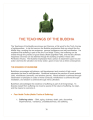
The Teachings of the Buddha
The Teachings of the Buddha
The Teachings of the Buddha are known as Dhamma, a Pali word for the Truth, the law of righteousness. In his first sermon the Buddha emphasized that one should live the Mi
The Teachings of the Buddha, known as Dhamma, emphasize the Middle Way, avoiding extremes of indulgence and self-mortification. Central to Buddha's teachings are the Four Noble Truths, which acknowled
40
The Futility of Self-Mortification
Commentorial Metaphors: Self-mortification:
1. Sugar-cane juice and poison: It can be compared to a mixture of sugar-cane juice and poison. In the end such practices will lead to death, and all for no
This text presents a series of metaphors illustrating the perils of self-mortification. Comparing self-harm to poison, stale excrement, and dangerous leaps, it highlights the futility of such practice
141
Understanding Impermanence, Suffering, and Not-Self
Impermanence [aniccān]: This is the built-in character of objects that are of a nature to change the whole of the time. Such things as the Five Aggregates of the Human Body are changing the whole of t
This text delves into the fundamental Buddhist concepts of impermanence (aniccān), suffering (dukkham), and not-self (anattā) as expressed through the Five Aggregates of the Human Body. It highlights
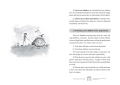
97
Guiding Children Towards a Positive Future
1. Teach your children. In a household where children have not developed bad behavior, then they should be taught about right and wrong and how to demonstrate self-discipline.
2. Address the problem
This content discusses the crucial role of parents in guiding their children to develop good behavior and self-discipline. It emphasizes the immediate need to address any self-destructive behaviors. F
128
Mappings with a Dharma Master
Mappings with a Dharma Master
we first start with our own individual self and then work outward in all directions.
“The six directions start with the smallest unit, ourselves. We are in the center o
The text discusses the importance of individual self-awareness and ethical behavior in shaping relationships and society. It emphasizes that one must start with self-improvement through meditation and
20
Superior Love through Superior Dhamma
Superior Love
through Superior Dhamma
Because we are human beings, none of us are perfect.
We all come with a baggage of deficiencies. We can
cope with our own deficiencies but we cannot
tolerate some
This text discusses the challenges of living with a partner and how the Dhamma provides guidance for a harmonious family life. It highlights the four virtues: truthfulness, self-control, endurance, an
9
Dhamma for Laypersons: The Vital Heart of a Stable Family
The following is the extracted text from the image:
---
The following subject matter is very important for all families; whoever wants to get married, whoever wants to have children, whoever wants t
Understanding family dynamics is essential for those looking to marry or raise children. This text emphasizes the importance of Dhamma for Laypersons, outlining four critical elements: truthfulness, s
68
Case History of the Success of Moral Training
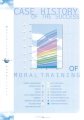
CASE HISTORY OF THE SUCCESS
OF MORAL TRAINING
W O R L D P E A C E
The G O R M
i n n e r P E A C E
CONFORMITY TO AHEAD REGULATIONS
X
ACCEPTANCE OF CRITICISM
X
PUNCTUALITY
X
This text discusses the significance of moral training in achieving success and promoting both world peace and inner peace. It emphasizes the necessity of conforming to regulations, accepting criticis
81
Effective Ways to Make Resolutions
118. EFFECTIVE WAY
TO MAKE RESOLUTIONS
Luang Por Wat Paknam taught me that the most effective way to make fruitful resolutions was to make them while focusing between their blessings. When they begin
Luang Por Wat Paknam emphasizes making resolutions with a focus between blessings during the blessing chant 'Yadtha'. Visualizing a clear Buddha image aids the resolution process, ensuring they resona
46
Journey to Joy
Journey to Joy
46
46
universal love, the love of all of humankind
without expectation of reward or gain.
To love ourselves in the appropriate way,
we have to still the mind by relaxing and gently
clos
In this chapter, the focus is on cultivating universal love and self-love without expectations. By relaxing the mind through meditation, individuals can achieve inner peace and a sense of cleansing th
53
Self-Development and Teacher Training Initiatives
Meeting #8
January 03, 2010
Today I am here with Luang Pi Joshua and Luang Pi Anurak. I have just returned to Bangkok and the Wat, after spending the end of 2009 in New York, helping my daughter move
In this meeting, various educational initiatives are discussed, focusing on self-development programs and teacher training. Projects include a Self-Development program inspired by the Five Rooms and S
120
Seeking Guidance from a Dharma Adviser
Needing with a Dharma Adviser
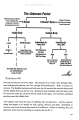
The Unknown Factor
-------------------------------
It Must Exist Because of Balance:
If There Is Suffering, Fear,
And Ignorance, There Must
Be Something That Can Fix It
The text delves into the concept of seeking a Dharma adviser to help navigate the unknown factors of suffering, fear, and ignorance. It discusses that if there is suffering, there must be a solution,
38
Chapter 4: Cultivating Good Emotions through Meditation
The extracted text from the image is:
-----------
Chapter 4
Those who meditate with consistency will have good emotions, and can easily see and understand the truth that everyone has good and bad in
Chapter 4 emphasizes the significance of regular meditation in helping individuals recognize the duality of good and bad within themselves and others. By understanding this balance, people can cultiva
143
Understanding the Dhamma Body and the Noble Path
Dhamma Body — not with the human eye or the naked eye.
All the knowledge that brought him to Buddhahood came
by the ‘knowing’ of the Dhamma Body, not by rationale or
reasoning with the logical (hum
The Dhamma Body can only be perceived beyond the human eye, allowing the Buddha to grasp deep truths about existence. His compassion drove him to teach the Noble Path for the liberation of others, adv
197
The Middle Way: Buddha's Revolutionary Teaching
tered to liberate themselves from suffering, but because the strongest spiritual trend of the time was the practice of self-mortification, many went astray or perished in their quest. Having tormented
This text discusses the historical context of the Buddha's teachings, emphasizing how many were misled by the practice of self-mortification in their quest for liberation from suffering. It highlights