

self-understanding : ค้นหาหนังสือธรรมะ หน้า 54 / 73
หน้าหนังสือทั้งหมด
105
Understanding Your Foundations and Spiritual Growth
7 This is very important because it is the place where you were born.
If you go to different foundations, start from foundation 7 to 6, 5, 4, 3, 2, 1 and then go to the new one. If you do not, you wil
This text discusses the significance of foundational stages in personal growth, emphasizing starting from foundation 7 down to 1 before moving onward. It highlights the connection between physical wel
407
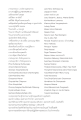
Thai Name Directory
Jane-Henry Dethrasavong
Jiraphorn Härter
Johann สมส่วน Leitl
Jose, Benjamin, Jassica, Athairat Bonilla
Ken-Narinthorn Lawrence
Khammy-Mone Vongsampanh
Ludwig Paulus
Masao Kohei Watanabe
Napalai Choto
This document provides a collection of notable Thai names, showcasing a diverse range of individuals from different backgrounds. The list includes professionals and families, emphasizing cultural sign
32
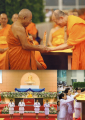
Ceremony of Recognition Among Monks
- The first image (top) shows two monks, one handing an award or plaque to the other, with other monks in the background.
- The second image (bottom left) depicts a formal event with a seated monk in
This content describes a set of images depicting a ceremonial event with monks. The first image portrays one monk awarding another, indicating a recognition of merit. The second image features a monk
130
บัญญาบารมี หนทางการสร้างปัญญา
บัญญาบารมี หนทางการสร้างปัญญา
๑๓
๑๔.สารสูตร
ว่าด้วยสารเป็นเหตุเกิดปัญญา
[๒๗] ข้าพเจ้าได้สังเอียงแล้วอย่างนี้ :-
สมหนึ่ง พระผู้มีพระภาคเจ้าอุบัติอยู่ ณ พระวิหารเชตวัน อารามของอนาถบิณฑิตเศรษฐี กรุงสาว
บทความนี้นำเสนอความคิดเกี่ยวกับการสร้างปัญญาผ่านการทำสมาธิและการเข้าใจความเกิดและความดับของรูป เวทนา สัญญา และวิญญาณ ตามคำสอนของพระพุทธเจ้าในพระวิหารเชตวัน ศึกษาความเชื่อมโยงระหว่างอุปาทาน ภพ ชาติ และ
252
Exploratory Insights into Early Buddhist Texts and Practices
Jantrasrisalai, Chanida. 2011. “Criteria for Identification of Elements of Dhammikāya Meditacionds., Early Buddhist Traces of Dhammikāya Meditation : Project Overview.
Keenam P. John. 1982. Original p
This text presents an overview of significant scholarly works on early Buddhist practices and literature, focusing on the criteria for identifying elements of Dhammikāya meditation and examining the p
253
Buddhism Studies and Literature
Sam Nhean. (1957). The History of Buddhism in Cambodia. Phnom Penh : TraiRat
Saddhātissa, H. 1990. Pāli Literature of South-East Asia. Singapore: Singapore Buddhist Meditation Centre.
Sehrai, Fidaulla
This text contains references to significant works in the study of Buddhism, including historical accounts, Pāli literature from Southeast Asia, and studies on the influence of Indian Buddhism and its
4
ชีวิตนี้ ชีวิตหน้า
This Life Next Life
Preface
This book is the result of my Dhamma research during my rains - retreat abroad from 2554 to 2556 B.E.
The purpose of this book is to provide Thai & non-Thai Buddhists ce
หนังสือเล่มนี้เป็นผลจากการค้นคว้าธรรมในช่วงเข้าพรรษาต่างประเทศระหว่างปี 2554 ถึง 2556 เพื่อให้ความรู้แก่ชาวพุทธทั้งไทยและต่างชาติเกี่ยวกับชีวิตหลังความตาย และการสนทนาระหว่างเจ้าชายปยายสีและพระกุมารกัส
6
Payasi Sutta: Rebirth and Karma
This Life Next Life
Payasi Sutta
(Rebirth and Karma)
Thus have I heard.
1. The venerable Kumara Kassapa¹ was once walking on tour in Kosala together with a great company of bhikkhus, to the number o
The Payasi Sutta recounts the teachings of venerable Kumara Kassapa during his time in Setavya. It narrates the challenges faced by Payasi, a chieftain in this city, as he grapples with misconceptions
12
Discourse on Rebirth and the Afterlife
some of them saluted him with joined hands and took their seats on one side ; some of them called out their name and family and did likewise, some of them took their seats on one side in silence.
5.
In a thought-provoking discussion, Payasi expresses disbelief in the existence of another world or the outcomes of human actions. Master Kassapa counters his views by questioning the nature of celesti
18
The Consequences of Apathy Towards Death
Let my masters, the executioners, wait till I have visited my friends and advisers, my kinsmen by blood, in this or that village or town, and come back " ? Or would the executioners cut off the head o
This text delves into a philosophical discourse about the inevitability of death and the moral implications of one's actions. It contrasts the yearning for a reprieve from execution with the notion th
22
The Simile of the Man in the Mire
Now this again, Master Kassapa, is evidence to me that there is neither another world, nor rebirth other than of parentage, nor fruit and result of deeds well - done and ill - done.'
9. 'Well then, P
In this passage, Master Kassapa uses a simile to illustrate the complexity of existence and moral actions. He compares a man trapped in mire to the wider concepts of life, illustrating that actions, l
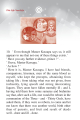
26
Questioning the Existence of a Spiritual Realm
10. 'Even though Master Kassapa says so, it still appears to me that not one of these things exists. '
'Have you any further evidence, prince ?' . . .
'I have, Master Kassapa. '
'As how ? '
'Here it i
In a thought-provoking dialogue, a prince challenges Master Kassapa's assertions about the existence of a spiritual realm. The prince draws upon personal experiences with friends who lived virtuous li
30
Understanding the Divine Eye and Existence
This Life Next Life
28
We do not believe him when he says these things. 'That, Prince, is just as if there were a man born blind who could not see objects as dark or bright, as blue, yellow, red or
In this passage, the conversation between Prince and Master Kassapa highlights the limitations of human perception. The parable of the blind man illustrates how disbelief stems from unawareness. The t
32
This Life Next Life
This Life Next Life
30
In this way, Prince, is the other world to be seen, and not, even as you imagine, by this fleshly eye. Let this be a proof to you that there is another world, that there are b
In this text, Prince questions Master Kassapa about the existence of another world and the nature of existence beyond death. The discussion revolves around the moral behavior of Wanderers and Brahmins
40
The Existence of the Soul in Dreams
' Not so, Master Kassapa. '
' So they who are living do not see the soul of you who are living entering or leaving you (when you dream ). How then will you see the soul of a dead person entering or le
In a profound dialogue, Master Kassapa discusses the nature of the soul with a prince who doubts its existence. The prince questions why living beings cannot perceive souls entering or leaving. He pre
44
The Nature of Existence and Evidence
18. ' Even though Master Kassapa says this, it still appears to me that not one of those things exists. '
' Have you any further evidence, Prince ? '
' I have, Master Kassapa.'
' What might that be
In this excerpt, Prince engages in a philosophical discussion with Master Kassapa about the existence of the soul. The Prince presents a scenario where a felon is punished severely, questioning the ab
46
Understanding Perception and Existence
He has sight and there are forms, but the organ does not perceive them ; he has hearing and there are sounds, but the organ does not perceive them ; he has smell and there are odours, but the organ do
This text discusses the idea that while humans have sensory organs for sight, sound, smell, taste, and touch, these organs do not necessarily imply the perception of a broader reality. The speaker, Ma
54
The Boy and the Fire Drill
Then the boy chopped the fire drill with the hatchet, thinking : - " Perhaps that's how I shall get fire." No fire got he. He split the fire drill in twain, in three, four, five, ten, a hundred pieces
In this tale, a boy attempts to create fire by chopping a fire drill with a hatchet, smashing it into pieces, and using a mortar. Despite his efforts, he fails to produce any fire. The Jatila returns
76
The Teachings of Master Kassapa
' With Master Kassapa's first simile I was pleased, I was charmed ; moreover I wanted to hear his ready wit in questions, for I regarded Master Kassapa as one who was to be opposed. It is wonderful, M
In this text, the narrator expresses admiration for Master Kassapa's teachings, viewing him as a guide on the path to enlightenment. The dialogue reveals the significance of understanding true sacrifi
98
Understanding Worthy and Unworthy Gifts
This Life Next Life
96
Asappurisadanasutta
Bhikkhus, these five are unworthy gifts.
What five ?
Giving disrespectfully,
giving without heart and thought,
not giving with one's own hand
The Asappurisadanasutta discusses the nature of giving, categorizing gifts into two types: unworthy and worthy. Unworthy gifts are defined as those given disrespectfully, without genuine intent, not g