

Buddha-nature : ค้นหาหนังสือธรรมะ หน้า 23 / 112
หน้าหนังสือทั้งหมด
18
The Consequences of Evil Deeds
16 Clear-minded Youths - 2 Story of Three Groups of Persons
The Buddha's answer to the third group: "Monks, once, seven cowheds saw an iguana going into a mound and, for fun, they closed all the outl
In this story, the Buddha illustrates the consequences of evil actions through the tale of seven cowheds who trap an iguana and forget it for seven days. This narrative emphasizes that no one can esca
28
The Virtue of Clear-Minded Youths
26
Clear-minded Youths — 3 The Story of Five Hundred Boys
The Buddha, hearing their words, said, "Monks, a monk like my son Maha Kassapa is dear to deities and men alike; such a man they delight to
In this discourse, the Buddha praises a monk, Maha Kassapa, for his virtue and insight, noting that he is respected by deities and men. The Buddha emphasizes that a person endowed with discipline, est
34
The Story of a Wood Cutter's Son
32 Clear-minded Youths - 4 The Story of a Wood Cutter's Son
Once, in Rajagaha, a wood cutter went into the woods with his son to cut some firewood. On their return home in the evening, they stopped n
In Rajagaha, a woodcutter and his son face a night of trials when the boy is left alone with their cart of firewood after the father goes searching for lost oxen. As he contemplates the Buddha's quali
4
The Treasure's Son: Lessons from Dhammapada
Preface
The 5 stories of the treasure’s son from 302 stories of Dhammapada in Tripitaka.
Layman 3 stories such as Great-wealth the Treasurer’s Son, The Story of Uggaena the Treasurer’s Son, Kala-Ana
This preface introduces five stories of the Treasure's Son from the Dhammapada, illustrating the complexities of wealth and inheritance in the time of the Buddha. It highlights the challenges of getti
54
The Story of Culasubhadda
4
The Story of Culasubhadda
While residing at the Jetavana monastery, the Buddha uttered Verse (5) of this chapter, with reference to Culasubhadda the daughter of Anathapindika.
Anathapindika and U
The story revolves around Culasubhadda, the daughter of Anathapindika, who faced challenges in her marriage due to her parents-in-law's non-Buddhist beliefs. Living in the house of Ugga's family, she
94
Dummedha-Jātaka: The Folly of Jealousy
Dummedha-Jātaka.
"Exalted station breeds a fool great woe."—This story was told by the Master while at the Bamboo-grove, about Devadatta.
For the Brethren had met together in the Hall of Truth, and w
The Dummedha-Jātaka recounts an episode from the life of the Buddha, where he reflects on the story of Devadatta. Jealous of the Buddha's wisdom and Perfections, Devadatta's madness led to his folly.
2
Buddhānussati and Visualization of the Buddha
**Abstract:**
“Buddhānussati” and “Visualization of the Buddha”: the Case Study of Piṅgiyā, Singālamātātheri and Vakkali
by Maythee PITAKTEERADHAM
My own curiosity urged me to start writing thi
บทความนี้พูดถึงการปฏิบัติธรรมของพุทธานุสรณ์ที่เป็นวิธีการสมาธิในพระไตรปิฎก โดยเฉพาะการตั้งใจที่ 'บuddhaguṇa' หรือคุณธรรมของพระพุทธเจ้า การอ้างอิงจากคุฎกนิกายที่กล่าวถึงการตั้งใจที่พระพุทธเจ้าเอง โดยช่
3
Analyzing the Dhammacakkappavattana Sutta: A Text-Critical Approach
The Document Research Methods
Case Study: The Dhammakakkappavattana Sutta
Pramaha Pongsak THANIO
Abstract
Dhammacakkappavattana Sutta (Sanskrit: Dharmacakaravartana
Sutra) is regarded as one of the
The Dhammacakkappavattana Sutta, a key Buddhist text, shows multiple versions arising after the Buddha’s death, raising authenticity questions. This research employs text-critical methods to establish

5
การศึกษาวิเคราะห์ Catuṣkoṭi แห่ง Nāgasārjuna ในพระธรรมบท
136
ธรรมธารา
วาวสาววิชาการทางพระพุทธศาสนา ปีที่ 4 ฉบับที่ 2 (ฉบับรวมเล่มที่ 7) พ.ศ. 2561
The Analytical Study of the Affirmative Catuṣkoṭi by Nāgasārjuna in Mūlamadhyamakakārikā Scripture
Na
บทความนี้สำรวจมุมมองของโรงเรียนมัธยมาคาในเรื่อง Catuṣkoṭi ซึ่งถูกสร้างขึ้นเพื่อการปกป้องและตอบโต้ความเชื่อที่ต่างกันในช่วงหลังพุทธกาล โดยเน้นการวิเคราะห์ทฤษฎีที่แสดงถึงสอนของพระพุทธเจ้า ตลอดจนความถูกต

36
ธรรมธารา - วารสารวิชาการพระศรีนาถ ฉบับที่ 5 ปี 2560
ธรรมธารา
วารสารวิชาการพระศรีนาถ ฉบับที่ 5 ปี 2560
อักษรย่อและบรรณานุกรม
Nanden Nanden-daizōkyō 南伝大蔵経 (พระไตรปิฏกบาหลี
แปลญี่ปุ่นฉบับนั้นเด่นในโอเคเคียว). 1935-1941. Tokyo:
Daizōshuppansha.
BARUA, B
วารสารธรรมธารา ฉบับที่ 5 ปี 2560 นำเสนออักษรย่อและบรรณานุกรมที่สำคัญเกี่ยวกับพระพุทธศาสนา รวมถึงผลงานของนักวิจัยหลายท่านที่ศึกษาเกี่ยวกับประวัติชีวิตของพระพุทธเจ้าและปรัชญาทางพุทธศาสนา นอกจากนี้ยังมีก

46
ฝึกใจให้หยุดนิ่ง
ฝึกใจให้หยุดนิ่ง
นิเก็องค์พระภายในทุก ๆ อริยาบท
กายหยาบทำกิจกรรมไป
ส่วนในก็นึกถึงองค์พระตลอดเวลา
ความปลื้มปีติใจ และความภาคภูมิใจจะเกิดขึ้น
เรียกว่า “ตถอยู่ในกระแสแห่งธรรม”
Train your mind to be stil
การฝึกใจให้หยุดนิ่งเป็นการพัฒนาจิตใจให้เข้าถึงความสงบภายใน โดยการมุ่งนึกถึงองค์พระในทุกกิจกรรม แม้ร่างกายจะเคลื่อนไหวไปตามกิจวัตร แต่จิตใจจะมีความสงบและเต็มไปด้วยความภาคภูมิใจในการนึกถึงพระ เมื่อเราฝึ
8
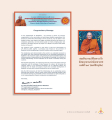
Congratulatory Message for Wat Phra Dhammakaya's 55th Anniversary
Namo Buddhaya
সংঘনায়ক মহাস্থবির শ্রীরাম মহাথের
Sanghanayaka Tharmadhipati Professor Banasree Mahathero
Sanghanayaka (Supreme Patriarch)
Bangladesh Bouddha Bhikkhu Mahasabha
(Supreme Sangha Mahaniya
As the Sanghanayaka of Bangladesh, I congratulate Wat Phra Dhammakaya on its 55th Anniversary. This day reflects the Buddha’s wisdom, promoting compassion and peace among all beings. The event on Febr
43
Understanding the Noble Eightfold Path
Noble Eightfold Path is the most auspicious of all the virtuous teachings of the Lord Buddha.
4. A Wish-fulfilling Jewel: It can be compared to a wish-fulfilling jewel of eight facets.
5. The Chariot
The Noble Eightfold Path is central to Buddha's teachings, likened to a wish-fulfilling jewel. It consists of eight components: Right View, Right Intention, Right Speech, Right Action, Right Livelihoo
45
The Buddha's Teachings on Right Livelihood and Moral Conduct
the monk's equivalent of Right Livelihood, by avoiding such evils as fortune telling, sacrifices or interpreting dreams, because these are all 'low arts'[tiracchānavijjā]. The Buddha even prohibited m
This text discusses the Buddha's teachings on Right Livelihood, emphasizing the avoidance of 'low arts' such as fortune telling and the prohibition of harmful trades for monks and laypeople. In partic
73
Understanding Types of Suffering in Buddhism
parideva dukkha
The Buddha characterized this form of suffering as that which produces tears of anguish whenever we are unable to give up our attachment to something. Again the cause might be the dece
This text delves into the different forms of suffering defined by the Buddha. It describes 'parideva dukkha' as the anguish leading to tears due to attachment loss, primarily affecting those grieving
102
Overcoming Craving through the Noble Eightfold Path
[phottabhba-vitaka] and thought-conception concerning of the mental objects [dhamma-vitaka].
Moreover, the discursive thought [vicāra] concerning our sensual objects arising from the aforementioned se
This text explores how discursive thoughts about sensory objects lead to attachment and suffering. Each of the six senses contributes to craving, necessitating practitioners to overcome these attachme
105
Rediscovery of the Dhammakāya Tradition
mentaries for most people to understand. The knowledge of Dhammakāya is said to have diminished and eventually for some unknown reason, disappeared from Buddhism approximately 500 years after the Pari
The Dhammakāya tradition, once diminished in Buddhism, was revitalized by Luang Phaw Wat Paknam who dedicated his life to its teachings. His outreach efforts led to the tradition being acknowledged in
113
Understanding the Dhamma Body and Its Significance
Dhamma Body, thereby make themselves invulnerable to
the action of defilements. In the past we might have been
unable to give up unwholesome behaviours (such as drink-
ing alcohol) in spite of knowing
The Dhamma Body, or Dhammakāya, represents the essence of Buddhism, highlighting the journey towards enlightenment. By attaining the Dhamma Body, individuals can free themselves from defilements such
114
The Path to Nirvana: Understanding the Dhammakāya
with which his mind had been engrained for countless lifetimes polluting his thoughts, speech and actions — which had led to retribution and leading to his continuing rebirth in the cycle of existence
This text discusses the purification of the mind through the teachings of the Buddha, emphasizing the importance of the Dhammakāya Arahat Body and the attainment of enlightenment. The Pathama Magga re
173
The Wholesome Deeds of the Brahmin
Once there was a brahmin who noticed that as the monks stopped at a certain place to robe themselves before entering the town for alms, the hems of their robes would always become wet from the dew on
Once there was a brahmin who noticed that as the monks stopped at a certain place to robe themselves before entering the town for alms, the hems of their robes would always become wet from the dew on