

E-V : ค้นหาหนังสือธรรมะ หน้า 81 / 138
หน้าหนังสือทั้งหมด
78
Understanding Dhammakāya in Early Theravādin Context
The research approach employed in the present study is intended as a more direct, analytical and inclusive one than previous approaches to this question. It is more direct in that it set off by docume
This study analyzes the term dhammakāya through close readings of Pali canonical passages, revealing that it relates not only to the Buddha but also to other noble figures like Paccakabuddhas and disc
79
Understanding Dhammakāya: A Noble Identity
As a noun, the term refers to the new identity of a noble person once he/she is transubstantiated either from the worldly plane to a supramundane plane or from a lower transcendent state to a higher.
The term Dhammakāya refers to the new identity of a noble person following transubstantiation, highlighting different levels of realization. It embodies the reality spiritually identified with the Bud
81
Understanding Dhammikāya in Buddhist Philosophy
Dhammapāla, like Buddhaghosa, employs the term dhammikāya
mostly as a noun, and relates it either with the Buddha’s mental
qualities and purity,134 with the Enlightenment either of the Buddha135
or hi
Dhammapāla discusses dhammikāya, relating it to the Buddha's mental qualities and Enlightenment. This term connects the Buddha's teachings and truths, illustrating his purity and extraordinary qualiti
84
Bibliography of Buddhist Studies
Bibliography
Dutt, Nalinaksha. Mahayana Buddhism. Delhi: Motilal Banarsidass, 1978.
Geiger, Wilhelm. “Dhamma and Brahman.” Zeitschrift flour buddhismus (1921): 73-83.
Gombrich, Richard. “The Buddha’s
This bibliography encompasses significant scholarly works in Buddhist studies, offering insights into various aspects such as the early Buddhist philosophy, the concept of Dharmakāya, and teachings of
87
Buddhist Manuscripts in China: Theravāda Buddhism in Sipsong Panna
Buddhist Manuscripts in China: A Case Study of Theravāda Buddhist Manuscripts in Sipsong Panna (Xishuangbanna, Yunnan Province, PRC)
Joe Zhou Ya
China, like many other countries in the world, is a c
This article delves into the rich tapestry of Buddhist culture in China, specifically focusing on the Theravāda Buddhism of the Dai people in Sipsong Panna, Yunnan Province. Buddhism's introduction to
88
Overview of Theravāda Buddhist Manuscripts in China
I will give a brief overview of the manuscripts that have been
discovered and catalogued, an explanation of some current research
projects, and I will discuss some of the problems that threaten
China'
This document provides an overview of Theravāda Buddhist manuscripts found in China, particularly in Yunnan Province. It discusses the significance of these manuscripts within the Dai community and hi
92
The Role of Sa-Paper in Buddhist Manuscripts
are also certain exceptions to this. For example, Buddhist scriptures that are chanted daily are always copied on sa-paper manuscript for the convenience of page turning and reading. Secular literatur
Sa-paper, made by local artisans, serves as a practical alternative for copying both Buddhist and secular texts in Sipsong Panna. Although less symbolic than palm leaves, sa-paper's ease of use and du
100
The Dhammakāya Verse: A Lan Na Thai Manuscript
The Dhammakāya Verse:
a Lan Na Thai manuscript
Kitchai Urkasem
This article is a report on research undertaken with the support of the 60th Dhamma chai Education Foundation (DEF) on a palm leaf manu
This article discusses research supported by the 60th Dhamma chai Education Foundation on a palm leaf manuscript titled Dhamma kāya from northern Thailand's Lan Na region. Undated, it is believed to h
103
The Historical Significance of Dhammakāya Verse in Thai Buddhism
Although there is no date on the manuscript, the dhammakāya verse has been known in the Lan Na regions for many centuries. It also appears on a 16th century stone inscription unearthed at the site of
The dhammakāya verse has been recognized in the Lan Na regions for centuries, with historical inscriptions confirming its existence dating back to the 16th century, specifically at Wat Tham Suea in Ph
114
การบรรลุของพระพุทธเจ้าและอรรถธรรม
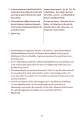
ญ๊ษัททําสําทัดะสา adigatạ: that the Lord attained. Imam dhammakāyăm buddharakkhaṇam: the body of Dhamma (dhammakāya) is the property (lakhana) of the Lord Buddha. Yogāvacarapputanna: the practitioners
ในเนื้อหานี้กล่าวถึงการบรรลุของพระเจ้าพุทธเจ้าและการปฏิบัติธรรมอย่างจริงจังเพื่อนำไปสู่การเข้าถึงนิพพาน โดยมีการเน้นถึงความสำคัญของการทบทวนและสวดบทสวดเพื่อกราบไหว้พระ. พุทธศาสนิกชนถูกกระตุ้นให้ถือปฏิบ
121
The Influence of An Shigao on Mindfulness Breathing Meditation in Eastern Han China
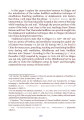
In this paper I explore the connections between An Shigao and the introduction of the Indian Buddhist meditation technique of mindfulness breathing meditation, or ānāpānasmṛti, into Eastern Han China.
This paper examines An Shigao's role in introducing the Indian mindfulness breathing meditation technique, ānāpānasmṛti, into Eastern Han China. The phrase「息中具有四大。 而心在中」suggests that the mind should f
125
Meditation Techniques from An Shigao's Teachings
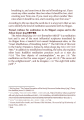
breathing in, and count two at the end of breathing out. If you
count any other number than two when it should be two, start
counting over from one. If you count any other number than
nine when it sho
This text delves into meditation practices from An Shigao’s works, particularly highlighting the Anban shouyi jing, a crucial scripture translated from Sanskrit. The sutra emphasizes mindfulness of br
126
An Shigao's Influence on Anban Sutras
From Sengyou’s CSZJJ, we learn that there are two Anban[shouyi] jing sutras which were translated by An Shigao:37
安般守意經一卷 安錄云:『小安般經』。(CSZJJ p.5c 23: “corresponding to a Smaller Anban jing”
大安般經一卷(CSZJ
This content examines An Shigao's translations of Anban sutras, highlighting the distinctions between the Present Da Anban shouyi jing and the Kongo-ji Anban shouyi jing. The text discusses the integr
130
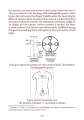
Understanding the Dantian and Its Location
the dantian is located around two or three inches below the navel. 53
This is in contrast to the teachings of PhraMongkolthepmuni, which
locates the centre point two finger breadths above the navel. D
The dantian is primarily recognized as located about two to three inches below the navel, differing from PhraMongkolthepmuni's teachings which suggest it lies two finger breadths above. While the loca
135
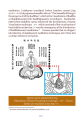
Buddhist Influence on Daoist Visualization Techniques
meditation. Lokakṣema translated Foshou banzhou sanmei jing 佛說般若三昧經 Pratyutpanna Samadhi-sūtra or “The Samadhi of Being in the presence of all the Buddhas”, which is the Visualization of Buddha or Bud
This text discusses the translation of Buddhist sutras like the Pratyutpanna Samadhi-sūtra and their influence on Daoist visualization techniques. It highlights how practices such as Buddhānusmṛti and
138
Exploring Chinese Philosophical Texts and Their Influence
Kohn, Livia, and Yoshinobu Sakade. Taoist Meditation and Longevity Techniques. Center for Chinese Studies, University of Michigan, 1989.
Mair, Victor H. “What Is Geyi, After All?” In Philosophy and Re
This collection examines various texts that shed light on the development of Chinese philosophical thought and literary traditions. Works range from Livia Kohn's exploration of Taoist meditation pract
139
Buddhist Texts and Historical Studies
The SAT Daizōkyō Text Database Committee. “出三藏記集 (No. 2145 (僧祐提)) in Vol. 55.” Taishō Shinshū Daizōkyō (大正新修大藏經), March 17, 1998. http://21dzk.l.u-tokyo.ac.jp/SAT/ddb-sat2.php?mode=detail&useid=2145,_
This collection includes significant Buddhist texts and studies, such as the Mahāyāna Buddhism foundations by Paul Williams and insights into early Chinese Buddhism by Erik Zürcher. Scholarly works di
55
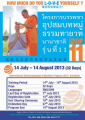
International Dhammadayada Ordination Program 2013
HOW MUCH DO YOU L-O-V-E YOURSELF ?
看您有多爱自己?
โครงการบรรพชาอุปสมบทหมู่ธรรมทายาทนานาชาติ IDOP รุ่นที่ 11
国际佛法新传者短期出家活动
14 July – 14 August 2013 (32 Days)
International Dhammadayada Ordination Program 201
The International Dhammadayada Ordination Program (IDOP) offers a unique opportunity for individuals to experience monastic life. Scheduled from July 14 to August 14, 2013, this 32-day program welcome
75
การสร้างความดีและบุญในการเข้าวัด
"เมื่อเราเข้าวัด ก็มีมุ่งหวังอย่างเดียวคือเพื่อสร้างความดีให้มาก ๆ มาเอาบุญนี้ตนเองมาเพื่อที่จะทำประโยชน์ให้แก้ตัวเองแท้ ๆ will then just think that we have to do the best in life because we get a lot
บทความนี้กล่าวถึงความสำคัญของการเข้าวัดเพื่อสร้างความดีและบุญ เน้นความมุ่งหวังในการทำบุญเพื่อพัฒนาตนเองให้ดีขึ้น โดยความเชื่อว่าการทำดีจะนำไปสู่โอกาสที่ดีในชีวิตและช่วยให้เราสามารถทำประโยชน์ให้กับผู้อ

32
โครงการบรรพชาอุปสมบทมงคล ๑๐๐,๐๐๐ รูป
The banner text reads:
"โครงการบรรพชาอุปสมบทหมู่ ๑๐๐,๐๐๐ รูป ทุกบ้านหัวไทย ศรีสะเกษ (นาน้ำพรรษา)
วันที่ ๑๓ กรกฎาคม พ.ศ. ๒๕๖๙ ณ วัดพระธาตุธรรมกาย จ.ปทุมธานี
Buddhist Lent Session, Mass Ordination of 1
โครงการบรรพชาอุปสมบทหมู่ ๑๐๐,๐๐๐ รูป จัดขึ้นในวันที่ ๑๓ กรกฎาคม พ.ศ. ๒๕๖๙ ณ วัดพระธาตุธรรมกาย จังหวัดปทุมธานี เป็นโครงการที่มีวัตถุประสงค์เพื่อส่งเสริมกิจกรรมการบวชที่เป็นมงคล และเป็นการอนุรักษ์วัฒนธร