

F : ค้นหาหนังสือธรรมะ หน้า 171 / 300
หน้าหนังสือทั้งหมด
32
Dhamma-kāya in the Pali Canon
…‘Dhamma-kāya’ in the ‘Pali Canon’?
The term dhamma-kāya/dharmakāya appears in Buddhist literature of different schools. Previous scholars have done excellent work on interesting aspects of studies reg…
…ming to provide a comprehensive analysis that has been overlooked in previous studies. While many references have been made, significant aspects remain unexplored, warranting a closer examination of it…
33
Reinterpreting Dhammarāya in the Pali Canon
Most of them refer only to the Aggañña-sutta passage, 4 missing out the three Apadāna references. 5 The rea…
This paper examines the overlooked references to dhammarāya in the Pali canon, emphasizing a context not previously presented. It critique…
34
Understanding Dhammakāya in Early Buddhist Thought
II. The Different Approach
A fairly established academic understanding has settled regarding the term dhammakāy…
… It is established through several canonical passages that equate the Buddha with dhamma. Notable references include the Aggāṇa-sutta and Mahāparinibbāna-sutta, emphasizing that the dhamma becomes the …
37
Exploring the Concept of Dhammakāya in the Aggañña-sutta
IV. Reference 1: Dhammakāya as the Tathāgata’s Designation
The first Pali reference to the term dhammakāya …
This text discusses the term 'dhammakāya' as referenced in the Aggañña-sutta, emphasizing its importance in defining an heir of dhamma and the Tathā…
40
Understanding Dhammakāya in Aṅgāṇā-sutta
In brief, contemporary academics refer to the term dhammakāya in the Aṅgāṇā-sutta either as a noun or an adj…
… a noun and an adjective. As a noun, it denotes the Buddha’s teachings, while as an adjective, it refers to the nature of the Tathāgata. Traditional Pāli commentators like Buddhaghosha and Dhammapala d…
41
Understanding Dhammakāya: A Scholarly Interpretation
Points to Consider
It may be observed that the difference in previous scholarly interpretations of the term dhammakāya in this passage mainly pertains…
This text delves into scholarly interpretations of the term 'dhammakāya', emphasizing the need for a nuanced understanding of 'dhamma' as both a reali…
42
Saddhā: The Criterion of Being the Tathāgata's Son
Saddhā: Criterion of being the Tathāgata's Son
The first point to be looked at is the criterion of being the Buddha’s ‘t…
This text discusses the criterion of being the Tathāgata's son, emphasizing the irremovable confidence (saddhā) in the Buddha. It define…
43
Understanding the Noble Discipleship in Buddhism
Vin.II.192, A.IV.186, 210, 213
Just as a piece of clean cloth that is deprived of dirt would well-absorb the dye, the pure and clear eye of dhamma (d…
The text discusses the qualities of noble disciples in Buddhism, emphasizing the importance of clear perception of dhamma and the eradi…
44
Qualities of a Stream-Attainer in Buddhism
mentioned in the canon.40
The title ‘son of the Blessed one’ suggests that, through the
Buddha, the person was (re)born to the same plane (bhūm…
This text delves into the characteristics of a Stream-attainer, identified as a noble disciple who is reborn to a transcendental plane through t…
45
Understanding Dhamma and Spiritual Realization
This corresponds to the set of four activities41 belonging to a Stream-attainer (sotāpattiyānga) which brings about other sets of …
This content discusses the process of spiritual attainment through dhamma, emphasizing four key activities that lead to the emergence of …
46
Buddhism and the Concept of Nirvāṇa
**43** This is, perhaps, as Eliade observes, ‘for the Buddha, one can be ‘saved’ only by attaining nirvāṇa - that is, by going beyond the plane of …
Eliade suggests that for the Buddha, salvation comes through attaining nirvāṇa, transcending the mundane aspects of human …
47
Implications of Parallel Descriptions of Monks and Brahmins
Implications of Parallel Descriptions of Monks and Brahmins
As Gombrich points out, the passage in question is comp…
The text delves into how Gombrich compares the descriptions of Brahmins and Monks, emphasizing the dual interpretations of the term 'brahma-' as both the masculin…
48
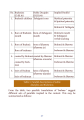
Brahmins and Noble Disciples: A Comparative Analysis
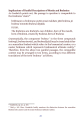
… Tathägata's sons | Mythical paternity & Spiritual paternity
| | | Brahma & Tathägata
2. | Born of Brahma's mouth | Born of Tathägata's mouth | Brahma's mouth & Tathägata's verbal teaching
3. | Born…
…ing their similarities in mythical and spiritual parental origins. It details how both are seen as offsprings of divine origins—Brahma for Brahmins and Tathägata for Noble Disciples. Furthermore, the d…
49
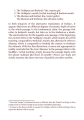
The Tathāgata and Brahmā: A Semantic Analysis
…a and Brahmā, the creator god; or
The dhamma and Brahman, the ultimate reality.
In both instances of the alternative translations of brahma-, it
appears that there are different degrees of semantic de…
…arallel between verbal teachings and creation concepts. The discussion extends to how 'dhamma' is referred to in Buddhist and Brahmanical contexts, emphasizing the importance of understanding these dis…
50
Understanding the Connotation of Dhamma in Relation to Brahma
In the case that ‘brahma-’ refers to the masculine ‘Brahma’
In case of the term ‘brahma-’ in the three compounds50 being
translate…
In this text, the term 'brahma-' is analyzed in the context of its translation as the masculine 'Brahma.' It discusses how the comparison between the Tathāgata an…
52
Understanding the Noble Eightfold Path and Threefold Path in Buddhism
[Right concentration, again, becomes the basis of right views, right aspirations, and other steps of the noble eightfold path, which is now experienc…
…errelationship between Right Concentration, Right Views, and Right Aspirations as pivotal elements of the Noble Eightfold Path leading to liberation. It discusses the spiral progression toward higher l…
55
Implications of Dhamma and Brahma in Buddhist Teachings
While a conclusion is proposed here to some extent, it may be useful to examine further implications from the parallel usage of the term 'dhamma' and 'brahma' elsewhe…
เนื้อหานี้สำรวจการใช้คำว่า 'ดัมมะ' และ 'บราเหมะ' ในวรรณกรรมพุทธศาสนา และการตีความความหมายที่เชื่อมโยงกันของทั้งสองคำ เป็นการศึกษาความสำคัญของการใช้คำที่ขนานกัน ซึ่งสะท้อนถึงสถานะความบริสุทธิ์สูงสุดที่
56
Understanding Brahmabhūta and the Path to Nibbāna
where all fetters are unrooted, or at least they signify the ‘best’ state.
The same may be said for the paral…
The text discusses how 'brahmabhūta' refers to the state of having eradicated all defilements, allowing one to experience ultimate peace and…
58
Understanding the Concept of Body and Collection in Dhamma
Functionally, however, both terms seem to imply a different relationship between individual members a…
This text analyzes the distinctions between the terms 'body' and 'collection' within the framework of Dhamma, particularly focusing on functional dependence. It argues that while a 'body' ma…
60
Understanding Dhammakāya: The Essence of Transcendental Dhamma
Arhatship (arahattamagga).86 Therefore, the particular path is not a mere ‘collective title’ of the path-constituents but the ‘essentia…
This text discusses the concept of Arhatship and the definition of Dhammakāya in the context of Buddhist philosophy. It argues that th…