

LÀ : ค้นหาหนังสือธรรมะ หน้า 4 / 174
หน้าหนังสือทั้งหมด
121
Luang Phaw Dhammajayo's Campaign Against Alcohol and Gambling
Luang Phaw Dhammajayo's "no alcohol no tobacco" project campaigns against the use of drugs and bad temptations; which are causes of unhappiness within the family, society and country. The campaigns ma
Luang Phaw Dhammajayo's 'no alcohol no tobacco' project addresses the social issues stemming from drug use and gambling that adversely affect families and society in Thailand. The campaign inspired a
185
Universal Peace Award by WBSY
Universal Peace Award
World Buddhist Sangha Youth (WBSY) is a world class Buddhist organisation. The organisation has many members who are Buddhists from every Buddhist sect; Theravada, Mahayana and
World Buddhist Sangha Youth (WBSY) is a premier Buddhist organization comprised of members from various traditions including Theravada, Mahayana, and Vajrayana. They acknowledge the significant dedica
9
Dhamma for Laypersons: The Vital Heart of a Stable Family
The following is the extracted text from the image:
---
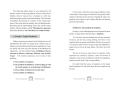
The following subject matter is very important for all families; whoever wants to get married, whoever wants to have children, whoever wants t
Understanding family dynamics is essential for those looking to marry or raise children. This text emphasizes the importance of Dhamma for Laypersons, outlining four critical elements: truthfulness, s

25
Ceremonial Lamp Lighting Event
People are participating in a ceremonial event, possibly a lamp lighting or a religious ritual, with a group of individuals lighting a lamp or flame. The scene is set at night, with a large audience o
This text describes a ceremonial lamp lighting event held at night, where a large crowd participates in a religious or cultural ritual. Individuals light lamps or flames, creating a star-like effect a
18
Understanding Dhammakāya and Theravāda Manuscripts
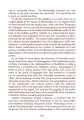
and is ‘spiritually reborn’. The dhammakāya becomes her new identity as the milk nourishes her spiritually. It is something she is given as a verbal teaching.
To add the material from the Apadānas is
This text delves into the doctrine of dhammakāya, representing a new spiritual identity that arises from teachings, akin to nourishment from milk. It connects the concepts found in the Agañña-sutta, i
103
The Historical Significance of Dhammakāya Verse in Thai Buddhism
Although there is no date on the manuscript, the dhammakāya verse has been known in the Lan Na regions for many centuries. It also appears on a 16th century stone inscription unearthed at the site of
The dhammakāya verse has been recognized in the Lan Na regions for centuries, with historical inscriptions confirming its existence dating back to the 16th century, specifically at Wat Tham Suea in Ph
104
Historical Significance of the Lan Na Palm-Leaf Manuscript
Bangkok period.
The Lan Na palm-leaf manuscript itself cannot provide an accurate date for the composition of the verse because palm-leaf manuscripts are fragile, and rarely survive more than a centur
The Lan Na palm-leaf manuscript's dating is uncertain due to its fragility, but it has been recited by devout Buddhists since the 16th century, alongside evidence from the Phitsanulok inscription and
80
Understanding Vyavala in Context of Largesse
78
10 To keep the robes down.
11 Vyavala. This became almost a technical term in connexion with largesse.
It is literally 'hindered'; but when the things to be given were too limited as
compar
This text explores the term 'Vyavala' which became a technical term associated with the concept of largesse. It reflects on how limited resources lead to some applicants being overlooked, in a practic
56
The Miraculous Establishment of Dhammakaya Temple
pinnacle of success as we know today. Chayaboon and Padej were the driving force behind many of Khun Yai's success.
After the ordination of Luang Por Dhammajayo, Khun Yai felt the time was right for
The establishment of the Dhammakaya Temple is a testament to Khun Yai's vision and determination. With only 3,200 Baht, she believed in the power of merit and, on Lady Prayad's birthday, managed to ac
133
Understanding the Five Hindrances in Meditation
Five Hindrances
Hindrances are negative mental states that impede success in meditation. They consist of:
Sensual Desire – craving for pleasure of the five senses: sight, sound, smell, taste and tou
The Five Hindrances are crucial negative mental states that can obstruct meditation success. They include Sensual Desire, which refers to craving for sensory pleasures that distract the mind. Ill will
163
Understanding Pali and Parami in Buddhism
Pali: an ancient language used in India, now no longer an active language. The original Buddhist scriptures were written in Pali. Pali texts are used by the Theravada school of Buddhism.
Parami: a Pa
Pali is an ancient language from India that is no longer actively spoken but holds significant historical importance as the original language of Buddhist scriptures. These scriptures serve as a core e
20
Understanding Boon, Kilesa, and Mara in Theravada Buddhism
Suzanne Jeffrey
We start to talk about general stuff like the weather and his health and how Jon and I are enjoying the Wat experience. I decide to start the questions, believe it or not, and so I ha
In this excerpt, Suzanne Jeffrey shares her dialogue with a Theravada monk, discussing important Buddhist concepts such as boon, kilesa, and Mara. The monk provides insight into the 'Treasure Store Di
41
Understanding the Nature of the Mind
Suzanne Jeffrey
body. And, it resides only at the center of a living human body. If it leaves the body, the
body will become a corpse and the mind, and the more subtle form and the more subtle
form e
This text delves into the nature of the mind, explaining its pure and clear state when unclouded by emotions like love and anger. It describes the mind's role as the master of the body, directing acti
104
Understanding the Mind and Human Existence
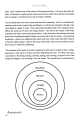
Luang Por then draws the circle within the circle that follows, regarding languages…
“As you can see, the language of the mind is far greater than any other language. And, because of this, the Buddha
Luang Por discusses the concept of the mind as a profound element that transcends language limitations. He explains how the human body, consisting of the four elements—earth, water, fire, and wind—is
111
The Path to Self-Development and Ethical Living
Suzanne Jeffrey
tions, although in the beginning of our life, when we are developing our habits, our six
directions give us total input - in other words, we are in-taking all the information that
wil
This text discusses the importance of self-development through six directions, emphasizing the role of ethical living and the teachings of Buddha in understanding one's mind and actions. It highlights
59
Publications and Media of the Dhammakaya Foundation
PUBLICATIONS AND MEDIA
As the demand for teachings on the culture for inner peace becomes broader, the need for academic resources for study of the culture, especially media resources has become grea
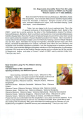
The Dhammakaya Foundation has recognized the growing demand for academic resources on inner peace culture. Committed to producing teaching materials including books and multivision presentations, they
4
Welcome Speech at the 4th General Conference of WBSY
Ven. Mugunuwela Anuruddha Thero From Sri Lanka
Secretary General of WBSY and Founder
Welcome speech on 11 DEC 2550(B.E.)
Most venerable Pra Athikarn Sanong Khatapumpyo, Mahathero, Abbot Wat Sangh
On December 11, 2550 B.E., Ven. Mugunuwela Anuruddha Thero delivered a warm welcome speech at the 4th General Conference of the World Buddhist Sangha Youth at Wat Sanghathan. He expressed gratitude to
74
The Power of Generosity and the Languages of Buddhism
The practice of generosity is the easiest one to perform, and the fruits of merit are the
quickest to materialize. The merit result from the practice of generosity is riches and
wealth to the one wh
The practice of generosity is vital in Buddhism, revealing that giving attracts wealth while selfishness repels it, backed by the Law of Karma. Pali and Sanskrit are essential Buddhist languages, with
16
The Virtuous Lay Disciple Dhammika
While residing at the Jefavana Monastery in Savatthi,
the Buddha spoke this verse, with reference to
Dhammika, a lay disciple.
Once there lived in Savatthi, a lay disciple by the
name of Dhammika, wh
While residing at the Jefavana Monastery, the Buddha spoke about Dhammika, a lay disciple from Savatthi known for his charity and virtuous life. He led five hundred virtuous followers and had seven so
54
The Story of Culasubhadda
4
The Story of Culasubhadda
While residing at the Jetavana monastery, the Buddha uttered Verse (5) of this chapter, with reference to Culasubhadda the daughter of Anathapindika.
Anathapindika and U
The story revolves around Culasubhadda, the daughter of Anathapindika, who faced challenges in her marriage due to her parents-in-law's non-Buddhist beliefs. Living in the house of Ugga's family, she