

example : ค้นหาหนังสือธรรมะ หน้า 13 / 26
หน้าหนังสือทั้งหมด
36
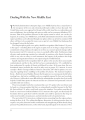
Dealing With the New Middle East
… this confrontational stance precludes the search for other ways to pursue U.S. interests. A recent example is Bush's warning to Bashar al-Assad in December 2007 that his patience was running out regarding S…
The Bush administration's policies have complicated the realities in the Middle East. A new approach is needed, prioritizing diplomacy and a clear understanding of U.S. limits in the region. Confronta
43
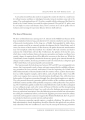
Reassessing U.S. Policy Toward Syria and Democracy in the Middle East
…nately of democratization both for countries where a path to democratization was visible, Egypt for example, and for others, such as Saudi Arabia, where it was difficult to even imagine where a process of tr…
This text discusses the need for a nuanced U.S. policy toward Syria, recognizing its limited ambitions while encouraging a shift away from its spoiler role in Lebanon and alignment with Iran. It furth
44
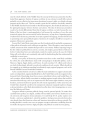
Challenges of Democracy Promotion in the Middle East
…estion of language, but also of tools used in promoting more open political regimes. Sanctions, for example, should have no part in a program of democracy promotion.
Second, the United States must make sure…
The text discusses the fluctuating concept of democracy promotion in the Middle East, highlighting the confusion between promoting democracy and regime overthrow. It emphasizes the need for the U.S. t
14
Advancements in Buddhist Studies through Collaboration
…as benefited largely in terms of
up to date knowledge on history, archaeology and anthropology.
For example, we became aware of the new discoveries and research
essays in the Early Buddhist Manuscript Projec…
This text appreciates the collaboration over the last ten and five years, particularly acknowledging the Social Research Institute of Chiang Mai University for the photographic duplication of Lan Na P
37
Exploring the Concept of Dhammakāya in the Aggañña-sutta
…s claimed in some scholarly works as being the sole appearance of dhammakāya in the Pali canon. For example, see Williams, op. cit., p. 284, note 5; Harrison, op. cit., p. 50.
18 The vocative ‘vāsetṭha’ in t…
This text discusses the term 'dhammakāya' as referenced in the Aggañña-sutta, emphasizing its importance in defining an heir of dhamma and the Tathāgata’s true son. The conversation between the Buddha
38
Understanding the Concept of Dhammakāya in Buddhist Thought
…f them interpret the first
component, i.e., dhamma, in the sense of ‘the Buddha’s teaching(s).’
For example, Dutt interprets the term as being a tappurisa compound
referring to a ‘collection of the Buddha’s …
In this passage, Vāsettha and Bhāradvāja discuss the unwavering confidence in the Tathāgata, stating that those deeply rooted in dhamma can claim to be heirs of dhamma. The term 'dhammakāya' and its i
46
Buddhism and the Concept of Nirvāṇa
…
**44** I. B. Horner, “Early Buddhist Dhamma,” Artibus Asiae 11, no. 1 (1948), p. 119.
**45** For example, see M.II.25-29, S.I.221-222, Ap.II.544.
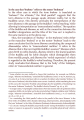
Eliade suggests that for the Buddha, salvation comes through attaining nirvāṇa, transcending the mundane aspects of human life and entering an unconditioned state. This transformation entails a metaph
51
The Transformative Power of the Noble Eightfold Path in Buddhism
…ve suggested, the 'path' may be developed to higher levels until the point of final liberation. For example, Govinda suggests a 'spiral-like' progression of the noble eightfold path56
This text delves into the concept of transformation in Buddhist philosophy, specifically through the Noble Eightfold Path. It highlights how this path aids in the eradication of defilements, enabling
54
Understanding Dhamma and Brahman in Buddhism
…endental realities’ in general.
63 Some scholars are more inclined to choose this translation. For example, see Wilhelm Geiger, "Dhamma Und Brahman," Zeitschrift für buddhismus (1921): 73-83, 79, Harrison, …
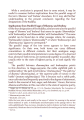
This text clarifies that the term 'brahma-' can refer to either the masculine 'Brahmā' or the neuter 'brahman,' ultimately leading to the view that dhamma signifies transcendental realities. It sugges
55
Implications of Dhamma and Brahma in Buddhist Teachings
…dhammabhūta' with 'brahmabhūta.'67 The same parallel can be found also in other passages where, for example, 'brahmacakka' replaces 'dhammacakka'68 or where 'brahmacariyā' and 'dhammacariyā' appear to corres…
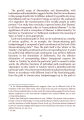
เนื้อหานี้สำรวจการใช้คำว่า 'ดัมมะ' และ 'บราเหมะ' ในวรรณกรรมพุทธศาสนา และการตีความความหมายที่เชื่อมโยงกันของทั้งสองคำ เป็นการศึกษาความสำคัญของการใช้คำที่ขนานกัน ซึ่งสะท้อนถึงสถานะความบริสุทธิ์สูงสุดที่
59
Understanding Dhamma and Nibbāna
…te.
Each transcendental path or fruit can be understood as a totality of various qualities. As an example, the Stream-attaining path (sotāpattimagga) is composed of path-constituents at the level of the St…
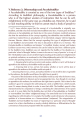
This study delves into the concepts of dhamma and Nibbāna, positing that dhamma refers to transcendental dhamma, which serves as a transformer and defilement eradicator. It explores how the realizatio
63
Understanding Paccekabuddhas in Buddhist Philosophy
…ther ‘enlightened beings.’ The same holds true for his statement regarding any noble disciples. For example, the Buddha would call anyone who possesses qualities of a Stream-attainer as a ‘Stream-attainer’ (…
This text discusses the concept of Paccekabuddhas, individuals of high wisdom who achieve self-enlightenment but lack the ability to teach. It explores scholarly arguments about the pre-Buddhist origi
64
Understanding Paccekabuddhas in Buddhism
…containing instructions on how to practise oneself in order to gain spiritual realisation. See, for example, Ap.I.7-14.
92 Although the Pāli word ‘khaggavisāṇa’ could mean either the ‘rhinoceros’s horn’ or…
The text discusses the distinct nature of Paccekabuddhas, who can guide individuals toward enlightenment but do not teach the masses like Buddhas. Their teachings emphasize solitude and are succinct,
69
The Superiority of Dhamma over Worldly Existence
…ects of dhammakāya precisely, at least some initial implications can be appreciated right away. For example, its quality as being blameless implies its completeness or perfection, and its quality as being pl…
ในบทความนี้เสนอการเปรียบเทียบระหว่างความเป็นแม่ในโลกกับการเป็นบิดาทางจิตวิญญาณ โดยเน้นที่การดูแลร่างกายทางกายภาพและร่างกายทางจิตวิญญาณ รวมถึงประสิทธิภาพในการบรรเทาความกระหายของนมธรรมดาและนมที่เป็น dha
87
Buddhist Manuscripts in China: Theravāda Buddhism in Sipsong Panna
…kly became a part of Chinese culture. Today, the influence of Buddhism can be seen in politics (for example, Buddhist participation in China’s political consultation system), the economy (such as the rush of…
This article delves into the rich tapestry of Buddhist culture in China, specifically focusing on the Theravāda Buddhism of the Dai people in Sipsong Panna, Yunnan Province. Buddhism's introduction to
94
Buddhist Manuscript Formats in Dai Region
… O Jin Han (笨人吃笨). The flipping-folded sa-paper manuscripts contain between 5 to 11 lines per page. Examples of such manuscripts include Volume 15 Tam Xian Meng Zong Bu (召召 enthusiast and) (reproduced in Th…
…a Wexiandala represents a key Buddhist text promoting dāna, or generosity, as the highest merit. An example is a palm-leaf scripture collected by my Research Center in a 5-line format, showcasing varied manu…
95
Dai Buddhist Manuscripts in Yunnan's Dehong Prefecture
…f the cross-border flow of Buddhist monks, material culture, and concepts between these regions. An example of this geographical flow was illustrated during a survey of the Jingzhen Buddhist Temple in Mengha…
This text discusses the unique tradition of Buddhist manuscripts among the Dai people in Dehong Autonomous Prefecture of Yunnan, where various types of manuscripts are produced. Most texts utilize sa-
96
The Imminent Extinction of Palm-Leaf Manuscripts in Sipsong Panna
…ally, the art of producing finished palm-leaves ready for inscription and binding is dying out. For example, when the Author surveyed the Jingzhen Temple, the biggest Buddhist temple in Menghai, in April of …
This text discusses the worrying decline of palm-leaf manuscripts in Sipsong Panna, where Buddhist manuscript culture is rich but facing imminent extinction. Key reasons include the autonomous nature
101
Understanding the Pāli Verses and Buddhist Doctrine
…ents of the Dhamma body of the Buddha with particular qualities or forms of wisdom of a Buddha. For example, the ear of the dharmakāya is identified as the divine ear (dibbasota). The eyes of the Dharmkaya a…
The manuscript presents Pāli verses and commentary in Tai Yuan, summarizing Buddhist doctrines about the Buddha's physical body and wisdom. It includes thirty stanzas highlighting qualities like divin
124
Meditation Practices Introduced by An Shigao in Eastern Han China
…g meditation." Many of An Shigao's translations were about the "counting in breath" meditation, for example the Anban shouyi jing; the Daodi jing (T607); Yin-chi ru jing (T603); the large and small of Shi’er…
An Shigao, notable for his translations, played a key role in introducing meditation practices to Eastern Han China (25-220 CE). The prevalent form during this period was breathing meditation, particu