

non-Buddhist : ค้นหาหนังสือธรรมะ หน้า 3 / 82
หน้าหนังสือทั้งหมด
44
Daily Life of Buddhists Meditation
Daily Life of Buddhists Meditation
Monica
a sermon, meditate, and make merits. Also, on
special days in Buddhism such as Visakha Puja Day,
Asarnha Puja Day, Buddhist Lent Day, the end of
Buddhist Lent
In Buddhism, monks strive to liberate themselves from suffering and attain Nirvana, similar to the Lord Buddha. Their daily routine includes morning prayers and meditation, going on alms rounds, clean
76
Luang Phaw Dhammajayo: A Beacon of Peace and Buddhism
About Luang Phaw Dhammajayo
In the pursuit of his perfection, Luang Phaw Dhammajayo has
devoted himselfovermany decadestothepracticeofmeditation, Dhamma
study, and the promotion of world peace through
Luang Phaw Dhammajayo has spent decades dedicated to meditation and Dhamma study, promoting world peace through inner peace. His teachings focus on attaining the Dhammakaya, the true nature of peace a
7
Exploring Buddhist Meditation and Its Significance
Preface
Not a month goes by these days without another important article being published on some newly uncovered Buddhist text, and among the discoveries are ancient materials about Buddhist meditati
This preface discusses the ongoing discoveries in Buddhist meditation texts and the efforts of Venerable Phrakrupaladnayokwarawat (Sudhammo Bhikkhu) in promoting scholarly exploration. It emphasizes t
16
Launch of the Journal of the Dhammachai International Research Institute
Introduction
This collection of articles marks the launch of the Journal of the Dhammachai International Research Institute (JDIRI). The articles presented here indicate some of the perspectives on B
This collection of articles marks the launch of the JDIRI, showcasing perspectives on Early Buddhism and meditation studies. The journal aims to publish research on ancient manuscripts and esoteric pr
32
Dhamma-kāya in the Pali Canon
Dhamma-kāya in the Pali Canon¹
Chanida Jantrasrisalai
I. Why ‘Dhamma-kāya’ in the ‘Pali Canon’?
The term dhamma-kāya/dharmakāya appears in Buddhist literature of different schools. Previous scholars
The study investigates the term dhamma-kāya as presented in the Pali Canon, aiming to provide a comprehensive analysis that has been overlooked in previous studies. While many references have been mad
34
Understanding Dhammakāya in Early Buddhist Thought
II. The Different Approach
A fairly established academic understanding has settled regarding the term dhammakāya in the Pali canon, that it was used merely in the sense of the ‘Buddha’s teachings.’ In
The term 'dhammakāya' in the Pali canon is understood as representing the Buddha's teachings. It is established through several canonical passages that equate the Buddha with dhamma. Notable reference
91
Exploration of Theravāda Buddhist Manuscripts in Sipsong Panna
literature.9 It is notable that the Agama Sutras (阿含经) discovered in the Xishuangbanna region are incomplete. For example, the Hinayana Agama should have contained the Khuddaka Patha (小品), Dharma-phra
The Agama Sutras found in the Xishuangbanna region are notable for their incompleteness. The Hinayana Agama is expected to contain various texts that are partly missing. According to The Complete Coll
121
The Influence of An Shigao on Mindfulness Breathing Meditation in Eastern Han China
In this paper I explore the connections between An Shigao and the introduction of the Indian Buddhist meditation technique of mindfulness breathing meditation, or ānāpānasmṛti, into Eastern Han China.
This paper examines An Shigao's role in introducing the Indian mindfulness breathing meditation technique, ānāpānasmṛti, into Eastern Han China. The phrase「息中具有四大。 而心在中」suggests that the mind should f

156
A ‘New’ Early Chinese Buddhist Commentary
Zacchetti, Stefano. 2008 "A ‘New’ Early Chinese Buddhist Commentary: The Nature of the Da Anban Shouyi Jing (T 602) Reconsidered." Journal of the International Association of Buddhist Studies 31: 421-
This research article by Stefano Zacchetti delves into the nature of the Da Anban Shouyi Jing (T 602), reconsidering its significance in early Chinese Buddhist commentary. The study provides insights
63
Charumati Buddha Vihar and Buddhist Mission in Nepal
Charumati Buddha Vihar and resident of Charumati Buddhist mission Nepal / วัด จารุมาติวิหาร ประเทศเนปาล
๒๖. โโล่งวัดและใบประกาศเกียรติคุณ จาก Prof. Dr. Mitomo Kenyo / ค.ศ. มิโดเมะ เกนโญ พระมหาเกระระด
Charumati Buddha Vihar in Nepal is notable for its contributions to Buddhism and its recognition with various honors from esteemed Buddhist figures worldwide. This includes accolades from Prof. Dr. Mi
33
Exploring Buddhist Texts and Influence
Bernhard, Franz.
1970 "Gåndhārī and the Buddhist Mission in Central Asia." Ánjali: Papers on Indology and Buddhism: A Felicitation Volume Presented to Oliver Hector de Alwis Wijesekera on His Sixtieth
This collection of works explores the significant contributions to Buddhist scholarship, including analyses of the Gåndhārī texts, the investigation of the Därșanatika, and the characteristics of the
104
The Dhammakaya Tradition and Luang Phaw Wat Paknam
practice of the Middle Way until attaining levels of Buddhist
sainthood according to their potential. All the evidence that
is left by some Buddhist saints is their scriptural testimo-
nies, but some
The practice of the Middle Way leads to various levels of Buddhist sainthood according to individual potential. Luang Phaw Wat Paknam, the prominent monk who discovered the Dhammakaya Tradition, is re

66
สนทนาธรรมเกี่ยวกับนิพพาน
Q&A
สนทนาธรรมแบบสบาย ๆ
โดย : ดวงธรรม
ความหมายของนิพพาน
Q: What religion do you profess?
(คุณนับถือศาสนาอะไรครับ?)
A: Buddhism.
(ศาสนาพุทธครับ)
religlon (n) = ศาสนา
profess (v) = นับถือ
Q: Ohl Are you
Q&A สนทนาธรรมแบบสบาย ๆ โดย : ดวงธรรม ความหมายของนิพพาน Q: What religion do you profess? (คุณนับถือศาสนาอะไรครับ?) A: Buddhism. (ศาสนาพุทธครับ) religlon (n) = ศาสนา profess (v) = นับถือ Q: Ohl Are you

181
Understanding External and Internal Fools in Buddhism
1) External Fools include non-Buddhists. They are determined to demolish Buddhism, whether they are of other religious affiliations or not…
In Buddhism, External Fools are non-Buddhists who seek to distort and undermine Buddhist teachings, casting aspersions on monks and creating con…

29
Activities of the Dhammakaya Foundation
…since the establishment of the Foundation, its activities have attracted devotees both Buddhist and non-Buddhist alike, from Thailand and all over the world. Activities organized by the Dhammakaya Foundation incl…
…t fostering global peace. With over 25 years of history, these activities attract both Buddhist and non-Buddhist participants from around the world, highlighting the foundation's commitment to serving society and…

43
National Dhamma Quiz Contest
The text in the image is:
"National Dhamma Quiz Contest
The Dhamamkaya Foundation in co-operation with the International Buddhist Club have arranged a yearly peace and ethics education curriculum wh
The Dhamamkaya Foundation, with the International Buddhist Club, organizes a yearly peace and ethics education curriculum that features a quiz contest for schoolchildren, university students, and mili

69
Success of Moral Training Projects: Dhammadayada Program
ASE HISTORY OF THE SUCCESS OF MORAL TRAINING PROJECTS
The Dnammadayada (Dhamma Inheritors) Training Programme has been conducted for twenty-seven years since the beginning of the Dhammikaya Foundatio
The Dhammadayada Training Programme has operated for twenty-seven years, focusing on hands-on Buddhist practice for students. In 1996, the program was scientifically assessed, revealing that participa

130
Systematic Training Programme for Spreading Buddhism
The Systematic Training Programme for Spreading Buddhism began in 1999-2007, with a total of 71 classes completing the Programme. There have been 8.090 monks from 5.833 temples, from across the countr
The Systematic Training Programme for Spreading Buddhism, initiated from 1999 to 2007, has successfully trained 8,090 monks from 5,833 temples across Thailand, promoting the teachings of the Buddha. T
244
Understanding Buddhist Concepts: Nirvana and Absorptions
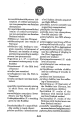
nevasāññāṇasāññāyatana (absorption of neither-perception-nor-non-perception: see formless absorptions) Nevasāññāsaññāyatanaabhūmi (realm of neither-perception- nor-non-perception: see formless Brahma
This text delves into various Buddhist concepts such as Nevasāññāṇasāññāyatana, the realm of neither-perception-nor-non-perception, Nibbāna, and other related terms. It discusses the Five Aggregates,
175
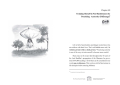
Training Oneself in Non-Recklessness by Practicing Austerity
Chapter 40
Training Oneself in Non-Recklessness by Practicing Austerity (Dhütanga) 4
Life is full of uncertainties and danger awaits those who are reckless with their lives. The Lord Buddha once sa
Chapter 40 emphasizes the significance of non-recklessness through the practice of austerity as taught by the Lord Buddha. It highlights that life is filled with uncertainties and that reckless behavi