

one-pointedness : ค้นหาหนังสือธรรมะ หน้า 44 / 135
หน้าหนังสือทั้งหมด
192
The Importance of Supporting the Sangha
be summed up in the following proverb: One rotten apple spoils
the whole barrel. If people think this way, they can harm
Buddhism unknowingly. This is certainly not the nature of a
Buddhist. Buddhists
The text emphasizes the importance of supporting the Sangha community and not generalizing negative perceptions from a few individuals. It highlights a situation where a layperson questioned the respe
197
The Supreme Wisdom of the Lord Buddha
Since we must seek refuge in our own wisdom in times of sorrow and happiness, we can appreciate that the Lord Buddha’s supreme wisdom (of how to lead one’s life) is indeed comparable to none. His pure
In times of sorrow and happiness, the wisdom of the Lord Buddha guides us on how to live right. His teachings illuminate the causes of life’s vicissitudes, emphasizing the Law of Kamma, where good or

200
Wisdom of the Lord Buddha in Facing Challenges
6) When the Lord Buddha faced an expert on debate, He used His wisdom to solve this problem. Each of His words possessed truth, correctness, and reason.
7) In one case, Ven. Moggallana,13 as the Lord
In facing challenges, the Lord Buddha exemplified wisdom, utilizing His understanding to confront experts and overcome obstacles. Ven. Moggallana demonstrated supernatural powers to subdue Nandopānand
202
The Significance of Donating Buddha Images
examine this so that we will not miss the opportunity to do so.
We should clearly understand the importance of contributing
a Buddha image so that we do not obstruct our grandparents
when they wish to
This text emphasizes the importance of donating Buddha images as a means of showing gratitude towards the Lord Buddha and contributing to spiritual merit. It discusses the concept of Bodhisattas, indi
17
Registration and Orientation at Yuwakalayanamitra Camp
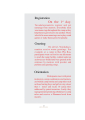
Registration
On the 1st day,
Yuwakalayanamitra register and get
nametags from mentors. Everybody must
wear name-tags throughout the camp as they
help them to get to know one another. Those
who fail to
At Yuwakalayanamitra camp, participants register and receive name-tags, essential for fostering connections. Warm greetings await them upon arrival, such as a 1-kilometer walk to the camp facility und
10
The Reality of the New Middle East
The Reality of the New Middle East
The first step toward the formulation of a new policy is to understand the realities of the new Middle East as it is now. The three clusters of countries — Iran–Ira
The new Middle East is defined by three country clusters: Iran–Iraq, Lebanon–Syria, and Palestine–Israel, intertwined with issues such as nuclear proliferation and sectarianism. The U.S. faces not jus
11
Iraq's Complex Reality: The Interwoven Challenges of State Failure and External Influences
albeit it is still inappropriate to talk about an axis. Iraq's problems, and possible solutions, are so closely intertwined with Iran that it is no longer possible to discuss solutions for Iraq withou
Iraq's current situation as a failed state is deeply intertwined with Iran's influence. The U.S. invasion has led to a power struggle, making it impossible for Iraq to function effectively. Political
23
Challenges in U.S. Policy Toward Palestinian Elections
Palestinian legislative elections to proceed credibly — but then led to an immediate American effort to overturn the result through any possible means.
The Bush administration’s short attention span f
The text discusses the complications surrounding the Palestinian legislative elections and the subsequent U.S. effort to undermine the democratic outcome, particularly emphasizing the Bush administrat
28
The New Middle East: Democracy vs. Stability
22 THE NEW MIDDLE EAST
few, limited in scope, carried out only when allowed by incumbent regimes, and dropped quickly when governments objected.
After September 11, President Bush openly repudiated th
This text discusses the shift in U.S. foreign policy in the Middle East following the September 11 attacks. President Bush's declaration of aligning American values of freedom and security contrasted
31
Political Dynamics and Sectarian Tensions in the Middle East
retrenchment into a more ideological posture by a movement that has sought, but has so far been denied, a legitimate political role.
The adoption and subsequent abandonment of the freedom agenda broug
The text discusses the complexities faced in promoting democracy in Arab nations, highlighting the influence of incumbent regimes resistant to political reform. It notes that, despite potential allies
41
Navigating the Complexities of U.S.-Middle East Relations
But it is impossible to turn back the clock to more propitious circumstances. The biggest tension—between integrating Hamas and denying the movement its proclaimed goal of destroying Israel—can only b
The text discusses the challenges of integrating Hamas while managing its actions against Israel. It stresses the importance of regional pressures and U.S. support for a unified Palestinian government

45
Analysis of Geopolitical Issues in the Middle East
Notes
1. See International Crisis Group report, Dealing With Iran’s Nuclear Program, November 2004.
2. See http://usinfo.state.gov/xarchives/display.html?p=texttrans-english&y=2007&m=April&x=200704181
This text discusses various reports and publications relevant to the geopolitical issues in the Middle East, with a specific focus on Iran's nuclear program, negotiations involving al-Qaddafi, and the

30
Nong Pa Fa Cave Manuscripts: A Historical Insight
The Nong Pa Fa Cave manuscripts are quite old and one of them dates back to 2112 BE (1569 CE), or 441 years, which is extremely rare for a palm-leaf manuscript. The oldest manuscript, however, is kept
The Nong Pa Fa Cave manuscripts are ancient, with one dating back to 2112 BE (1569 CE). The oldest, from 1520 CE, resides in Luang Prabang. These writings in a Lao variant of Dhamma script include a c
37
Exploring the Concept of Dhammakāya in the Aggañña-sutta
IV. Reference 1: Dhammakāya as the Tathāgata’s Designation
The first Pali reference to the term dhammakāya that is well known to all previous works is a passage in the Aggañña-sutta, wherein the term
This text discusses the term 'dhammakāya' as referenced in the Aggañña-sutta, emphasizing its importance in defining an heir of dhamma and the Tathāgata’s true son. The conversation between the Buddha
38
Understanding the Concept of Dhammakāya in Buddhist Thought
D.III.84
Vāsettha and Bhāradvāja, he whose confidence in the
Tathāgata is settled, rooted, established, solid, irremovable by
any ascetic or brahmin, any deva or Māra or Brahmā or anyone
in the world
In this passage, Vāsettha and Bhāradvāja discuss the unwavering confidence in the Tathāgata, stating that those deeply rooted in dhamma can claim to be heirs of dhamma. The term 'dhammakāya' and its i
39
Interpretations of Dhammakāya in Early Pāli Texts
Gombrich, while differently translating the term in this passage as a bahubbiha compound 'dhamma-bodied,' similarly interprets it as an indication that the Buddha's true import is due to 'his teaching
This text delves into various scholars' interpretations of the term 'dhammakāya' within the context of early Pāli suttas. Gombrich views it as 'dhamma-bodied,' emphasizing that the essence of the Budd
43
Understanding the Noble Discipleship in Buddhism
Vin.II.192, A.IV.186, 210, 213
Just as a piece of clean cloth that is deprived of dirt would well-absorb the dye, the pure and clear eye of dhamma (dhammacakku) arose to the man, on that current seat
The text discusses the qualities of noble disciples in Buddhism, emphasizing the importance of clear perception of dhamma and the eradication of doubts and fetters. It describes the transformation exp
46
Buddhism and the Concept of Nirvāṇa
**43** This is, perhaps, as Eliade observes, ‘for the Buddha, one can be ‘saved’ only by attaining nirvāṇa - that is, by going beyond the plane of profane human experience and re-establishing the plan
Eliade suggests that for the Buddha, salvation comes through attaining nirvāṇa, transcending the mundane aspects of human life and entering an unconditioned state. This transformation entails a metaph
50
Understanding the Connotation of Dhamma in Relation to Brahma
In the case that ‘brahma-’ refers to the masculine ‘Brahma’
In case of the term ‘brahma-’ in the three compounds50 being
translated as a masculine ‘Brahma,’51 the comparison of the first and
the third
In this text, the term 'brahma-' is analyzed in the context of its translation as the masculine 'Brahma.' It discusses how the comparison between the Tathāgata and the Brahma, the creator, illustrates
72
Understanding the Levels of Dhammakāya and Noble Disciples
In regard to the different levels of dhammakāya, the canon talks about the different states of trainees (sekha) and non-trainees (asekha). The former refers to states in which a further course is yet
The text elaborates on the different levels of dhammakāya, categorizing trainees and non-trainees based on their qualities and practices. Trainees are seen as individuals who still have further course