

self : ค้นหาหนังสือธรรมะ หน้า 5 / 36
หน้าหนังสือทั้งหมด

36
Understanding the Eightfold Path
…ที่ 4 คือ ทางแห่งการพ้นทุกข์ หรือมรรค
There is a path to the end of suffering and a gradual path of self-improvement, which is the Eightfold Path.
It is the middle way between the two extremes of excessiv…
บทความนี้อธิบายถึงมรรคหรือทางแห่งการพ้นทุกข์ในพุทธศาสนา ซึ่งคืออริยมรรค 8 ที่นำไปสู่การสิ้นสุดของทุกข์และการพัฒนาตนเองอย่างค่อยเป็นค่อยไป มันอยู่ระหว่างความพอใจมากเกินไปและการอดทนเกินไป ในการเปรียบเที
90
Meditation Benefits
…le outcomes of meditation which include: relaxation, concentration,
an elevated state of awareness, self-observing attitudes, perceptual sensitivity, good
memory, self control, empathy, and good self este…
Meditation is associated with various health benefits such as relaxation, concentration, and increased awareness. Scientific studies reveal its positive impact on metabolism, heart rate, and brain act
15
Understanding Boon and Kilesa in Meditation
…happens is that the very thing that you need to work on is the very thing that you do not see – yourself! So, we need to meditate and keep our mind always in the center. Our mind gets used to being outsid…
…ng Por explains how the mind often drifts outside our center, leading to anger and distraction from self-awareness. By focusing inward and engaging in good actions, or boon, one can create pure energy tha…
17
Insights from Luang Por: Buddha, Jesus, and Meditation
…ddhists do not say sin, but wholesome or unwholesome."
Then Jon asks, "Was Buddha aware of his own self-enlightenment?"
Luang Por looks at Jon with the utmost seriousness and says, "Buddha is aware of s…
…ng Buddha's teachings on proving everything versus Jesus' acceptance. He articulates the concept of self-enlightenment and describes the Cetiya, likening its circles to the human mind. Furthermore, he hum…
27
The Concept of the Unknown Factor in Human Belief
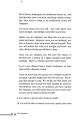
…ple who do not believe it exists because those people say that if it existed, it would have shown itself by now or it would have been discovered. These are also the people who say that is does not concern…
…group searches for the Unknown Factor within or outside of themselves, either through indulgence or self-mortification. This journey of discovery ties back to the Buddha, who navigated these extremes towa…
85
The Journey of Self-Discovery Through Ordination
…eventually, their need to sleep in air-conditioned rooms will disappear.
You learn about your true self. You learn about your inner strength, knowledge, moral fiber and virtue.
Before you are ordained, …
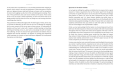
…experiences through ordination. It highlights how luxuries are relinquished for personal growth and self-awareness. The journey challenges preconceived notions of talent, urging individuals to recognize t…
15
Understanding the Eternal Punishment of Life and the Role of Educators
… good teachers and trainers who are equipped and correctly educated in all aspects of creating good self-kamma whilst practicing the creation of good self-kamma diligently and continuously themselves on a…
…s knowledge but also exemplify moral values and decision-making abilities. They must cultivate good self-kamma and embody the wisdom required to inspire their students, creating a cycle of learning and gr…
45
The Importance of Moral Education in Teaching
Only with moral education can human beings eliminate conflicts, selfish and greedy tendencies and practices so that man may truly coexist with mindful and peaceful cons…
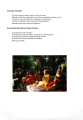
This text emphasizes the necessity of moral education to eliminate selfish and greedy tendencies, enabling peaceful coexistence. It discusses the role of various types of …
22
Formation of Good Habits
…ivelihood
Good Habits Result from Proper Training
* A penchant for truth, honesty
* A penchant for self-command, a penchant for self-discipline
* A penchant for patience, being fearlessly resolute
* A pe…
…hlights that good habits are a result of proper training, focusing on virtues such as truthfulness, self-discipline, patience, and selflessness. By cultivating these traits, individuals can develop a posi…
26
Formation of Habits
…ivelihood
Good Habits Result from Proper Training
. A penchant for truth, honesty
. A penchant for self-command, a penchant for self-discipline
. A penchant for patience, being fearlessly resolute
. A pe…
…s the importance of good habits resulting from proper training, including traits like truthfulness, self-discipline, patience, and charity. By cultivating these habits, one can improve their interactions …
23
Self-Reflection and Dhamma Contemplation for Personal Growth
1. EXAMINE YOURSELF
Before bedtime each night, take a few minutes to meditate upon your day.
Reflect on everything…
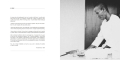
In this text, readers are encouraged to engage in nightly self-reflection, evaluating their daily actions to accumulate merit and relinquish negative deeds. The p…
26
The Journey of Self-Discovery Through Meditation
…rl. I love cleanliness and orderliness. I know where everything should or should not be. I taught myself everything.
I know when to do what. I know how to manage my time and how to handle my tasks. When I…
…d upbringing at Wat Paknam. Through meditation, she recalls past lives that have contributed to her self-teaching abilities. Emphasizing the importance of meditation, she encourages others to develop self…
27
Understanding Yourself: The Journey Within
7. LOOK WITHIN YOURSELF
I look at myself. I look through myself. I understand "me" clearly.
I look into my physical self to…
…thin themselves for true understanding rather than focusing on others. It highlights the journey of self-discovery through examining both physical and spiritual aspects of oneself. The teachings stress th…
19
Understanding Buddhism: Key Concepts and Texts
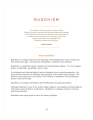
…ng consisting of impermanence (aniccata), state of suffering or dissatisfaction (dukkhata), and not-self, non-self, or soullessness (anattata)
…ree Jewels of Buddhism and the Three Characteristics of existence: impermanence, suffering, and non-self. Key meditative practices like fire contemplation and the significance of shrines in Buddhism are a…
70
Understanding Buddhism: A Cosmic Religion
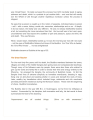
… not to believe or disbelieve until something is
proven to be true or false.
Buddhism encourages self-reliance and self-liberation through good deeds.
Although Buddhism is one of the world’s oldest re…
… superstitions, making it a modern and applicable way of life. It encourages a neutral perspective, self-reliance, and good deeds. Unlike many religions, Buddhists have not engaged in war for religious re…
77
The Enlightenment of Siddhattha Gotama
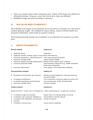
was himself freed. He lastly surveyed the process how birth inevitably leads to aging, sickness and death, whic…
…t dawn, he perceived the universe anew, transcending worldly attachments and understanding his true self as something vast and unconditioned, which he identified as Nirvana. Following his enlightenment at…
106
The Importance of Meditation for Mental and Physical Health
…hysical health less sickness, longer life (e.g. better relaxation, Lower blood pressure)
• Improves self-control inner peace, more harmonious lifestyle
Concentration-related: leading to:
• Sharpens conce…
…oved overall health. By practicing meditation, individuals can achieve higher levels of insight and self-realization, leading to a harmonious lifestyle and increased mental power. For more resources on me…
6
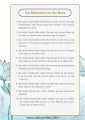
Ten Reflections for the Monk
…tinue to improve.
4. We monks should often reflect that the purity of our Precepts must stand up to self-scrutiny.
5. We monks should often reflect that the purity of our Precepts must stand up to the scr…
…e, relying on community support, and continually improving personal conduct. Additionally, it urges self-examination of precept purity and encourages awareness of the consequences of actions on karma. Mon…
107
परम ध्यान और आत्मा का केंद्र
…t — and it is completely free of the two extremes of sensual indulgence [kāmasukhallikānu yoga] and self-mortification [attā-kilamathānu yoga] — it is the trailhead of the pathway towards the arahship. Th…
लुआंग फॉ वट पाकनम ने समझाया कि शरीर के केंद्र पर ध्यान लाने की क्षमता को 'मध्यम' कहा जाता है। यह वह बिंदु है जहाँ मन सद्भाव में आता है, और इसे अच्छे या बुरे के संदर्भ में नहीं रखा जा सकता है। इसके द्व
108
The Path to Spiritual Enlightenment
…the above represents the sequence of following the Middle Way which the Lord Buddha followed for Himself with His supreme wisdom to the point of enlightenment. When the mind reaches the Subtle Human Body …
… how by bringing the mind to a state of stillness, one can transition through various spheres: from Self-Discipline to Concentration, Wisdom, and ultimately to Liberation. Each stage builds upon the last,…