

Aggiāṇā-sutta : ค้นหาหนังสือธรรมะ หน้า 2 / 9
หน้าหนังสือทั้งหมด
39
Interpretations of Dhammakāya in Early Pāli Texts
Gombrich, while differently translating the term in this passage as a bahubbiha compound 'dhamma-bodied,' similarly interprets it as an indication that the Buddha's true import is due to 'his teaching
This text delves into various scholars' interpretations of the term 'dhammakāya' within the context of early Pāli suttas. Gombrich views it as 'dhamma-bodied,' emphasizing that the essence of the Budd
40
Understanding Dhammakāya in Aṅgāṇā-sutta
In brief, contemporary academics refer to the term dhammakāya in the Aṅgāṇā-sutta either as a noun or an adjective. As a noun, the term is interpreted mostly as the Buddha’s teachings collected togeth
The term dhammakāya is interpreted in contemporary academia as both a noun and an adjective. As a noun, it denotes the Buddha’s teachings, while as an adjective, it refers to the nature of the Tathāga
71
Understanding Dhammakāya and Enlightenment
1. The term dhammakāya is related to enlightenment. This agrees with our earlier observation regarding the relation of ‘dhammakāya’ to the Buddha and Paccakabuddhas.
2. Dhammakāya is not exclusive to
The term 'dhammakāya' signifies enlightenment and is not exclusive to the Buddha but can also be attained by his disciples, as indicated by Gotami's reference to 'my dhammakāya.' This term is interpre
6
Payasi Sutta: Rebirth and Karma
This Life Next Life
Payasi Sutta
(Rebirth and Karma)
Thus have I heard.
1. The venerable Kumara Kassapa¹ was once walking on tour in Kosala together with a great company of bhikkhus, to the number o
The Payasi Sutta recounts the teachings of venerable Kumara Kassapa during his time in Setavya. It narrates the challenges faced by Payasi, a chieftain in this city, as he grapples with misconceptions

38
The Virtue of Abstaining in Dakhina-vibhanga Sutta
The Virtue of Abstaining
6. Dakhina-vibhanga Sutta
the virtues loved by noble ones.24 It is owing to the Blessed One that Mahā paja pārī Gotāmī is free from doubt about suffering, about the origin of
The Dakhina-vibhanga Sutta highlights the significance of abstaining from harmful actions such as killing and immoral conduct. It illustrates how one's journey towards refuge in the Buddha, Dhamma, an

40
The Verse of Abandoning: Dakkhināvíbhanga Sutta
The Verse of Abandoning
6. Dakkhināvíbhanga Sutta
"When one person, owing to another, has come to possess unwavering confidence in the Buddha, the Dhamma, and the Sangha, and to possess the virtues
The Dakkhināvíbhanga Sutta emphasizes the significance of unwavering confidence in the Buddha, Dhamma, and Sangha. It illustrates how one person's faith and understanding can be influenced by another,

54
The Purification of Offerings in Dakhināvíbhanga Sutta
54
The Virtue of Absolving
6. Dakhināvíbhanga Sutta
13. "And how is the offering purified both by the giver and by the receiver? Here the giver is virtuous, of good character, and the receiver is
The Dakhināvíbhanga Sutta presents insights on how offerings are purified based on the character of both the giver and receiver. It delineates scenarios: when a virtuous giver offers to an immoral rec

66
The Virtue of Approving in Velāma Sutta
66
The Virtue of Approving
7. Velāma Sutta
"Now, householder, if the thought should occur to you,
'Perhaps it was someone else who at that time was
Velāma the brahman, who gave that gift, t
In the Velāma Sutta, the householder is reminded that true merit comes not from the quantity or grandeur of gifts, but from the character and realization of those who receive them. The teaching emphas
72
Velama Sutta: The Power of Good Will
The Voice of Abstaining
7. Velama Sutta
“If one were to develop even just one whiff of a heart of good will, that would be more fruitful than... if one with a confident mind were to undertake the tra
This text discusses the teachings of the Velama Sutta, emphasizing that developing even a small amount of good will is more fruitful than significant material offerings and merits. It illustrates how
85
The Dhammakaya Tradition
The Dhammakaya Tradition
The Dhammakaya Tradition is a Buddhist meditation method taught by Phramongkolthepmuni in the early 20th century. Dhammakaya meditation encompasses both the samatha (tranquili
The Dhammakaya Tradition is a renowned Buddhist meditation technique initiated by Phramongkolthepmuni in the early 20th century, blending samatha and vipassana practices with the aim of overcoming the
90
Meditation Benefits
86 MEDITATION BENEFITS
MEDIATION BENEFITS
Meditation has been linked to a variety of health benefits. A review of scientific studies
identified favorable outcomes of meditation which include: relaxa
Meditation is associated with various health benefits such as relaxation, concentration, and increased awareness. Scientific studies reveal its positive impact on metabolism, heart rate, and brain act
59
The Importance of Chanting in Buddhism
your mind will clear and be open to receive merit. Your thoughts, speech, and action will not be led astray by temptation.
Performing Vatta serves constantly to remind us of the virtues of the Triple
Chanting in Buddhism plays a crucial role in enhancing faith and preserving teachings of the Buddha. It reminds practitioners of the virtues of the Triple Gem and helps them avoid temptation. Historic
18
The Arrival of Celestial Chariots
While the monks were reciting the Mahasatipatthana Sutta,
six decorated chariots from six celestial worlds arrived to invite him to their respective worlds. Dhammika told them to wait for a while for
In this passage, while the monks recite the Mahasatipatthana Sutta, six celestial chariots from different worlds arrive to invite Dhammika to join them. Dhammika requests them to wait, fearing the dis
14
Author's Preface on the Uniqueness of Buddhism
Author's Preface
Buddhism is unique in teaching a way to overcome suffering, with its aim definitely to liberate oneself from the Cycle of Existence [vadda-samśāra] thereby attaining the highest eter
The Author's Preface highlights Buddhism's distinctive qualities in teaching ways to alleviate suffering and attain ultimate happiness, emphasizing its systematic approach to teachings and virtues. It
17
Dhamma Practice and Understanding in Dhammacakkapavattana Sutta
translation are hampered in their studies both by the scarcity of the original and its archaic language. In spite of the present author's respect for the original use of language, to leave it in its o
This work addresses the challenges of understanding the Dhammacakkapavattana Sutta due to its original language and scarce resources. The author adapts complex passages to modern language while mainta
21
The Inaugural Teaching of the Buddha
He agreed to teach the Dhamma, but remained undecided as to exactly who he should teach first. Eventually, the Bud- dha decided to make the journey to teach the ‘Group of Five’ [pañcavaggiya] who were
The Buddha decided to teach the Dhamma starting with the Group of Five at Isipatana Deer Park. His first sermon, the Dhammacakka pavattana Sutta, serves as a crucial teaching, symbolized by a royal ch
218
General Index of Meditation and Mindfulness Concepts
Appendix C:
General Index
absent-mindedness: overcome by meditation 124
absorption: factors 123, 129-132; of neither-perception-nor-non-perception 193; fifth 131; first 85, 123, 129; fourth 129; sec
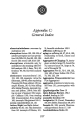
This general index compiles significant terms and concepts related to meditation and mindfulness practices. It includes terms like absent-mindedness, absorption, and aggregates of clinging, helpful fo
68
The Importance of Positive Influence on Children's Development
attend; we just need them to be in a good and positive environment. Being the number one student in class does not mean that student will become the richest person in the world. Knowledge from textboo
การเลี้ยงดูเด็กในสิ่งแวดล้อมที่ดีและสร้างสรรค์มีความสำคัญต่อการพัฒนาความคิดและพฤติกรรมของเด็ก การศึกษาเพียงอย่างเดียวไม่เพียงพอต่อความสำเร็จในอนาคต ต้องมีการสร้างมิตรภาพที่ดีและการให้คำแนะนำอย่างเหมาะ
18
Understanding Dhammakāya and Theravāda Manuscripts
and is ‘spiritually reborn’. The dhammakāya becomes her new identity as the milk nourishes her spiritually. It is something she is given as a verbal teaching.
To add the material from the Apadānas is
This text delves into the doctrine of dhammakāya, representing a new spiritual identity that arises from teachings, akin to nourishment from milk. It connects the concepts found in the Agañña-sutta, i
35
Exploring the Concept of Dhammakāya in Pali Canonical Texts
Of the three canonical passages mentioned above, only the first, namely the Aggañña-sutta passage, contains the term dhammakāya, while the other two do not. The reason for which all these passages are
This study reexamines the term dhammakāya in specific Pali canonical passages, notably the Aggañña-sutta, contrasting it with previous scholarly interpretations that often exclusively link the term to