

B : ค้นหาหนังสือธรรมะ หน้า 72 / 424
หน้าหนังสือทั้งหมด
36
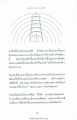
มหาธรรมกายเจดีย์: วิวัฒนาการและความหมาย
…งที่บ่งบอกความเป็นตัวของตัวเอง เพียงแต่ไม่ขึ้นกับรูปแบบสถาบันวิธรรมเดิม แนะนำอธิบายรง
เจดีย์ที่เน้น Bell Shape ไปปรับตามความคิดของตน เกิดเป็นรูปทรงเฉพาะขึ้น เรียกว่า “Tibetan Stupa” แล้วคำอธิบายว่า
ชน…
…กิดจากพื้นฐานความเชื่อดั้งเดิม ในขณะเดียวกันก็มีรูปทรงที่สามารถแสดงถึงเอกลักษณ์ของตนเอง เช่น รูปทรง Bell Shape ที่ปรับให้เหมาะกับความคิดส่วนตัว ทำให้เกิดเป็น Tibetan Stupa ซึ่งเป็นการแสดงถึงความตั้งใจข…
31
Dhammacakkappavattana Sutta: The Sermon
Dhammacakkappavattana Sutta:
The Sermon
Something which you will find at the beginning of every sutta are Aṅanda’s words 'Evam.e sutam...': i.e. ‘Thus have I heard (directly from…
The Dhammacakkappavattana Sutta begins with Aṅanda's phrase 'Thus have I heard' and recounts the Buddha's teachings delivered at the …
34
Buddhist Teachings on Sensual Pleasures
used to rinse a toilet or the toilet bowl itself, which is soiled with excrement. He also compared the pleasures of the senses to human fa…
In this text, the Buddha emphasizes the folly of indulging in sensory pleasures, likening them to dangerous paths and h…
36
The Hardships of Earning a Living
ways: for example, some are farmers, some run businesses, some tend dairy cattle, some are soldiers, some are civil servants, some are elephant tra…
This text discusses the various livelihoods people engage in, from farming to business and training animals, emphasizing the hardships each profession entails regardless of the su…
40
The Futility of Self-Mortification
Commentorial Metaphors: Self-mortification:
1. Sugar-cane juice and poison: It can be compared to a mixture of sugar-cane juice and poison. In the end such practices will lead to death…
This text presents a series of metaphors illustrating the perils of self-mortification. Comparing self-harm to poison, stale excrement, and dangerous leaps, it highlights the futility of such practice
54
Understanding the Origin of Suffering in Buddhism
2.2 The Origin of Suffering as a Cause
In explaining the Origin of Suffering, the Buddha intended to make clear that the suffering experienced by living beings has craving as its caus…
In this examination of the Buddha's teachings, the Origin of Suffering is explained as being rooted in craving, which leads to a…
56
The Noble Eightfold Path and the Cessation of Suffering
"The wise one who trains himself [yoĝāvācara] should see that the builder is ‘Craving’ who fashions the home that is the physical body of each and every living being, …
This text delves into the teachings of the Buddha regarding the nature of craving as the cause of suffering and the means of escape through the …
62
The Suffering of Birth: Understanding the Stages of Embryonic Development
The suffering of birth starts to affect beings without exception from the moment they are conceived. Some beings are f…
The suffering of birth begins at conception and affects all beings. It varies by the mode of birth, with those born fr…
65
Aspects of Suffering in Birth
and stabbed with razor-sharp knives. This fifth aspect of suffering at birth is known as 'gabbha nikkhamana …
This text delves into the profound aspects of suffering experienced from the moment of birth. It highlights 'gabbha nikkhamana mūlaka dukkha', which refers to the initial suffering at birt…
68
Understanding the Body as a House
of the six senses¹ and the deterioration of the thirty-two parts of the body², causing the body to become shrivelled and unattractive.
In actual fact, this house that is o…
This text offers a profound understanding of the human body as a metaphorical house constructed by craving. It illustrates how the various parts of the body…
80
The Three Forms of Craving in Buddhism
The Three forms of Craving
The Lord Buddha taught that there are three sorts of craving: craving for sense-pleasure [kāmaṭhaṇa], craving …
The Lord Buddha identified three types of craving: 1) Craving for Sense-Pleasure (kāmaṭhaṇa) signifies a longi…
85
The Path of Wholesomeness and Unwholesomeness
…ṭṭa]
- idle chatter, frivolous talk [samphappalāpa]
Unwholesome thought comprises:
- covetousness [abhijjhā]
- vengeful thinking [byāpāda]
- false view [micchādiṭṭhi]
Most people know that these ten b…
In Buddhism, ten unwholesome behaviors are cautioned against: stealing, committing adultery, lying, divi…
86
Understanding Craving and Suffering in Buddhism
ing after such wealth, even though it is acquired by honest
means, is still subject to suffering because it contains craving which is the origin of suf…
This text delves into the concept of craving in Buddhism, emphasizing that even honest wealth can lead to suffering due to inherent craving. It discu…
87
The Cycle of Existence and Three Spheres
… the three sorts of craving which keep them prisoner in the thirty-one realms.
In teaching on the subject of the three sorts of craving as the reason why living beings are the prisoners of rebirth in t…
This text discusses the concept of craving as the root cause of rebirth in the Cycle of Existence, using a story from the Dhammapadathakā to illustrate the journey of …
94
The Nature of Suffering and the Pursuit of Happiness
…fering. The suffering of such people, at root
comes from their search for sense-pleasure and sense-ob-
jects. Even the suffering that comes to us from unjust gov-
ernment, robbery, fire and flood which…
…se-pleasures results in suffering. It emphasizes that those who do not derive happiness from sense-objects remain unaffected by external misfortunes. To achieve true salvation, one must diligently mini…
106
Understanding the Middle Way in Dhamma Practice
…e explained that the word ‘Middle’ in the term ‘Middle Way’ is indeed used in a very profound way — but in a way which has for a long time been overlooked. He explained that the practice [dhamma] that …
…ucidates the profound significance of the Middle Way, urging practitioners to find stillness at the body’s central point. This location, described using the intersection of two imaginary threads, marks…
114
The Path to Nirvana: Understanding the Dhammakāya
with which his mind had been engrained for countless lifetimes polluting his thoughts, speech and actions — which had led to …
This text discusses the purification of the mind through the teachings of the Buddha, emphasizing the importance of the Dhammakāya Arahat Body and the attainment of enlightenment.…
126
Meditation and Mindfulness: Cultivating Inner Awareness
Once the meditator has developed the absorptions to this point not only can they see the inner bodies in succession — they will be able to …
เมื่อผู้ปฏิบัติธรรมพัฒนาการเข้าถึงระดับที่ลึกซึ้ง ไม่เพียงแต่จะมองเห็นกายภายในที่เกิดขึ้นตามลำดับ แต่ยังสามารถเห็นความรู้สึกที่เกิดขึ้นพร้อมกันได้อีกด้วย พวกเขาจะเห็นและพิจารณาความรู้สึกอย่างต่อเนื่อง
139
Understanding the Body of Enlightenment in Buddhism
hatred [dosa] and delusion [moha].
Having attained the Sakidägämi Body of Enlightenment,
the meditator uses this Body of Enlightenment to examine
the Four Noble Truths…
บทความนี้สำรวจระดับต่างๆ ของการตรัสรู้ในพุทธศาสนา โดยเน้นถึงการใช้ร่างกายของการตรัสรู้ เช่น Sakidägämi, Anägämi และ Arahant ซึ่งผู้ปฏิบัติธรรมจะสามารถปล่อยวางข้อผูกพันต่างๆ เพื่อเข้าถึงความรู้สูงและกา
142
The Path to Enlightenment: Understanding Dhammakāya
the knowledge arising from cognition may be erroneous.
The knowledge arising from 'knowing', by contrast, de-
pends on the Dhammakāya — it is …
This text discusses the distinction between knowledge gained through cognition and that which arises from true wisdom based on the Dhamma…