

C&D : ค้นหาหนังสือธรรมะ หน้า 73 / 507
หน้าหนังสือทั้งหมด
60
World Peace Through Collective Effort
"World Peace,
It can not happen through one person.
We can not accomplish it alone.
It comes from the thoughts of all beings.
Excluding no one…"
T hese are the words that show the intention in the mi
ข้อความนี้มาจาก Luang Phaw Dhammajayo ที่แสดงเจตนารมณ์ว่า สันติภาพในโลกไม่สามารถเกิดขึ้นได้จากบุคคลเดียว แต่เกิดจากความคิดของทุกคน ผู้คนเป็นพันธมิตรในการสร้างความสุขและสันติภาพภายใน โดยเริ่มจากกลุ่มเล
81
Dhammadayada Training Programme
Trainees who pass the months training will qualify for the mass ordination, which lasts for another month. This last month of Dhammadayada training programme focuses on establishing the understanding
The Dhammadayada training programme offers an enriching experience where trainees who successfully complete the months of training qualify for mass ordination. This unique program emphasizes self-trai
88
Summer Training Programme for Female Students
4. Summer Training Programme for Female Students
Dhammadayada training and mass ordination proves to substantially improve behaviour and the life of many trainees. Luang Phaw Dhammajayo recognises the
In the summer of 1986, Luang Phaw Dhammajayo expanded the Dhammadayada training programme to include female students, recognizing its benefits. The programme lasts 1-2 months, with about 400 participa
89
Impact of Dhammadayada Training Programmes
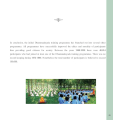
In conclusion, the initial Dhammadayada training programme has branched out into several other programmes. All programmes have successfully improved the ethics and morality of participants thus provid
In conclusion, the initial Dhammadayada training programme has branched out into several additional programmes, all of which have effectively improved the ethics and morality of their participants. Be
112
Kalyanamitta: The Path to True Friendship and Family Bliss
The word “Kalyanamitta” means good friends or true friends who wish their friends well, who advise them to do virtuous deeds. The members’ objective is to bring at least 3 family members and friends t
The Kalyanamitta project focuses on fostering good friendships and family connections through daily chanting and meditation. Participants aim to gather family members to dedicate time for meditation a
115
Ceremonies at Wat Phra Dhammakaya
The text extracted from the image is:
The novice monk ordination ceremony on 8th February 1998 at Wat Phra Dhammakaya for giving a blessing to His Majesty the King related to His 70th Birthday Celebr
The novice monk ordination ceremony on 8th February 1998 at Wat Phra Dhammakaya honored His Majesty the King for his 70th birthday, with 13,842 participants including students, government employees, a
118
Creating World Peace Through Abstinence
Creating World Peace by abstaining from drugs and bad temptations
Drugs and the path to bad temptations (i.e. gambling) are the shortfall in creating world peace. They undermine both the physical and
The text emphasizes the detrimental impact of drugs and bad temptations like gambling on physical and mental health. These issues hinder individual fitness and ultimately disrupt peace and happiness i
120
Campaign for a Drug-Free Family
When there is no peace in a family because of drugs and the roads to ruin problem, the dream of world peace will unfortunately remain a dream. Hence Luang Phaw Dhammajayo initiated a campaign "No alco
เมื่อครอบครัวไม่มีความสงบเนื่องจากปัญหายาเสพติด ความฝันของสันติภาพในโลกก็จะยังคงเป็นเพียงความฝัน ดังนั้นหลวงพ่อธรรมะจโยจึงเริ่มต้นโครงการ "ไม่มีแอลกอฮอล์ ไม่มีบุหรี่" โครงการนี้ประสบความสำเร็จอย่างน่า
127
The Importance of Studying Lord Buddha's Teachings
During the course of their education, Luang Phaw Dhammajayo would like students to see the value of their studies of the Lord Buddha’s teachings, and wants them to be proud and love their studies. Mor
Luang Phaw Dhammajayo emphasizes that students should value their studies of the Lord Buddha's teachings and take pride in it. He encourages them to study diligently and understand the truth of Buddhi
136
Humanitarian Aids and Compassion
Humanitarian Aids
In creating world peace, an important virtue in one's mind is compassion to others. Thus, in times when the country and its people experience natural disasters, Luang Phaw Dhammajay
In the pursuit of world peace, compassion emerges as a critical virtue. Luang Phaw Dhammajayo demonstrates this by addressing the needs of those affected by natural disasters. Through broadcasts on DM
137
Ceremony to Support 266 Temples in Southern Provinces
Donation offering ceremony to help 266 temples of the southern provinces
The interminable unrests in the southern provinces have caused troubles for the monks in the region as they can no longer perf
The donation offering ceremony initiated by Luang Phaw Dhammajayo aims to assist 266 temples in the southern provinces and nearby Songkla, as ongoing unrest has severely affected the monks' ability to
150
Discovering True Happiness Through Meditation
DMC causes viewers around the world to perform meditation which is the easy way to find true happiness in oneself. A lot of Thai and foreign viewers are able to discover their own peace from meditatio
DMC inspires viewers worldwide to embrace meditation as a means to attain true happiness. Through teachings by Luang Phaw Dhammajayo, individuals, including those from the Solomon Islands, have discov
152
Production of Visual Aids and Publications in Buddhism
Production of visual aids and publications
Luang Phaw Dhammajayo is aware of the necessity of using visual technology and publications to spread Buddhism; therefore, he has created a project which pr
Luang Phaw Dhammajayo recognizes the importance of visual technology and various publications in spreading Buddhism. His projects include the production of Dhamma books, monthly journals, tapes, VCD v
156
Expansion of Buddhism Worldwide through Luang Phaw Dhammajayo
With his kindness for Thai people in foreign countries and foreigners to be able to learn Buddhism and practise meditation, Luang Phaw Dhammajayo decided to choose suitable people, monks, upasaka and
Luang Phaw Dhammajayo has shown immense kindness towards the Thai community abroad and foreigners interested in Buddhism and meditation. By selecting suitable individuals with language skills, he faci
157
Meditation Practices and Activities at Centres
Each centre has regular meditation practise and activities including offering sustenance to Buddha on every first Sunday of the month, dedicating merit to the decreased, releasing fish and other creat
Each centre hosts regular meditation practices and activities like offering sustenance to Buddha, dedicating merit to the deceased, and releasing creatures. Special ceremonies are complemented by cour

163
Meditation Centers in Europe
Europe
Belgium
Antwerp
Dhammakaya International Meditation Centre
(Belgium) Sint-Jobsteenw 84,
2970 S-Gravenwezel, Antwerp, Belgium
Tel. (+32) 3.326.45.77,
+32) 3.289.51.81
Mobile: (+32) 494.32.80.02
This content provides a comprehensive list of meditation centers located throughout Europe, highlighting key locations such as Dhammakaya International Meditation Centre in Belgium, Wat Buddha centers
177
Dhammakaya Foundation and Its Global Engagement
Dhammakaya foundation has also been a member of The World Fellowship of Buddhists (WFB) and the World Fellowship of Buddhist Youth (WFBY) since 1986. The Dhammakaya foundation has participated in many
Dhammakaya Foundation has been a member of The World Fellowship of Buddhists (WFB) and the World Fellowship of Buddhist Youth (WFBY) since 1986. The foundation actively participates in various activit
185
Universal Peace Award by WBSY
Universal Peace Award
World Buddhist Sangha Youth (WBSY) is a world class Buddhist organisation. The organisation has many members who are Buddhists from every Buddhist sect; Theravada, Mahayana and
World Buddhist Sangha Youth (WBSY) is a premier Buddhist organization comprised of members from various traditions including Theravada, Mahayana, and Vajrayana. They acknowledge the significant dedica
188
Message from the Founder and Secretary General of WBSY
Message from Founder and Secretary General of WBSY
It was a greatly inspiring occasion for the World Buddhist Sangha Youth of Sri Lanka to organize the Third General Conference of the World Buddhist
The World Buddhist Sangha Youth of Sri Lanka organized their Third General Conference from 2nd - 5th December 2006, themed 'Tolerance and Harmony'. The event included the 2550 Buddha Jayanti award cer

200
Finding Your Mind: A Journey to Inner Calm
Finding your mind is not a difficult task
Comfortably lean up against the back of a chair and gently close your eyes. Yes, right. You are feeling all your thoughts passing through your mind one after
Finding your mind is a process of calming your thoughts and focusing on one at a time. By leaning back, closing your eyes, and acknowledging your waves of thoughts, you can begin to arrange mental pri