

E-V : ค้นหาหนังสือธรรมะ หน้า 110 / 137
หน้าหนังสือทั้งหมด
280
Understanding Artificial Intelligence
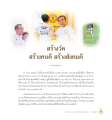
สร้างวัด
สร้างคนดี สร้างสังคมดี
Artificial Intelligence (AI) has revolutionized numerous sectors, from healthcare to finance, by automating processes and providing insights through data analysis. This technology not only enhances ef
311
Understanding the Impact of Climate Change
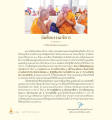
บันทึกบรรธานิการ
"ทำดีฉันเป็นวัฒนธรรมองค์กร"
พระราชวชรศาสนวิเทศ (สำราว กุลโล) ประธานสงฆ์พระธรรมฑูตไทยในยุโรป เจ้าวาสวัดไทยนอร์เวย์ ท่านได้รับรางวัลมุอรรถ์ครูโลก วันที่ ๒๖ เมษายน พ.ศ. ๒๕๖๔ พี่น้อมท่าน
Climate change is a significant challenge facing humanity today, impacting ecosystems, weather patterns, and human activities. This book delves into the causes of climate change, including greenhouse
5
Advanced Concepts in Buddhism
which are unnecessarily caught up with Thai culture have been minimized or omitted.
The content of this book is more advanced than the for- going titles in the series 'Buddhism in Plain English'. This
This book, part of the 'Buddhism in Plain English' series, offers advanced insights into Buddhism's higher spiritual training, focusing on the renunciation of mundane life. It discusses the common mis
8
The True Nature of the Buddha's Enlightenment
the Buddha’s enlightenment dealt entirely with meditation focussed outside the body. Then, as now, almost all success was attributed to ideas and strategies — but as a result of countless past lifetim
Siddhattha Gotama's enlightenment was rooted in meditation that transcended mere conceptualization. He recognized that achieving true liberation demanded a harmonious blend of theory and inner virtue.
11
The Noble Truths of Suffering
4 The Noble Truth of Suffering ........................................... 57
Every Living Being is a Victim of Suffering 57 • Suffering as a result of
Birth 58 • The Suffering of Internment in the Wo
เนื้อหาเกี่ยวกับสัจธรรมทั้งสี่ซึ่งกล่าวถึงทุกข์และวิธีการดับทุกข์ในศาสตร์ของพุทธศาสนา รวมถึงอธิบายความสำคัญของการเข้าใจทุกข์และการพึ่งพาไม่ให้จิตใจเสพติดความสุขชั่วครั้งชั่วคราว การบรรลุถึงสภาวะนิพพาน
12
The Noble Eightfold Path: Key Concepts and Insights
7 The Noble Truth of the Path to the Cessation of Suffering .................... 117
The Noble Eightfold Path 117 • Right View 118 • Right Intention 118 • Right Speech 118 • Right Action 118 • Right L
The Noble Eightfold Path is a fundamental Teaching of Buddhism aimed at overcoming suffering. It consists of eight essential practices: Right View, Right Intention, Right Speech, Right Action, Right L
17
Dhamma Practice and Understanding in Dhammacakkapavattana Sutta
translation are hampered in their studies both by the scarcity of the original and its archaic language. In spite of the present author's respect for the original use of language, to leave it in its o
This work addresses the challenges of understanding the Dhammacakkapavattana Sutta due to its original language and scarce resources. The author adapts complex passages to modern language while mainta
21
The Inaugural Teaching of the Buddha
He agreed to teach the Dhamma, but remained undecided as to exactly who he should teach first. Eventually, the Bud- dha decided to make the journey to teach the ‘Group of Five’ [pañcavaggiya] who were
The Buddha decided to teach the Dhamma starting with the Group of Five at Isipatana Deer Park. His first sermon, the Dhammacakka pavattana Sutta, serves as a crucial teaching, symbolized by a royal ch
23
Understanding the Path to Nirvana: The Buddha's Teachings
the attainment of Nirvana. In the Dhammacakkapavattana Sutta, further to the clarification of the profitable path of practice, the Buddha stipulates paths of practice that are unprofitable and might e
This text discusses the Buddha's elucidation of the paths to Nirvana as presented in the Dhammacakkapavattana Sutta. It highlights the unprofitable practices, particularly the path of sensual indulgen
26
The Noble Truths and the Path to Nirvana
3. The Noble Truth of the Cessation of Suffering [dukkhanirodha ariyasacca];
4. The Noble Truth of the Path to the Cessation of Suffering [dukkhanirodhåkāmıni ariyasacca].
Apart from allowing Prince S
This text delves into the Four Noble Truths, emphasizing the cessation of suffering and the path leading to it. The Middle Way enables Prince Siddhattha to attain enlightenment and Nirvana while alive
31
Dhammacakkappavattana Sutta: The Sermon
Dhammacakkappavattana Sutta:
The Sermon
Something which you will find at the beginning of every sutta are Aṅanda’s words 'Evam.e sutam...': i.e. ‘Thus have I heard (directly from the Lord Buddha)
The Dhammacakkappavattana Sutta begins with Aṅanda's phrase 'Thus have I heard' and recounts the Buddha's teachings delivered at the Isipatana Deer Park. The Blessed One addresses the group of five mo
33
The Buddha's Teachings on Sensory Pleasures
6. Eating a poisonous fruit: The pleasures of the five senses can be compared to a poisonous fruit. The hedonist, in his greed eats the fruit and must endure the ensuing pain and upset as the poison t
The Buddha uses various metaphors to illustrate the dangers of indulgence in sensory pleasures. He likens them to poisonous fruits, sharp weapons, and children's toys, highlighting the inevitable suff
34
Buddhist Teachings on Sensual Pleasures
used to rinse a toilet or the toilet bowl itself, which is soiled with excrement. He also compared the pleasures of the senses to human faces which dogs like to spend their time sniffing.
Thus, the Lo
In this text, the Buddha emphasizes the folly of indulging in sensory pleasures, likening them to dangerous paths and harmful actions. This indulgence is viewed as detrimental, bringing suffering akin
35
The Dangers of Sensual Indulgence in Buddhist Teachings
16. A man who falls in love with an ogress: The Buddha also compared indulging the pleasures of the senses to a man who falls in love and co-habits with an ogress who he takes for a human maiden (but
In the teachings of the Buddha, the indulgence of the senses is likened to a man falling in love with an ogress and a crow feeding from a floating elephant carcass. These metaphors illustrate the inhe
39
Understanding Self-Mortification in Buddhism
It is for this reason that the Lord Buddha should want to start his sermon by instructing the ‘group of five’ that indulgence of the senses is unsuitable, base, ignoble, without benefit, unsuitable fo
In this text, Lord Buddha teaches that indulgence of the senses is unsuitable for a Buddhist monk and should be avoided. The practice of self-mortification, common among non-Buddhist ascetics, include
40
The Futility of Self-Mortification
Commentorial Metaphors: Self-mortification:
1. Sugar-cane juice and poison: It can be compared to a mixture of sugar-cane juice and poison. In the end such practices will lead to death, and all for no
This text presents a series of metaphors illustrating the perils of self-mortification. Comparing self-harm to poison, stale excrement, and dangerous leaps, it highlights the futility of such practice
43
Understanding the Noble Eightfold Path
Noble Eightfold Path is the most auspicious of all the virtuous teachings of the Lord Buddha.
4. A Wish-fulfilling Jewel: It can be compared to a wish-fulfilling jewel of eight facets.
5. The Chariot
The Noble Eightfold Path is central to Buddha's teachings, likened to a wish-fulfilling jewel. It consists of eight components: Right View, Right Intention, Right Speech, Right Action, Right Livelihoo
44
Understanding Right Intention and Right Speech in Buddhist Practice
subtle defilements¹ [anusaya].
2.1 Right Intention (mundane): At low level Right Inten- tion means having the wholesome intention to be generous, keep the Five Precepts, renounce the world to become a
This text discusses key aspects of Buddhist practice, specifically focusing on Right Intention and Right Speech. Right Intention involves having wholesome intentions such as generosity and the desire
45
The Buddha's Teachings on Right Livelihood and Moral Conduct
the monk's equivalent of Right Livelihood, by avoiding such evils as fortune telling, sacrifices or interpreting dreams, because these are all 'low arts'[tiracchānavijjā]. The Buddha even prohibited m
This text discusses the Buddha's teachings on Right Livelihood, emphasizing the avoidance of 'low arts' such as fortune telling and the prohibition of harmful trades for monks and laypeople. In partic
49
The Artistry Behind Preaching the Four Noble Truths
3
The Four Noble Truths
The Artistry Behind Preaching the Four Noble Truths
In the Dhammacakkapavattana Sutta as in his other sermons, the Lord Buddha explains not only Dhamma subjects, but the relat
In the Dhammacakkapavattana Sutta, the Lord Buddha presents the Four Noble Truths, emphasizing their interconnected nature. Each Noble Truth is not standalone; they influence and clarify one another.