

H&M : ค้นหาหนังสือธรรมะ หน้า 51 / 672
หน้าหนังสือทั้งหมด

20
The Journey of Enlightenment: The Buddha's Reflections
1
Overview
Introduction
After the Enlightenment which transformed Siddhartha Gotama into the Lord Buddha beneath the Bodhi tree on the banks of the River Nerañjāra, Bodhgavā on the full moon night of
After achieving Enlightenment under the Bodhi tree, the Buddha spent 28 days in contemplation to absorb the bliss and understand the Dhamma. With encouragement from Brahmā Sahampati, he decided to sha
29
The Enlightenment of Koṇḍañña
his Enlightenment for the benefit of the ‘Group of Five’ — Enlightenment that is supreme in the human world, angel world, Māra-world, Brahmā-world, animal-world, world of monks, world of brahmins, wor
This text discusses the pivotal moment when Koṇḍañña achieved enlightenment after listening to the Buddha’s teachings, recognizing the nature of arising and cessation within himself. The earth-sprites
32
Metaphors of Sensual Indulgence
Commentorial Metaphors: Indulgence in sensual pleasures:
1. A pig content to wallow in dung: Indulging in sensual pleasures is rather like a pig, which spends all its life wallowing in the warm mud an
This text delves into various metaphors that depict the indulgence in sensual pleasures as detrimental and unfulfilling. Comparing such indulgence to a pig in dung, a rotting corpse, and a dog with bo
59
Understanding the Noble Truths of Suffering
by reflecting on Suffering's meaning at 2, 3 and 4 in that
order. As for the the meaning at 2, even though it is con-
cerned with the Noble Truth of Suffering, it has implications
reaching to the Orig
The text reflects on the meanings of Suffering within Buddhism, particularly its Noble Truths. It discusses how the meanings related to Suffering connect with the Origin, Cessation, and the Noble Eigh
62
The Suffering of Birth: Understanding the Stages of Embryonic Development
The suffering of birth starts to affect beings without exception from the moment they are conceived. Some beings are fully equipped with sense spheres [āyatanā] from the moment they are born — others
The suffering of birth begins at conception and affects all beings. It varies by the mode of birth, with those born from the womb experiencing more suffering. Mammalian embryonic development shows cha
77
Understanding the Inevitability of Suffering
4. A Large Ox: Just as a large ox is the unescapable target for swarms of various biting insects no matter where it may roam, the Aggregates of Clinging are the unescapable prey of all twelve forms of
The text discusses how the Aggregates of Clinging, similar to a large ox attracting insects, are perpetually subject to suffering in all realms. It emphasizes the importance of recognizing this suffer
78
Understanding the Noble Truth of Suffering
tial a person might be, it doesn't merit any special consideration on suffering's part — all are equal in the face of suffering. Thus, realization of the reality of suffering for what it really is, to
This section discusses the Buddhist understanding of suffering, emphasizing that all beings are equal in their experience of suffering. It highlights the significance of realizing the Noble Truth of S
87
The Cycle of Existence and Three Spheres
suffering completely, with no more attachment for the Three Spheres¹. Put another way, their practice entails extinguishing the three sorts of craving which keep them prisoner in the thirty-one realms
This text discusses the concept of craving as the root cause of rebirth in the Cycle of Existence, using a story from the Dhammapadathakā to illustrate the journey of a female piglet that was reborn m
92
Understanding the Nature of Craving and the Physical Body
desire and carried away by their craving, and who do nothing but please themselves, never remove themselves from craving. Like the spider which spends its whole life in its web. If the spider were wis
The text discusses how craving ensnares individuals, likening them to a spider trapped in its web. It emphasizes the wise perspective on the body as impermanent and filled with impurities, urging a me
100
Understanding Sensual Attachments in Practice
previous factors — senses, sense objects and sense-con- sciousness — is implicated in the attachment we have to sensual pleasures. Again, each of the six senses has its own channel of sense-contact th
This text explores the relationship between the six senses and their respective sense contacts, feelings, perceptions, and volition, emphasizing the need for practitioners to extinguish craving associ
116
Understanding Nirvana: The Realm Beyond Existence
same happiness to us as if we were really in āyatanā nibbāna — but we are still ‘alive’ in our human body.
2. Nirvana without residual aggregates (Anupādisesa Nirvana [Nibbāna]) is the Nirvana that is
This text delves into the concepts of Āyatanā Nibbāna and Anupādisesa Nibbāna, explaining that Nirvana exists beyond the physical realm and is not bound by worldly elements. It describes Nirvana as a
123
Understanding Suffering and the Subtle Human Body
wealth. As the majority of sorts of suffering concerns material things, having attained the subtle human body, the mind, being unified with the subtle human body, is safely withdrawn beyond the reach
This text discusses why most people suffer due to attachment to their physical bodies and possessions, despite intellectually understanding Buddha's teachings on impermanence. The author emphasizes th
127
Understanding the Mind and Its Layers
are mindful that ‘the mind is distracted’. If the mind is con-
centrated, you are mindful that ‘the mind is concentrated’.
If the mind is liberated, you are mindful that ‘the mind is
liberated’. If
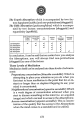
The text delves into the nature of the mind, describing its four concentric layers: perception, sensory registration, central processing, and cognition. It explains how mindfulness operates at each le
133
Understanding the Levels of Absorption in Meditation
The Fourth Absorption which is accompanied by two factors: happiness [sukhα] and one-pointedness [ekaggatα].
The Fifth Absorption [pañcamaajahana] which is accompanied by two factors: one-pointedness
This text outlines the five absorptions in meditation, detailing the factors involved in each stage, including joy, happiness, one-pointedness, and equanimity. Importantly, one-pointedness is a consis
155
King Asoka: Patron of Buddhism
by inviting 60,000 monks for alms in the palace daily. The king wanted to have the chance to pay respect to a fully-enlightened Buddha and with this end in mind, invited the Naga King to come up from
King Asoka was a pivotal figure in Buddhism, inviting 60,000 monks for daily alms and yearning to pay respect to a fully-enlightened Buddha. He invited the Naga King to appear as the Buddha for homage
162
Teachings of the Buddha on Nobility and Right Action
ter asking all the monks’ names, the Buddha would ask his. The Buddha knew what he was thinking and asked the man his name. “Ariya” replied the man. In fact, the Buddah didn’t need to be told the man’
In this text, the Buddha teaches that true nobility is defined by one's actions towards living beings. Ariya learns that harming others disqualifies him from being 'noble', resulting in his attainment
176
Understanding Right Concentration in Mindfulness
the emperor. Similarly, discretional mindfulness monitors
all mental phenomena — if it is unwholesome, then to try to
reduce it. If it is wholesome, to give it the chance to grow.
8. Right Concentrat
This section discusses the concept of Right Concentration in mindfulness, highlighting its two essential characteristics: supporting role and focusing role. It draws analogies to illustrate how concen
180
The Life of Koṇḍañña and His Journey to Enlightenment
If you look back at the life history of Koṇḍañña, you will remember him as being the youngest amongst the eight brahmin soothsayers selected to interpret the bodily marks of Prince Siddhattha shortly
The narrative recounts the life of Koṇḍañña, a notable figure among brahmin soothsayers who predicted Prince Siddhattha's future enlightenment. As the only soothsayer to accurately foretell Siddhattha
192
The Importance of the Dhammacakkapavattana Sutta
the other teachings of the Buddha,the teachings of the arahants and the teachings of distinguished Buddhist teachers down to the present time are simply enlargements upon the Dhammacakkapavattana Sutt
บทความนี้กล่าวถึงความสำคัญของพระธรรมจักรปวตนสูตรซึ่งเป็นแผนหลักในการเข้าถึงการตรัสรู้ ภาพรวมของสอนต่างๆ ของพระพุทธองค์และพระอรหันต์ ต่อจากนี้ยังบอกเราถึงสาเหตุการเผยแผ่พระธรรมจักรปวตนสูตร และการที่พระ
198
Adapting Teaching Practices Through the Middle Way
how to adapt the teaching for our personal practice. How-ever, if we look at how Luang Phaw Wat Paknam explained these same words, compiled from sermons he gave on many occasions:
SECTION 2: THE MIDDL
In this exploration of the Middle Way as explained by Luang Phaw Wat Paknam, we learn about its significance in achieving insight and reality perception. The Buddha emphasizes the importance of the 'i