

SH : ค้นหาหนังสือธรรมะ หน้า 104 / 170
หน้าหนังสือทั้งหมด
95
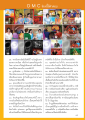
Exploring Spiritual Imagery and Meditation
1. (Images of Buddha, meditation, natural scenes, and traditional textiles)
2. (Images of women interacting, people at a temple, and group discussions)
3. (Black and white images of planets or moons,
…at temples, along with black and white imagery of celestial bodies and deities. The collection also shows monks, diverse individuals in formal attire, and serene scenes of meditation within temple setti…
13
Inaugural Volume of Buddhist Research by Dhammachai International Research Institute
…arch Institute (DIRI), as an academic organization preserving Early Buddhist teaching, proudly publish the inaugural volume of their research works. This is part of meritorious needs deserving the celeb…
…utions in Sri Lanka and ongoing support from international universities, DIRI aims to safeguard and share valuable Buddhist knowledge, aligning its mission with the fundamental teachings of the Buddha.
16
Launch of the Journal of the Dhammachai International Research Institute
…xts, many of which are often subjected to esoteric interpretations.
The JDIRI, then, plans to publish research articles about Early Buddhism and Buddhist meditation written by members of the DIRI and b…
This collection of articles marks the launch of the JDIRI, showcasing perspectives on Early Buddhism and meditation studies. The journal aims to publish research…
20
Exploring the Cakras and Early Buddhism
…ructed the Director of DIRI, Phrakrupladnayokwarawart (Sudhammo Bhikkhu), to ensure that no bias be shown to any particular Buddhist school or nikai, and to support research that leads to a better under…
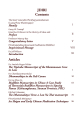
This journal focuses on the study of cakras and early Buddhism, emphasizing neutrality across Buddhist schools. Under the direction of Luang Phaw Dhammajayo, the Director of DIRI, Phrakrupladnayokwara
21
Exploring Buddhist Manuscripts and Teachings
…
*Buddhist Manuscripts in China: A Case Study of Theravāda Buddhist Manuscripts in Sipsong Panna (Xishuangbanna, Yunnan Province, PRC)* 63
Kitchai Urkasame
*The Dhammakāya Verse: a Lan Na Thai man…
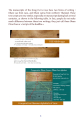
This text presents a collection of scholarly articles on Buddhist manuscripts and teachings, focusing on contributions from various experts. It includes studies on the Tipitaka Manuscripts of the Kham
27
Exploring the Manuscripts of Nong Pa Fa Cave
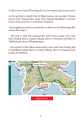
…nd. These two scripts are very similar, especially on manuscripts dating back several centuries, as shown in the following table. In fact, people do not make much difference between these two writings, …
The manuscripts of the Nong Pa Fa Cave showcase two primary forms of writing: Dham Lao from Laos and Dham Lanna from northern Thailand. While…
29
Exploring the Origins of the Nong Pa Fa Cave Manuscripts
…ndaburi, a former name of Nan province, in northern Thailand.
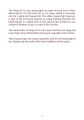
Two hypotheses can be considered, as shown in the following table and on the map in
- The first is that the manuscripts with Lanna script …
This text examines the Nong Pa Fa Cave manuscripts, highlighting their writing style as Dham Lanna. It raises questions about their origins, specifically whether part of these manuscripts originate fr
30
Nong Pa Fa Cave Manuscripts: A Historical Insight
…n in a Lao variant of Dhamma script, is a copy of the Parivāra.
The manuscripts of Nong Pa Fa Cave show that the Lan Xang and Lanna had a close relationship in the past, especially in the culture.
The…
The Nong Pa Fa Cave manuscripts are ancient, with one dating back to 2112 BE (1569 CE). The oldest, from 1520 CE, resides in Luang Prabang. These writings in a Lao variant of Dhamma script include a c
33
Reinterpreting Dhammarāya in the Pali Canon
Most of them refer only to the Aggañña-sutta passage, 4 missing out the three Apadāna references. 5 The reason could be either that the scholars concerned have taken the aforementioned text as represe
…ed. The paper outlines the reasons for its distinct approach and contrasts it with earlier studies, shedding light on a crucial aspect of Buddhist literature. More information can be found at dmc.tv.
35
Exploring the Concept of Dhammakāya in Pali Canonical Texts
Of the three canonical passages mentioned above, only the first, namely the Aggañña-sutta passage, contains the term dhammakāya, while the other two do not. The reason for which all these passages are
…ighlights how interpretations of dhammakāya have evolved and the factors that have influenced these shifts in understanding, while referencing contemporary academic works for deeper insights. For more d…
36
References to 'Dhammakāya' in the Pāli Canon
…se and understanding of the term in the early Theravāda community - the Pali canonical period.
We shall now look at each passage in detail.
---
15 With the exception of a PhD dissertation (Need, op.…
In the Pāli Canon, the term 'dhammakāya' is found four times, significantly in the Aggiāṇā-sutta and Apadāna literature. It serves various roles including a designation for the Tathāgata and associati
37
Exploring the Concept of Dhammakāya in the Aggañña-sutta
…the Pali sutta. The PTS and CS versions put the word in singular form, while the BJ and SR versions show the word in plural form ‘vāsetṭha.’ The singular form implies that the Buddha was speaking to vas…
This text discusses the term 'dhammakāya' as referenced in the Aggañña-sutta, emphasizing its importance in defining an heir of dhamma and the Tathāgata’s true son. The conversation between the Buddha
39
Interpretations of Dhammakāya in Early Pāli Texts
…on, op. cit., p. 50.
28 Ibid., p. 54.
29 Need, op. cit., pp. 377-378. As he comments: .....care should be taken with respect to reading the compound as "one who has the teachings as his body," or "o…
This text delves into various scholars' interpretations of the term 'dhammakāya' within the context of early Pāli suttas. Gombrich views it as 'dhamma-bodied,' emphasizing that the essence of the Budd
49
The Tathāgata and Brahmā: A Semantic Analysis
…ahmā' as beings in form
(rūpāvācara) or formless (arūpāvācara) realms in Buddhist philosophy.
49 As shown in the above parallel, to equate the Tathāgata with his verbal teaching is like to
equate the Br…
This passage delves into the nuanced relationships between the Tathāgata and Brahmā, highlighting the semantic layers present in verbal teachings. …
50
Understanding the Connotation of Dhamma in Relation to Brahma
…na) into a noble one (ariya-puggala). His title as an ‘heir of dhamma’ implies similar qualities he shares with the Buddha which indicates the noble (ariya) heredity. Therefore, the component ‘dhamma’ i…
…Buddhism. The Tathāgata is described as ‘dhamma-bodied’ and ‘the one who has become dhamma,’ establishing a connection with his noble disciples, who are seen as 'born of dhamma' and 'heirs of dhamma.' T…
51
The Transformative Power of the Noble Eightfold Path in Buddhism
…le states, so that itself is comparable to the creator. At the same time, it must refer also to the shared or same kind of qualities or essence of the Buddha and his noble disciples which are distinct f…
This text delves into the concept of transformation in Buddhist philosophy, specifically through the Noble Eightfold Path. It highlights how this path aids in the eradication of defilements, enabling
52
Understanding the Noble Eightfold Path and Threefold Path in Buddhism
…arvey explains the development of the threefold path in different levels up to the point where Arhatship is attained:57
With each more refined development of the virtue-meditation-wisdom sequence, the p…
This text elaborates on the interrelationship between Right Concentration, Right Views, and Right Aspirations as pivotal elements of the Noble …
53
Understanding Dhamma and Nibbāna in Buddhism
…, it may be more appropriate to refer to 'Nibbāna,' for once they have attained Buddhahood and Arhatship their spiritual qualities are transformed and they have passed beyond the earlier paths and fruit…
…the context of 'dhamabhuta,' signifies a transformation that occurs with enlightenment. It distinguishes between the qualities of the Buddha and those of lower-level noble disciples, while establishing …
57
The Concept of Dhamma and Kāya in Buddhist Philosophy
…und dhammakāya and dhammaBhūta refers to the ninefold transcendental dhamma in general.’
Next, we shall determine the meaning of the second component ‘kāya.’
**The Meaning of ‘Kāya’ in the Aṅgāṇṇa-s…
This study examines the terms dhamma and brahma, suggesting that they refer to the highest aspect of Tathāgāta, likely Nibbāna. The term dhamma denotes transcendental realities, transcending the realm
61
Exploring the Concept of Dhammakaya
…t the *Tathāgata's* body is the transcendental *dhamma(s)* or *Nibbāna.* The only difference is the shift of identification of this *dhamma*-body, from ‘belonging to the *Tathāgata*’ to ‘itself being (i…
…es transcendental dhamma or Nibbāna. The discussion highlights the Buddha's essence and the relationship between the Buddha and Nibbāna, shedding light on the depth of these terms in Buddhist teachings.…