

SH : ค้นหาหนังสือธรรมะ หน้า 105 / 170
หน้าหนังสือทั้งหมด
67
Understanding Dhammakāya in Relation to Paccekabuddhas and Enlightenment
… be argued that the Buddha and Paccekabuddhas are not the same. As the Buddha is a teacher, then it should be fine to say that he 'has teaching as body.' This is unlikely, however, for it would be stran…
This study analyzes the term 'dhammakāya' and its relation to enlightenment. Dhammakāya is presented as a singular concept applying to both the Buddha and Paccekabuddhas, emphasizing that 'dhamma' ref
69
The Superiority of Dhamma over Worldly Existence
… of ‘happiness of truths’ implies also that such a realization brings about happiness. In verse 32, she declares that her blameless or pleasurable dhammakāya was brought up by the Buddha. This has a num…
ในบทความนี้เสนอการเปรียบเทียบระหว่างความเป็นแม่ในโลกกับการเป็นบิดาทางจิตวิญญาณ โดยเน้นที่การดูแลร่างกายทางกายภาพและร่างกายทางจิตวิญญาณ รวมถึงประสิทธิภาพในการบรรเทาความกระหายของนมธรรมดาและนมที่เป็น dha
71
Understanding Dhammakāya and Enlightenment
… ‘dhammakāya’ in this passage is used strictly as a noun. It affirms that both forms of translation should be accepted according to the context of the passage where the term is located.
6. With the desc…
…s her status as an 'heir' through dhamma, reflecting that both the Buddha and enlightened disciples share certain qualities of dhammakāya. This overview reinforces the notion of dhammakāya as a substant…
74
Understanding Dhammakāya and Enlightenment
…ation or enlightenment brings about happiness, and so dhammakāya is said to be pleasurable. Next we shall proceed to a close reading of an ambiguous Pāli reference to dhammakāya.
116 See earlier discuss…
This text analyses the concept of dhammakāya, highlighting its connection to enlightenment and the associated happiness. It emphasizes the blameless nature of dhammakāya and notes Gotami's insights in
75
Dhammakāya and the Previous Buddha
VII. Reference 4: Dhammakāya and Previous Buddha
Another Pāli passage that shows the relation of dhammakāya with the Buddha is found in the Atthasandassakathera-apadāna. But her…
บทความนี้วิเคราะห์ความสัมพันธ์ของคำว่า Dhammakāya กับพระพุทธเจ้าในพระอัฏฐสังคษา โดยมีการเล่าถึงชีวิตของพระอรหันต์ Atthasandassaka ที่มีความคิดถึงพระพุทธเจ้า Padumuttara และการยกย่องพระพุทธเจ้าในบทกวีส
78
Understanding Dhammakāya in Early Theravādin Context
…f different Pali passages all point to the same direction and reinforce each other. This, in a way, shows the consistency of understanding regarding the term dhammakāya in the early Theravādin community…
This study analyzes the term dhammakāya through close readings of Pali canonical passages, revealing that it relates not only to the Buddha but also to other noble figures like Paccakabuddhas and disc
79
Understanding Dhammakāya: A Noble Identity
As a noun, the term refers to the new identity of a noble person once he/she is transubstantiated either from the worldly plane to a supramundane plane or from a lower transce…
…ource of his teachings. Traditional Theravādin writings by scholars like Buddhaghosa and Dhammapala shed light on this concept, viewing Dhammakāya as a complete, functional body in every transcendent st…
81
Understanding Dhammikāya in Buddhist Philosophy
…ity such as the ten powers (dasa bala), four causes
of intrepidity (catu vesārajja), six kinds of unshared knowledges (cha asādhāranāṇa.) and eighteen exclusive Buddha’s qualities (atthārasavēnabuddhadh…
…scendental dhamma, aligning it with the teachings of true dhamma and the Buddha's unique qualities, showcasing the connection between his physical body and dhamma-body. Furthermore, he highlights how dh…
89
Preservation of Dai Buddhist Manuscripts in Sipsong Panna
…ipts, 211 are Chinese paper ones and 40 are "Zanha Libretto."5 According to Yanxiang, the head of Xishuangbanna State Ethnic Research Institute and director of the State Palm-Leaf Culture Research Cente…
…uscripts, with 152 on palm leaves and 211 on Chinese paper. Key figures include Yanxiang from the Xishuangbanna State Ethnic Research Institute, noting about 1,000 palm-leaf scriptures exist in Yunnan. …
90
Buddhist Manuscripts from Sipsong Panna Region
…uddhist literature based on the Jatakas; this literature includes “indigenous” jatakas such as Zhao Shutun (召树屯) and Langaxihe (兰嘎西贺) and contains references to the ethnic and regional characteristics o…
Buddhist manuscripts from the Sipsong Panna region are categorized into four main groups: the Dai Pāli Tripiṭaka and Tripiṭaka commentary, frequently used Pāli Canon texts, Theravāda Buddhist literatu
94
Buddhist Manuscript Formats in Dai Region
Volume 98 Khuddaka-nikāya (小阿含经) and Volume 99 Majjhima-nikāya (中阿含经) are all in 5-line to 6-line format manuscripts; Volume 100 Digha-nikāya (长阿含经) is in 4-line to 5-line-format. The jäṭaka Wexiandal
…hest merit. An example is a palm-leaf scripture collected by my Research Center in a 5-line format, showcasing varied manuscript formats such as 14-21 lines depending on paper size. Most common are 17-l…
96
The Imminent Extinction of Palm-Leaf Manuscripts in Sipsong Panna
…ctions. When the Author interviewed Venerable Meng (勐长老) the abbot of Kublang Monastery in Menghai, she discovered that most local Buddhist temples have libraries or Scripture Halls where they keep palm…
This text discusses the worrying decline of palm-leaf manuscripts in Sipsong Panna, where Buddhist manuscript culture is rich but facing imminent extinction. Key reasons include the autonomous nature
97
Preservation of Palm-Leaf Scriptures in Dai Buddhism
…to read because both the page and the character size is
larger, and the white background contrasts sharply with the black
letters.
A further problem is that increasing amounts of Dai people
are unabl…
…and readable texts printed on Chinese and sa-paper. Reasons include cost, legibility, and the diminishing ability of the Dai people to read traditional scripts, as modern education focuses on the New Da…
98
Preserving Palm-Leaf Manuscripts in Southwestern China
…manuscripts, copied and inscribed in Pāli and the Dai language using traditional Dai Dhamma script, show the spread of Theravāda Buddhism into China, and are of great importance for the study of ancient…
…n Southwestern China, palm-leaf and sa-paper manuscripts are crucial for studying ancient Buddhism, showcasing the influence of Theravāda Buddhism. The recent collection efforts by the local government …
100
The Dhammakāya Verse: A Lan Na Thai Manuscript
…from Phitsanulok and a gold-plated inscription deposited in Wat Chetupon during the reign of Rama I shows that the concept of the Dhamma body of the Buddha, or dhammakāya, that is expounded in this manu…
…a kāya verse is presented with detailed analysis and translations into Pāli, Central Thai, and English. The manuscript, consisting of a bundle of ten palm leaves, is housed at Wat Pasak Noi in Chiang Ma…
102
Wisdom and the Dhammakāya in Buddhist Teachings
…efold learning (sikhāttaya). The discussion of the monastic robes is related to the virtue of moral shame (hiri) and moral fear (ottappa). The text mentions the chest belt, or girdle (kāya-bandha) that …
The text highlights unique qualities of wisdom exclusive to Buddhas, including omniscience and the ten intellectual powers. It discusses the dhammakāya as the embodiment of a Buddha's inner wisdom, di
103
The Historical Significance of Dhammakāya Verse in Thai Buddhism
… inscription was given the identification number of 54 in the Corpus of Thai Inscriptions, and published under the name “Inscription of dhammakāya” by the Office of the Prime Minister in 1965. The inscr…
…hists. Found in royal contexts like Wat Phra Chetupon, the continued existence of these manuscripts showcases the verse's lasting impact on Thai Buddhism and its teachings about the Dhamma body of Buddh…
104
Historical Significance of the Lan Na Palm-Leaf Manuscript
…, Autumn/Winter 2008, pp. 16-23.
7 Coedes' article, Adyar Library Bulletin, vol. 29, 1956, 248-286, shows that the dhammakāya verse was important for Khmer Buddhists as well.
The Lan Na palm-leaf manuscript's dating is uncertain due to its fragility, but it has been recited by devout Buddhists since the 16th century, alongside evidence from the Phitsanulok inscription and
119
An Shigao and Early Chinese Meditation Techniques
Phra Kiattisak Kittipanyo
University of Otago
123
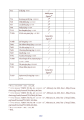
Buddhist Sutras Compilation
T32 Si di jing 四譯經 Madhyama Āgama19
T36 Benxiong yizhi jing 本相獻曆經 /20
T48 Shifa fejiajing 是法非法經 /21
T57 Lou fenbu jing 漏分布經 /20
T98 Pufa yi jing 普法義經 /22
T112 Ba zhendaoj…
…nd meditation practices necessary for the path to enlightenment. Notable texts include the Da Anban shouyi jing and the Apitan wu fa xing jing, each providing unique perspectives on Buddhist philosophy …