

Self-Reflection : ค้นหาหนังสือธรรมะ หน้า 16 / 33
หน้าหนังสือทั้งหมด
15
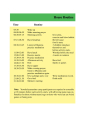
Daily Routine at Yuwakalayanamitra Camp
House Routine
Time Routine
05.30 Wake up
06.00-06.30 Make morning prayer
06.30-07.15 Morning activity Give alms,
The Yuwakalayanamitra Camp involves a comprehensive daily schedule encouraging spiritual growth and camaraderie among participants. Beginning with a morning wake-up at 5:30 AM, activities include morn
48
YUWA CAMP Evening Show and Farewell Ceremony
Evening show
On the night before last night at YUWA CAMP, Yuwakalayanamitra perform shows out of stories of Buddha, with some adjustment, to express themselves and their creativeness. Their shows are
At YUWA CAMP, participants engaged in creative performances based on Buddha's stories, led by mentors who shared their insights. The final night was marked by a warm farewell ceremony where mentors ex

166
There is no visible readable text in the image provided. The image depicts a silhouette of a traditional pagoda-style structure on water, with a yellow background and a reflection of the structure in

25
Ceremonial Lamp Lighting Event
People are participating in a ceremonial event, possibly a lamp lighting or a religious ritual, with a group of individuals lighting a lamp or flame. The scene is set at night, with a large audience o
This text describes a ceremonial lamp lighting event held at night, where a large crowd participates in a religious or cultural ritual. Individuals light lamps or flames, creating a star-like effect a
76
Understanding the Terms Kevala and Dhammakāya in Buddhist Texts
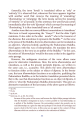
Generally, the term ‘kevala’ is translated either as ‘only’ or ‘entirely.’ It is observed that, whenever the term appears together with another word that conveys the meaning of ‘emanating,’ ‘illuminat
This text explores the interpretation of key Buddhist terms such as 'kevala', which denotes 'only' or 'entirely', particularly in contexts associated with illumination. The term 'dhammakāya', often li
18
The Consequences of Apathy Towards Death
Let my masters, the executioners, wait till I have visited my friends and advisers, my kinsmen by blood, in this or that village or town, and come back " ? Or would the executioners cut off the head o
This text delves into a philosophical discourse about the inevitability of death and the moral implications of one's actions. It contrasts the yearning for a reprieve from execution with the notion th
24
Exploring the Next Life and Rebirth
22
This Life Next Life
And they were to do so. And you were to say to them : -
" Well, masters, take him up on to the palace and amuse him with the pleasures of the five senses. "
And they were to
In this text, Master Kassapa discusses the transient pleasures of life and contrasts them with the inherent nature of human existence. Through dialogue, he illustrates the repulsive aspects of humanit
44
The Nature of Existence and Evidence
18. ' Even though Master Kassapa says this, it still appears to me that not one of those things exists. '
' Have you any further evidence, Prince ? '
' I have, Master Kassapa.'
' What might that be
In this excerpt, Prince engages in a philosophical discussion with Master Kassapa about the existence of the soul. The Prince presents a scenario where a felon is punished severely, questioning the ab
58
The Simile of the Caravan
23. ' Well then, Prince, I will give you a simile ; for it is by way of a simile that some intelligent men discern the meaning of what has been said. Once upon a time, Prince, a great caravan of a tho
In this narrative, a prince is presented with a simile involving a great caravan of a thousand carts journeying from the East to the West. The caravan consumes resources as it travels. Two leaders dec
210
Pali Literature: A Comprehensive Guide
Jayawardhana, Somapala. 1994. *Handbook of Pali Literature*. Colombo: Karanaratne and Sons Ltd.
Macdonell, Arthur. 1974. *A Sanskrit Grammar for Students*. Delhi: Motilal Banarsidass.
Malalasekera,
This collection includes essential works on Pali literature and languages, covering texts from Jayawardhana, Macdonell, and Malalasekera. Academic articles discuss aspects such as external sandhi in P

67
Piramide
Lago
Reflection
Curved Path
Bridge
Trees
Sky
45
The Burden of Wealth and Survival
position, as he could fight or escape. Sodh’s survival instinct told him that he should switch his position from the helm to the front of the boat to avoid danger. So he ordered his crewman at the fro
The story follows Sodh, a boat owner who grapples with his conscience when faced with danger. Despite the risk to his life, he chooses to prioritize the safety of his crew, leading to a reflection on
142
Cultivating Your Merit Sphere: A Guide to Mindfulness
Reflect on your merit sphere, easily and comfortably. Develop a feeling that you have a bright merit sphere residing at the center of your body. It doesn’t matter whether the sphere may appear clearly
Reflecting on your merit sphere is essential for mental refinement and clarity. Begin by embracing a comfortable mindset while focusing on the bright merit sphere within your body. Understand that cla
143
Achieving Inner Peace Through Simple Reflection
Reflect easily and comfortably. Relax your eyelids, adjust your sitting position, relax your body, and create a feeling of stillness, tenderness and comfort. This is all you have to do. It is the only
This text emphasizes the simplicity of achieving inner peace through relaxation, mental stillness, and reflection. It encourages individuals to set aside life's pressures and distractions to focus on
25
The Hermit's Wisdom and the Unknown Factor
ments with a Phammo Master
him, and begged him to come back. "I cannot come into your castle with these clothes on," said the hermit. "The people turned me away at the gate because they saw my old cl
In this entertaining story, a hermit is initially turned away from a feast due to his old clothes. After receiving new attire, he humorously chooses to feed his clothes instead, illustrating the lesso
29
Reflections on Meditation and Teachings of Luang Por
Leaving Luang Por that day, we have no idea when we will ever return. And, so, we say "Good Bye" and thank him for all of his kindness.
He says: "Please continue to meditate and I think you will be v
In this touching reflection, the author recounts a farewell to Luang Por, expressing gratitude for his kindness and wisdom. Luang Por encourages continued meditation practice and shares hopes for the
68
The Importance of Collective Care in Temples
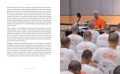
to the temple, they do so after making a wish and a resolution.
Therefore, when a monk uses any of these items, he does so
upon the good faith and respect of common people. If you show
disregard for
This text discusses the shared responsibility between monks and laypeople in maintaining temple property. It highlights the importance of respect for items used in religious practice and how neglect c
8
Journey to Enlightenment: Understanding the Dhamma
When later in life he met Khun Yai Ajahn he learned of the three levels of life’s goals and became further motivated by the realization that all human beings are prisoners on ‘Death Row’, this knowled
The text discusses a man's journey after meeting Khun Yai Ajahn, discovering life’s goals, and understanding that humans are prisoners on 'Death Row.' He learns that sharing knowledge can illuminate t
14
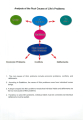
Analysis of the Root Causes of Life’s Problems
Analysis of the Root Causes of Life’s Problems
The Root Causes of Life’s Problems
Economic Problems Conflicts Defilements
Buddhism
The Individual
The Mind
Habits
Root Causes of Life’s Problems
This text discusses the analysis of life’s problems through a Buddhist lens, identifying economic issues, conflicts, and personal defilements as root causes. It asserts that these problems originate f
28
Understanding the Root Causes of Life's Problems through Buddhism
Summary
Concepts - The root causes of life's problems include economic problems, conflicts, and defilements
- The Lord Buddha's Teachings aim to correct the root causes of life's problems
- Buddhism c
This text discusses the root causes of life's problems, including economic issues, conflicts, and mental defilements, proposing that the Teachings of the Lord Buddha offer comprehensive solutions. By