

not-self : ค้นหาหนังสือธรรมะ หน้า 97 / 122
หน้าหนังสือทั้งหมด
120
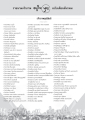
รายนามเจ้าภาพ อุปถัมภ์
รายนามเจ้าภาพ จับงาอุปถัมภ์
กัลยาณ์ขันธ์บัวโค้ง
กล้าหัสดีธร ชุณหวัณกุล พร้อมเพรียงกัน
กล้ารามญาติ ขวัญใจ และครอบครัว
กล้ารุ่งโรจน์ ลิขิตโชติ
กล้าสิทธิอาวุธ วิชิตชัย คำชะ
กล้าฤทธิ์-สุมนามาส-วุฒิชา
เอกสารนี้รวบรวมรายชื่อของเจ้าภาพที่ได้ให้การสนับสนุน โดยมีรายละเอียดเกี่ยวกับชื่อผู้สนับสนุนและครอบครัวของพวกเขา เริ่มจากกล้าหัสดีธร ชุณหวัณกุล ไปจนถึงกัลยาณ์ สุขศิลา ซึ่งทั้งหมดนี้แสดงถึงความมีน้ำใจข
7
Exploring Buddhist Meditation and Its Significance
Preface
Not a month goes by these days without another important article being published on some newly uncovered Buddhist text, and among the discoveries are ancient materials about Buddhist meditati
This preface discusses the ongoing discoveries in Buddhist meditation texts and the efforts of Venerable Phrakrupaladnayokwarawat (Sudhammo Bhikkhu) in promoting scholarly exploration. It emphasizes t
23
The Tipitaka Manuscripts of the Khammouan Cave in Laos
The Tipitaka Manuscripts of the Khammouan Cave in Laos
Anatole-Roger Peltier
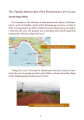
On invitation of the Ministry of Information and Culture (Vientiane, Laos), I went to Thakhek, capital of the Khammouan p
In May 2005, Anatole-Roger Peltier was invited by the Ministry of Information and Culture in Laos to explore the Nong Pa Fa Cave in Khammouan Province. Accompanied by a cultural officer and a local sc
35
Exploring the Concept of Dhammakāya in Pali Canonical Texts
Of the three canonical passages mentioned above, only the first, namely the Aggañña-sutta passage, contains the term dhammakāya, while the other two do not. The reason for which all these passages are
This study reexamines the term dhammakāya in specific Pali canonical passages, notably the Aggañña-sutta, contrasting it with previous scholarly interpretations that often exclusively link the term to
36
References to 'Dhammakāya' in the Pāli Canon
III. References to 'Dhammakāya' in the Pāli Canon
In the Pali canon, the term dhammakāya appears four times: once in the Aggiāṇā-sutta of the Dīgha-nikāya and three more times in Apadāna literature.
In the Pāli Canon, the term 'dhammakāya' is found four times, significantly in the Aggiāṇā-sutta and Apadāna literature. It serves various roles including a designation for the Tathāgata and associati
38
Understanding the Concept of Dhammakāya in Buddhist Thought
D.III.84
Vāsettha and Bhāradvāja, he whose confidence in the
Tathāgata is settled, rooted, established, solid, irremovable by
any ascetic or brahmin, any deva or Māra or Brahmā or anyone
in the world
In this passage, Vāsettha and Bhāradvāja discuss the unwavering confidence in the Tathāgata, stating that those deeply rooted in dhamma can claim to be heirs of dhamma. The term 'dhammakāya' and its i
39
Interpretations of Dhammakāya in Early Pāli Texts
Gombrich, while differently translating the term in this passage as a bahubbiha compound 'dhamma-bodied,' similarly interprets it as an indication that the Buddha's true import is due to 'his teaching
This text delves into various scholars' interpretations of the term 'dhammakāya' within the context of early Pāli suttas. Gombrich views it as 'dhamma-bodied,' emphasizing that the essence of the Budd
40
Understanding Dhammakāya in Aṅgāṇā-sutta
In brief, contemporary academics refer to the term dhammakāya in the Aṅgāṇā-sutta either as a noun or an adjective. As a noun, the term is interpreted mostly as the Buddha’s teachings collected togeth
The term dhammakāya is interpreted in contemporary academia as both a noun and an adjective. As a noun, it denotes the Buddha’s teachings, while as an adjective, it refers to the nature of the Tathāga
41
Understanding Dhammakāya: A Scholarly Interpretation
Points to Consider
It may be observed that the difference in previous scholarly interpretations of the term dhammakāya in this passage mainly pertains to the inter-relatedness of two distinctive meani
This text delves into scholarly interpretations of the term 'dhammakāya', emphasizing the need for a nuanced understanding of 'dhamma' as both a realized reality and a verbal expression. It identifies
45
Understanding Dhamma and Spiritual Realization
This corresponds to the set of four activities41 belonging to a Stream-attainer (sotāpattiyānga) which brings about other sets of qualities.
The titles ‘born of dhamma’ (dhammaja) and ‘created by dham
This content discusses the process of spiritual attainment through dhamma, emphasizing four key activities that lead to the emergence of noble qualities. It highlights how listening to the Buddha's te
49
The Tathāgata and Brahmā: A Semantic Analysis
1. The Tathāgata and Brahmā,48 the creator god
2. The Tathāgata's mouth (verbal teaching) & Brahmā mouth.
3. The dhamma and Brahmā, the creator god; or
The dhamma and Brahman, the ultimate reality.
I
This passage delves into the nuanced relationships between the Tathāgata and Brahmā, highlighting the semantic layers present in verbal teachings. It contrasts the Tathāgata's mouth with Brahmā's, ind
54
Understanding Dhamma and Brahman in Buddhism
In the case that 'brahma-' refers to the neuter 'brahman'
In the other case in which the term brahma- is translated as 'brahman'63 the ultimate,64 the third parallel65 suggests that the term dhamma in
This text clarifies that the term 'brahma-' can refer to either the masculine 'Brahmā' or the neuter 'brahman,' ultimately leading to the view that dhamma signifies transcendental realities. It sugges
89
Preservation of Dai Buddhist Manuscripts in Sipsong Panna
This project is in accordance with the national emphasis on the protection and development of religious culture in minority areas.3 Most of the Dai Buddhist manuscripts in Sipsong Panna are made from
This project aligns with the national focus on protecting religious culture in minority areas, specifically the Dai community in Yunnan. Research has identified more than 400 Dai Buddhist manuscripts,
94
Buddhist Manuscript Formats in Dai Region
Volume 98 Khuddaka-nikāya (小阿含经) and Volume 99 Majjhima-nikāya (中阿含经) are all in 5-line to 6-line format manuscripts; Volume 100 Digha-nikāya (长阿含经) is in 4-line to 5-line-format. The jäṭaka Wexiandal
Volume 98 Khuddaka-nikāya and Volume 99 Majjhima-nikāya are primarily in 5-6 line formats, while Volume 100 Digha-nikāya is formatted with 4-5 lines per page. The jäṭaka Wexiandala represents a key Bu
96
The Imminent Extinction of Palm-Leaf Manuscripts in Sipsong Panna
III The Problem of the Imminent Extinction of Palm-Leaf Manuscripts in Sipsong Panna
Buddhism in Sipsong Panna is characterised by its manuscript culture. However, today the number of the palm-leaf m
This text discusses the worrying decline of palm-leaf manuscripts in Sipsong Panna, where Buddhist manuscript culture is rich but facing imminent extinction. Key reasons include the autonomous nature
97
Preservation of Palm-Leaf Scriptures in Dai Buddhism
donate palm-leaf scriptures as an act of merit and such donations
appear less frequently in the sacred dantam (贽坦) or offering
ceremony. Donors prefer to donate Buddhist scriptures printed
using mod
This text discusses the decline in donations of traditional palm-leaf scriptures in favor of more accessible and readable texts printed on Chinese and sa-paper. Reasons include cost, legibility, and t
102
Wisdom and the Dhammakāya in Buddhist Teachings
Some of the qualities or forms of wisdom listed in the text are exclusive to Buddhas such as omniscience (sabbaññutāna), intrepdity (vesārajjanāna), and the ten supreme intellectual powers of a Buddha
The text highlights unique qualities of wisdom exclusive to Buddhas, including omniscience and the ten intellectual powers. It discusses the dhammakāya as the embodiment of a Buddha's inner wisdom, di
129
Exploring the Center of the Body in Meditation
Thus, the phrase 『息中具有四大。心在中』 can be interpreted as: "the mind should be located at the centre of the body while breathing (in and out)." The precise position of the centre of the body where the mind
This text examines the phrase 'the mind should be located at the center of the body while breathing in and out.' It references the teachings of PhraMongkolthepmuni regarding the center's location abov
136
The Influence of An Shigao on Meditation in Eastern Han China
Conclusion
In conclusion, in this paper I have reviewed An Shigao's career as a meditation master and a translator of Buddhist texts. Based on his translations of meditation sutras I have argued that
In this conclusion, I highlight An Shigao's significant contributions as a meditation master and translator of Buddhist texts. His translation of meditation sutras introduced mindfulness breathing med
7
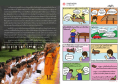
เรื่องราวเกี่ยวกับการฝึกฝนและการปฏิบัติตน
Here is the extracted text from the image:
**Left side:**
*The text is in Thai and appears to be about respect and discipline, possibly in a teacher or monk context, but is not fully transcribed her
เนื้อหาเกี่ยวกับการฝึกฝนทักษะในชีวิตประจำวันที่สำคัญ เช่น การทำอาหารและการเตรียมตัวในสถานการณ์ฉุกเฉิน ประกอบไปด้วยการสนทนาเกี่ยวกับการรับมือกับปัญหาที่เกิดขึ้นต่างๆ รวมถึงความสำคัญของการเรียนรู้และควา