

2 : ค้นหาหนังสือธรรมะ หน้า 498 / 724
หน้าหนังสือทั้งหมด
40
Understanding Dhammakāya in Aṅgāṇā-sutta
…dental fruits (phalas)’ along with their ‘corresponding paths (maggas)’ and ‘Nibbāna.’
35 ThrA.II.205.
Dhammabhūtehiṭi dhammakāyatāya dhammasabhāvehi, navalokuttaradhammaṭo vā bhūtehi jatehi, dhamm…
The term dhammakāya is interpreted in contemporary academia as both a noun and an adjective. As a noun, it denotes the Buddha’s teachings, while as an adjective, it refers to the nature of the Tathāga
43
Understanding the Noble Discipleship in Buddhism
Vin.II.192, A.IV.186, 210, 213
Just as a piece of clean cloth that is deprived of dirt would well-absorb the …
The text discusses the qualities of noble disciples in Buddhism, emphasizing the importance of clear perception of dhamma and the eradication of doubts and fetters. It describes the transformation exp
44
Qualities of a Stream-Attainer in Buddhism
…g, c) proper contemplation on the teaching heard, d) proper practice
according to the teaching. D.Ⅲ.227, S.V.347.
2. Being possessed of the noble eightfold path, and, to some extent, the qualities of
a…
This text delves into the characteristics of a Stream-attainer, identified as a noble disciple who is reborn to a transcendental plane through the Buddha's teachings. Key qualities include association
46
Buddhism and the Concept of Nirvāṇa
…er, “Early Buddhist Dhamma,” Artibus Asiae 11, no. 1 (1948), p. 119.
**45** For example, see M.II.25-29, S.I.221-222, Ap.II.544.
Eliade suggests that for the Buddha, salvation comes through attaining nirvāṇa, transcending the mundane aspects of human life and entering an unconditioned state. This transformation entails a metaph
59
Understanding Dhamma and Nibbāna
…nāgāmi) which appear to be included also in the sutta. Cf. Harvey, The Selfless Mind, op. cit., pp. 233-4.
85 S.V.348.
This study delves into the concepts of dhamma and Nibbāna, positing that dhamma refers to transcendental dhamma, which serves as a transformer and defilement eradicator. It explores how the realizatio
64
Understanding Paccekabuddhas in Buddhism
… on how to practise oneself in order to gain spiritual realisation. See, for example, Ap.I.7-14.
92 Although the Pāli word ‘khaggavisāṇa’ could mean either the ‘rhinoceros’s horn’ or the animal ‘rhin…
The text discusses the distinct nature of Paccekabuddhas, who can guide individuals toward enlightenment but do not teach the masses like Buddhas. Their teachings emphasize solitude and are succinct,
80
Understanding Dhammakāya and its Significance in Buddhism
mental qualities128 or purity,129 or identifies it with realities to be
attained or experienced spiritually by noble d…
This text examines the term dhammakāya as articulated by Buddhaghosa, linking it to spiritual realities and teachings of the Buddha. It highlights the role of dhamma-vinaya as a guiding principle and
81
Understanding Dhammikāya in Buddhist Philosophy
…ssed by the preaching
of true dhamma.140
____________________________
134 At ThrA.I.115 and ĐT.II.201, Dhammapāla follows Buddhaghosa that the Buddha’s
dhammikāya is prosperous with treasured qualiti…
Dhammapāla discusses dhammikāya, relating it to the Buddha's mental qualities and Enlightenment. This term connects the Buddha's teachings and truths, illustrating his purity and extraordinary qualiti
84
Bibliography of Buddhist Studies
…: Motilal Banarsidass, 1978.
Geiger, Wilhelm. “Dhamma and Brahman.” Zeitschrift flour buddhismus (1921): 73-83.
Gombrich, Richard. “The Buddha’s Book of Genesis.” Indo-Iranian Journal 35 (1992): 159-78…
This bibliography encompasses significant scholarly works in Buddhist studies, offering insights into various aspects such as the early Buddhist philosophy, the concept of Dharmakāya, and teachings of
85
Academic Studies on Buddhism
…ody: Etherealization and Sense in Vedic and Early Buddhist in Religiosity." University of Virginia, 2004.
Nitta, Tomomichi. “The Meaning of “Dhammakāya” in Pāli Buddhism.” Journal of Indian and Buddhis…
This collection features key academic contributions to the study of Buddhism, drawing from archaeological criticism, doctrinal analyses, and comparative studies between traditions. Works by notable sc
88
Overview of Theravāda Buddhist Manuscripts in China
…as a population of more
than 1,000,000 people, is the largest group of Theravāda Buddhists in
China.2 There are Buddhist temples in almost every Dai village, and
Buddhist belief and ritual is an import…
This document provides an overview of Theravāda Buddhist manuscripts found in China, particularly in Yunnan Province. It discusses the significance of these manuscripts within the Dai community and hi
95
Dai Buddhist Manuscripts in Yunnan's Dehong Prefecture
…he Jingzhen Buddhist Temple in Menghai. Here, the author found that the vice-abbot of the Temple, a 22 year old monk, was originally from Myanmar. The only palm-leaf manuscript in Jingzhen Temple was a…
This text discusses the unique tradition of Buddhist manuscripts among the Dai people in Dehong Autonomous Prefecture of Yunnan, where various types of manuscripts are produced. Most texts utilize sa-
98
Preserving Palm-Leaf Manuscripts in Southwestern China
… region. However, there has been little research into this field until recently. The publication in 2010 of The Complete Collection of Chinese Palm-Leaf Scripture, a selected anthology of an anthology …
In Southwestern China, palm-leaf and sa-paper manuscripts are crucial for studying ancient Buddhism, showcasing the influence of Theravāda Buddhism. The recent collection efforts by the local governme
100
The Dhammakāya Verse: A Lan Na Thai Manuscript
…by the Institute of Social research, Chiang Mai University, and given the identification number 79 029 11 027-029. There is no trace of a date on the manuscript.
¹ Kitchai Urkasem (Chulalongkorn Unive…
This article discusses research supported by the 60th Dhamma chai Education Foundation on a palm leaf manuscript titled Dhamma kāya from northern Thailand's Lan Na region. Undated, it is believed to h
101
Understanding the Pāli Verses and Buddhist Doctrine
…cript domain: surveying, preservation and documentation,” part 1 Manuscript Cultures, Autumn/Winter 2008, pp. 16-23.
80
The manuscript presents Pāli verses and commentary in Tai Yuan, summarizing Buddhist doctrines about the Buddha's physical body and wisdom. It includes thirty stanzas highlighting qualities like divin
103
The Historical Significance of Dhammakāya Verse in Thai Buddhism
…is dated Friday, the first day of the third waxing moon, 1470 Mahasakkarāja, which is equivalent to 2092 BE (or 1548 CE). The scribe was a Buddhist monk: Maḥāthera Śribaṅśa. The inscription was commiss…
The dhammakāya verse has been recognized in the Lan Na regions for centuries, with historical inscriptions confirming its existence dating back to the 16th century, specifically at Wat Tham Suea in Ph
104
Historical Significance of the Lan Na Palm-Leaf Manuscript
…ript domain: surveying, preservation and documentation”, part 1, Manuscript Cultures, Autumn/Winter 2008, pp. 16-23.
7 Coedes' article, Adyar Library Bulletin, vol. 29, 1956, 248-286, shows that the dh…
The Lan Na palm-leaf manuscript's dating is uncertain due to its fragility, but it has been recited by devout Buddhists since the 16th century, alongside evidence from the Phitsanulok inscription and
120
An Shigao and Early Chinese Meditation Techniques
…Buddhism into China, and there have been many investigations of his life and translations (Zürcher, 2007³; Forte, 1995⁴; Zacchetti, 2002⁵; Nattier, 2008⁶). Most of these investigations have focused on …
An Shigao (147-168 CE) significantly influenced the early transmission of Buddhism in China. Despite a focus on his ethnicity and translation style, he is recognized as a respected meditation master.
126
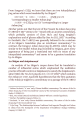
An Shigao's Influence on Anban Sutras
… two Anban[shouyi] jing sutras which were translated by An Shigao:37
安般守意經一卷 安錄云:『小安般經』。(CSZJJ p.5c 23: “corresponding to a Smaller Anban jing”
大安般經一卷(CSZJJ p. 6a 15): “corresponding to a Larger Anban …
This content examines An Shigao's translations of Anban sutras, highlighting the distinctions between the Present Da Anban shouyi jing and the Kongo-ji Anban shouyi jing. The text discusses the integr
127
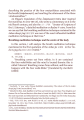
The Practice of Ānāpānasmṛti: Breath Meditation in Early Buddhism
…associated with the breath (ānāpānasmṛti), and resulting the attainment of the three vimoksamukhās.42
An Shigao’s translation of the Ānāpānasmṛti Sūtra later inspired the monk Dao An (312-385 CE), who …
This text delves into the practice of Ānāpānasmṛti, a significant Buddhist meditation focused on breath. It highlights An Shigao’s translation of the Ānāpānasmṛti Sūtra and its influence on later monk