

F : ค้นหาหนังสือธรรมะ หน้า 40 / 300
หน้าหนังสือทั้งหมด
46
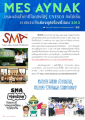
การปกป้องโบราณสถาน Mes Aynak
…ES AYNAC
มรดกวันสำคัญในโลกยังไม่รู้ UNESCO ยังไม่เห็น
เราจำเป็นต้องดึงเรื่องนี้ก่อน 2012
http://www.facebook.com/SaveMesAynakTH SPF
SMath (เอส-ม่า-ไทย) หรือ Save Mes Aynak Thailand คือวัยรุ่นไทยกลุ่มห…
กลุ่ม SMath (เอส-ม่า-ไทย) ตั้งขึ้นในปี 2012 เพื่อปกป้องโบราณสถาน Mes Aynak จากการทำเหมืองแร่ที่อาจทำลายมรดกทางประวัติศาสตร์และวัฒนธรรมโลก ทั้งนี้กลุ่มได้จัดกิจกรรมเพื่อเผยแพร่ข้อมูลและเชิญชวนผู้คนร่วม

55
V-PEACE Magazine: วารสารเพื่อความสุขและประโยชน์
… บริการงานบุญ
ส่งความคิดเห็นถึง V-PEACE magazine และทีมงานได้ที่ - สภาธรรมกายสากล เลขที่ P21 - www.facebook.com/vpeacemedia - e-mail: [email protected]
… รอคอยให้วารสารนี้ดำเนินต่อไปอย่างต่อเนื่อง สามารถติดต่อส่งความคิดเห็นได้ที่ สภาธรรมกายสากล หรือทาง Facebook และอีเมล์ที่ได้แสดงไว้ค่ะ.
17
Exploration of Pāli Manuscripts in Laos
The journal begins with Anatole-Roger Peltier's article on his investigations of a wooden chest containing palm-leaf manuscripts that were recently discovered in a cave in the Kham…
This journal features an article by Anatole-Roger Peltier on a wooden chest containing palm-leaf manuscripts found…
23
The Tipitaka Manuscripts of the Khammouan Cave in Laos
The Tipitaka Manuscripts of the Khammouan Cave in Laos
Anatole-Roger Peltier
On invitation of the Ministry of Information and…
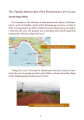
In May 2005, Anatole-Roger Peltier was invited by the Ministry of Information and Culture in Laos to explore the Nong Pa Fa Cave in Khammouan Province. Accompanied b…
26
Exploring the Tipiṭaka Manuscripts
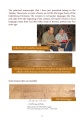
The palm-leaf manuscripts that I have just presented belong to the Tipiṭaka. These texts, or parts of texts, are …
The palm-leaf manuscripts presented belong to the Tipiṭaka, primarily in Pāli, the lingua franca of the Indochine…
35
Exploring the Concept of Dhammakāya in Pali Canonical Texts
Of the three canonical passages mentioned above, only the first, namely the Aggañña-sutta passage, con…
This study reexamines the term dhammakāya in specific Pali canonical passages, notably the Aggañña-sutta, contrasting it with previous scholarly interp…
36
References to 'Dhammakāya' in the Pāli Canon
III. References to 'Dhammakāya' in the Pāli Canon
In the Pali canon, the term dhammakāya appears four times…
In the Pāli Canon, the term 'dhammakāya' is found four times, significantly in the Aggiāṇā-sutta and Apadāna literature. It serves various roles …
38
Understanding the Concept of Dhammakāya in Buddhist Thought
D.III.84
Vāsettha and Bhāradvāja, he whose confidence in the
Tathāgata is settled, rooted, established, solid, irremovable by
any ascetic or brahmi…
In this passage, Vāsettha and Bhāradvāja discuss the unwavering confidence in the Tathāgata, stating that those deeply rooted in dhamma can claim to be heirs of dhamma.…
51
The Transformative Power of the Noble Eightfold Path in Buddhism
refer to something which 'transforms' the person into noble states, so that itself is comparable to the…
This text delves into the concept of transformation in Buddhist philosophy, specifically through the Noble Eightfold Path. It highlights…
53
Understanding Dhamma and Nibbāna in Buddhism
With regard to dhamma as the 'essence' of the Buddha and Arhat disciples, however, it may be more appropriate to refer to 'Nibbāna,' for once…
This text explores the concept of dhamma in relation to the Buddha and Arhat disciples, particularly the notion of Nibbāna as the ess…
54
Understanding Dhamma and Brahman in Buddhism
In the case that 'brahma-' refers to the neuter 'brahman'
In the other case in which the term brahma- is translated as 'brahman'63…
This text clarifies that the term 'brahma-' can refer to either the masculine 'Brahmā' or the neuter 'brahman,' ulti…
57
The Concept of Dhamma and Kāya in Buddhist Philosophy
On the whole, it appears that the terms dhamma and brahma constituting four designations of the Tathāgāta are used in the sense of the ‘highest.’ It is most likely that the…
This study examines the terms dhamma and brahma, suggesting that they refer to the highest aspect of Tathāgāta, likely Nibbāna. The term dhamma denotes transcendental realit…
59
Understanding Dhamma and Nibbāna
The parallel usage of dhammakāya and dhammabhūta with brahmakāya and brahmmabhūta suggests further that the term dhamma i…
This study delves into the concepts of dhamma and Nibbāna, positing that dhamma refers to transcendental dhamma, which serves as a transfo…
64
Understanding Paccekabuddhas in Buddhism
91 While it is possible for a Paccekabuddha to teach an individual which finally leads to that person's enlightenment, he doe…
The text discusses the distinct nature of Paccekabuddhas, who can guide individuals toward enlightenment but do not teach the masses like Bud…
83
Understanding Dhammakāya in Theravāda Buddhism
In a few passages, however, Sāriputta also refers to the term dhammakāya in the sense of the Buddha’s teac…
… term 'dhammakāya' as interpreted in traditional Theravāda Buddhism. It discusses the general view of dhammakāya as reflecting the qualities of the Buddha and the spiritual realities to be attained. Th…
87
Buddhist Manuscripts in China: Theravāda Buddhism in Sipsong Panna
Buddhist Manuscripts in China: A Case Study of Theravāda Buddhist Manuscripts in Sipsong Panna (Xishuangbanna, Yunnan Province, PRC)
Joe Zhou Ya
…
This article delves into the rich tapestry of Buddhist culture in China, specifically focusing on the Theravāda Buddhism of the Dai people in Sip…
94
Buddhist Manuscript Formats in Dai Region
Volume 98 Khuddaka-nikāya (小阿含经) and Volume 99 Majjhima-nikāya (中阿含经) are all in 5-line to 6-line format manuscripts; Volume 100 Digha-nikāya (长阿含经) is in 4-line to 5-line-format. The jäṭaka Wexianda…
Volume 98 Khuddaka-nikāya and Volume 99 Majjhima-nikāya are primarily in 5-6 line formats, while Volume 100 Digha-nikāya is formatted with 4-5 lines per page. The jäṭaka Wexiandala re…
125
Meditation Techniques from An Shigao's Teachings
breathing in, and count two at the end of breathing out. If you
count any other number than two when it should be two, start
counting over fr…
This text delves into meditation practices from An Shigao’s works, particularly highlighting the Anban shouyi jing, a crucial scripture translat…
129
Exploring the Center of the Body in Meditation
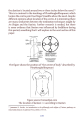
Thus, the phrase 『息中具有四大。心在中』 can be interpreted as: "the mind should be located at the centre of the body while breathing (in and out)." The precise position of the centre of the body where the mi…
This text examines the phrase 'the mind should be located at the center of the body while breathing in and out.' It references the teachings of PhraMongkolthepmuni regarding …
130
Understanding the Dantian and Its Location
…ian is located around two or three inches below the navel. 53
This is in contrast to the teachings of PhraMongkolthepmuni, which
locates the centre point two finger breadths above the navel. Despite
di…
The dantian is primarily recognized as located about two to three inches below the navel, differing from PhraMongkolthepmuni's teachings which suggest it lies two finger breadths above. While t…