

Hi : ค้นหาหนังสือธรรมะ หน้า 144 / 216
หน้าหนังสือทั้งหมด
104
The Inner Light of Dhamma
This is a cool, refreshing inner light that comes from the Dhamma within. All of us have this inner lig…
This text discusses the inner light that arises from the Dhamma within us, often hindered by sensual de…
115
Guided Meditation: The Seven Bases of the Mind
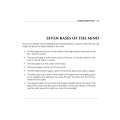
…is at the inner corner of the eye, on the right side for men and on the left side for women.
- The third base is at the center of the head.
- The fourth base is at the roof of the mouth.
- The fifth bas…
In this guided meditation, we revisit the teachings of the Great Master Luang Pu Wat Paknam regarding the …
121
Light of Purity
…ed, the same way it is natural for the golden rays of sunlight to appear with every breaking dawn. This is the light of purity. It is your reward when you embrace the Dhamma and train your mind to be st…
…ers to remain unaffected by the brightness, much like appreciating the sunrise without excitement. This inner light symbolizes the rewards of practicing Dhamma and achieving mental stillness. By maintai…
123
The Key to Success: Stopping the Mind
‘STOP’ IS THE KEY TO SUCCESS
Stopping the mind (from wandering) is more important than anything else. Whatever images that appear in your meditation, observe them impassively without engaging y…
…al in meditation practice. The Great Master Phramongkholthepmuni asserts that the main goal is to achieve mental stillness, regardless of external distractions. He emphasizes that the phrase 'Stop is th…
124
Luang Por Dhammajayo’s Aspiration
Luang Por Dhammajayo’s Aspiration
After Luang Por Dhammajayo took the yellow robe to become a Buddhist monk he resolved that he would preach only the subject of stopping the mind. Over the past forty …
Luang Por Dhammajayo emphasizes the essential practice of stopping the mind in his teachings. His journey from a young monk to a teacher focused on the importance of both reading an…
125
The Key to Inner Knowledge: Stopping the Mind
…le at that time and apprenticed with them. He practiced every kind of meditation technique known to him. Finally, he met the famed meditation master, Khun Yai Chand Khonnokyoong. It was through Khun Yai…
In his quest for profound meditation, he sought guidance from renowned teachers, eventually learning from…
126
The Importance of Beginning Meditation Properly
…mind. It will happen naturally when the mind comes to the right point of balance and become still. This is the result of practicing the right way. It may sound like a slow progression, but in fact it is…
เริ่มต้นการฝึกจิตให้สงบเป็นสิ่งสำคัญ แม้ว่าผลลัพธ์จะไม่ชัดเจนในทันที แต่ในระยะยาวจะนำไปสู่ความพึงพอใจที่มากขึ้น การเห็นภาพที่ชัดเจนหรือสดใสในขณะที่ต้องมีจิตใจที่สงบนั้นเป็นผลพลอยได้จากการฝึกที่ถูกวิธี
132
Understanding Your Body's Signals in Practice
Your body will tell you whether you’re doing the right thing or not. If your eyebrows twist, or your eyes, your forehead and your body become tense, or you fe…
ร่างกายของคุณจะบอกว่าคุณทำสิ่งที่ถูกต้องหรือไม่ หากคิ้วของคุณบิดหรือรู้สึกเครียด นั่นบ่งบอกว่ามีบางอย่างไม่ถูกต้อง จึงไม่ควรบังคับตัวเอง ต้องปรับแนวทางและเริ่มใหม่หลายครั้งจนกระทั่งคุณรู้วิธีปรับร่างก
139
Guided Meditation: Calling Upon Your Merit
…remember all the merits you have performed in your past lifetimes, but if you channel your mind to think about these merits, your mind will connect to your pool of accumulated merits and converge to bec…
This guided meditation encourages individuals to reflect on the merits accumulated throughout past and …
140
Understanding the Merit Sphere: The Source of Success and Happiness
…than, a polished diamond. It is as bright as, or brighter than, a midday sun. Its brightness is soothing and pleasant to look at, more soothing and pleasing than the light of a full moon.
The merit sph…
…stains one's journey towards prosperity, health, intelligence, and spiritual attainment, enabling achievements in various fields and leading to a fulfilling life. Its comforting brightness symbolizes th…
141
The Importance of Merit in Life
…ed.
The opposite of merit is demerit. Demerit is the negative force that causes you problems, hardships and obstacles in life. By reflecting regularly on your merit, the positive force of your merit ca…
Merits are the positive outcomes of good deeds, which include generosity, morality, and mental cultivation. These merits form a positive 'merit sphere'…
152
The Path to Enlightenment through Meditation
…inners. Make effort continuously, keep your mind bright, clear and pure, and in the end, you will achieve success.
8. Keep repeating the mantra. Eventually the sound of the mantra will fade away. At tha…
This text discusses the process of meditation, focusing on the abdominal area as the center of the body…
159
Glossary of Buddhist Terms
GLOSSARY 155
Dhamma (Skt. Dharma): the truth; the natural condition of things or beings; the law of their existence; the ethical code of righteousness; the whole body of reli…
This glossary outlines significant Buddhist terms. Dhamma refers to truth and the natural law of existe…
160
Understanding Transcendental Inner Bodies and Meditation
individual person possesses 18 transcendental inner bodies, which can be reached through advanced stages of meditative absorption. Once a person reaches the Dhamma…
This text discusses the concept of 18 transcendental inner bodies accessed through advanced meditation,…
161
Understanding Key Thai Terms in Buddhism
Klong: a Thai word for canal
Luang Por: a Thai word which means Venerable Father, an informal way of addressing a senior monk.
Luang Pu: a Thai word which…
This text provides insight into important Thai terms associated with Buddhism. Terms such as 'Klong' re…
162
Glossary of Buddhist Terms
…
Nibbana (Skt. Nirvana): the state of ultimate happiness, the happy condition of enlightenment, the highest spiritual attainment. This is not the sense-based happiness of everyday life; nor is it the co…
This glossary provides definitions and insights into crucial Buddhist terms such as Mundane Merit, whic…
163
Understanding Pali and Parami in Buddhism
Pali: an ancient language used in India, now no longer an active language. The original Buddhist scriptures were written in Pali. Pali texts are used by the Theravada school of Buddhism.
Parami…
Pali is an ancient language from India that is no longer actively spoken but holds significant historical importance as the original language of Buddhist scriptures. These scriptures serve as a cor…
164
Understanding Primary Path and Meditative Attainment
…those worthy of honor; it is good to be hospitable; actions produce consequences (Law of Kamma); a child has debt of gratitude to his parents; this world and the next exist; there will be afterlife and …
This text discusses the primary path of meditative attainment, highlighting the importance of right vie…
165
Exploring Concepts in Buddhism and Mindfulness
Sanskrit: another ancient language used in India; Buddhist scriptures in Sanskrit are translated from the Pali language; Sanskrit texts are used by the Maha…
This text delves into the significance of Sanskrit as an ancient language in India and its relation to …
166
Understanding the Tipitaka and Buddhist Concepts
Tipitaka (Skt, Tripitaka): Buddhist scripture. Tipitaka means the Three Baskets. They consist of the Basket of Discipline (Vinaya Pit…
Tipitaka, or Tripitaka, consists of three main sections: Vinaya Pitaka, Sutta Pitaka, and Abhidhamma Pitaka, covering monks' rules, discourses on various human concerns, and psychological aspect…