

Nibbāṇa : ค้นหาหนังสือธรรมะ หน้า 4 / 9
หน้าหนังสือทั้งหมด
40
Understanding Dhammakāya in Aṅgāṇā-sutta
In brief, contemporary academics refer to the term dhammakāya in the Aṅgāṇā-sutta either as a noun or an adjective. As a noun, the term is interpreted mostly as the Buddha’s teachings collected togeth
The term dhammakāya is interpreted in contemporary academia as both a noun and an adjective. As a noun, it denotes the Buddha’s teachings, while as an adjective, it refers to the nature of the Tathāga
51
The Transformative Power of the Noble Eightfold Path in Buddhism
refer to something which 'transforms' the person into noble states, so that itself is comparable to the creator. At the same time, it must refer also to the shared or same kind of qualities or essence
This text delves into the concept of transformation in Buddhist philosophy, specifically through the Noble Eightfold Path. It highlights how this path aids in the eradication of defilements, enabling
67
Understanding Dhammakāya in Relation to Paccekabuddhas and Enlightenment
early texts that 'dhammakāya' must be singular. 100 In any case, the verse conveys the meaning that a Paccekabuddha has dhamma(s) as his body (or bodies), where 'dhammas' refers to the qualities perta
This study analyzes the term 'dhammakāya' and its relation to enlightenment. Dhammakāya is presented as a singular concept applying to both the Buddha and Paccekabuddhas, emphasizing that 'dhamma' ref
73
Supramundane Paths and Fruits in Dhammakāya
supramundane paths and fruits. 113 The ‘four pairs’ are mentioned instead when particular paths and their corresponding fruits are collectively called under the same titles. Of the eight transcendenta
The text discusses the different transcendental levels of dhammakāya, highlighting the distinction between trainees and non-trainees. The first seven levels correspond to qualities of trainees, wherea
76
Understanding the Terms Kevala and Dhammakāya in Buddhist Texts
Generally, the term ‘kevala’ is translated either as ‘only’ or ‘entirely.’ It is observed that, whenever the term appears together with another word that conveys the meaning of ‘emanating,’ ‘illuminat
This text explores the interpretation of key Buddhist terms such as 'kevala', which denotes 'only' or 'entirely', particularly in contexts associated with illumination. The term 'dhammakāya', often li

48
Seven Kinds of Offerings to the Sangha
" There are seven kinds of offerings made to the Sangha, Ānanda.
One gives a gift to a Sangha of both [bhikkhus and bhikkhunīs] headed by the Buddha; this is the first kind of offering made to the San
This text outlines the seven kinds of offerings one can make to the Sangha, including gifts to the collective body of monks and nuns, and individual offerings specifying bhikkhus or bhikkhunīs. The fi
27
The Journey of Chaiyaboon in Meditation
One day, he came upon a book titled Dhammakaya written in the format of a sermon by the Great Abbot of Wat Paknam, who said: “Reading books alone is not enough to gain the perfect knowledge of Dhamma.
Chaiyaboon's quest for true understanding of Dhamma led him to the teachings of Khun Yai Chand at Wat Paknam. Through her guidance, he realized the reality of heaven and hell, the importance of medita
60
Dhammakaya Knowledge: The Five Aspects of Natural Law
The Dhammakaya Knowledge (Vijja10 Dhammakaya) is a profound knowledge that deals with the ‘Five Aspects of Natural Law’, the Law that governs all things. They include Biological Law, which governs all
The Dhammakaya Knowledge (Vijja10 Dhammakaya) focuses on the Five Aspects of Natural Law, including Biological, Chemical, Psychic, Karmic Laws, and the Law of Cause and Effect. This knowledge reveals
91
The Journey of Self-Improvement and Patience
Suzanne Jeffrey
ample, of sitting for long periods of time in meditation. We must also be patient toward
the imperfection of others. And we must practice this. Why? Because this helps us
correct the
In this enlightening text, the author reflects on the journey of self-improvement over a span of thirty-nine years under the guidance of Luang Por Dhammajayo. Through meditation, the author addresses
115
Understanding Boon and Dhamma
Suzanne Jeffrey
Q: How is boon generated?
A: Boon is created by doing good acts, keeping precepts, meditating, and listening to the Dhamma. You can feel the energy that is created by these four thing
Boon is generated by good actions, keeping precepts, meditating, and listening to Dhamma. It creates positive energy that purifies the mind. Conversely, baap, or bad energy, arises from negative thoug
119
Exploring the Unknown Factor and the Eightfold Noble Path
Suzanne Jeffrey
"The students you are teaching now will be the politicians when you retire. If you do not teach them properly, then who is to blame? We are!! We are to blame because we are probably n
The content emphasizes the responsibility of educators to guide students, as they will shape the future. It discusses various perceptions of the Unknown Factor, including Nibbana, God, and Supreme Kno
22
The Pursuit of True Happiness
the desire of young people who seek happiness in companionship; once they find their match they are happy, but then later on comes the suffering. Suffering in the form of concern, worry, jealousy, pri
The text discusses how young people often seek happiness in companionship, experiencing initial joy that can later transform into suffering due to jealousy, pride, and disappointment. This can lead to
86
The Path to Nibbana: Overcoming Desires and Sufferings
of worldly desires and sufferings, by virtue of:
• Precepts which will cleanse your body and speech
• Meditation which will cleanse your mind
• Wisdom which will cleanse you of your bad habits, and he
This text outlines the transformative journey of a follower of Buddha, emphasizing how following precepts, engaging in meditation, and cultivating wisdom can cleanse one's body, speech, and mind. It h
8
The Role of Buddhism in Society
"Digested from speech of Pramạhā Boonthavy Vilaichakr Buddhism and Society
"Buddhism occurred 2500 years ago in India. Since then it has contributed a lot to the human civilization of both materialit
Buddhism, which originated 2500 years ago in India, has profoundly influenced human civilization both materially and spiritually. Its teachings guide individuals to avoid wrongdoing, purify minds, pro

52
Only Spiritual Attainment Can Help Us
55. ONLY SPIRITUAL
ATTAINMENT CAN HELP US
In the entire universe, there is only one refuge from suffering for us, and that is meditative attainment. Hold on to it. Even if you see only a brief flash
In the universe, the only refuge from suffering is meditative attainment. This practice allows the mind to penetrate deep into Nibbana, achieving a state of bliss. However, worldly attachments can dra
64
The Importance of Merit in Buddhism
79. COME REAP YOUR MERIT
Invite your friends to come and reap merit at the temple. I feel pity for them, fearing that they may find themselves erroneously trading into an unhappy realm. Persuade them
This text discusses the concept of merit in Buddhism, illustrating its importance for spiritual success and future lives. It encourages individuals to invite friends to perform merit-making activities
81
Effective Ways to Make Resolutions
118. EFFECTIVE WAY
TO MAKE RESOLUTIONS
Luang Por Wat Paknam taught me that the most effective way to make fruitful resolutions was to make them while focusing between their blessings. When they begin
Luang Por Wat Paknam emphasizes making resolutions with a focus between blessings during the blessing chant 'Yadtha'. Visualizing a clear Buddha image aids the resolution process, ensuring they resona

125
Understanding Key Buddhist Concepts
"Fools" (palay): spiritually defective people. A fool is someone wicked, weak, or feeble in a moral sense. His discretion is faulty, not knowing right from wrong, good from bad. A fool is one who give
This content delves into various Buddhist concepts such as 'fools'—spiritually defective individuals whose actions reflect moral weakness. It explains that heaven in Buddhism comprises six levels prov
25
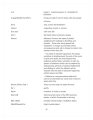
คำศัพท์และแนวคิดในพุทธศาสนา
นาก (naga) 1. mystical serpent; 2. candidate for ordination
นำบุญกลับไปฝากคนที่บ้าน bring your gift of merit to share with the people at home
นิยาย sect; school (of Buddhism)
นิครนธ์ (nigantth
เนื้อหานี้นำเสนอคำศัพท์และแนวคิดที่สำคัญในพุทธศาสนา รวมถึง 'นาก' ซึ่งหมายถึงงูศักดิ์สิทธิ์ และ 'นิพพาน' ซึ่งเป็นสถานะของการตรัสรู้ที่สมบูรณ์แบบที่พระพุทธเจ้าและพระอรหันต์จะเข้าถึงได้ การนิพพานถือเป็นค
104
The Dhammakaya Tradition and Luang Phaw Wat Paknam
practice of the Middle Way until attaining levels of Buddhist
sainthood according to their potential. All the evidence that
is left by some Buddhist saints is their scriptural testimo-
nies, but some
The practice of the Middle Way leads to various levels of Buddhist sainthood according to individual potential. Luang Phaw Wat Paknam, the prominent monk who discovered the Dhammakaya Tradition, is re