

PART : ค้นหาหนังสือธรรมะ หน้า 50 / 82
หน้าหนังสือทั้งหมด
13
Inaugural Volume of Buddhist Research by Dhammachai International Research Institute
…ving Early Buddhist teaching, proudly publish the inaugural volume of their research works. This is part of meritorious needs deserving the celebration.
Our institute believes in the sharing of knowledge …
On August 27, 2012, the Dhammachai International Research Institute (DIRI) marked the 44th anniversary of Luang Phaw Dhammajayo's ordination and the significant Buddhajayanti 2600. This inaugural rese
14
Advancements in Buddhist Studies through Collaboration
…of which we
are members, for their openness in sharing opportunities with us,
and for the chance to participate and contribute in several valuable
conferences hosted by the national institutes of members.…
This text appreciates the collaboration over the last ten and five years, particularly acknowledging the Social Research Institute of Chiang Mai University for the photographic d…
16
Launch of the Journal of the Dhammachai International Research Institute
…present. It will feature articles that investigate all aspects of studies into Early Buddhism, with particular emphasis on the discovery and study of old manuscripts. Some of these manuscripts are copies …
…ke the Early Buddhist Manuscript Project. Notable contributors include Dr. Chanida Jantrasiralai, a participant in this project, emphasizing the journal's academic collaboration and research impact in the…
18
Understanding Dhammakāya and Theravāda Manuscripts
… about the discovery of Theravāda manuscripts around the region of Sipsongpanna in the Southwestern part of China. Theravāda is the traditional form of Buddhism in what is historically a predominantly Mah…
… manuscripts. Kitchai Urkasame contributes insights into the transliteration of Lan Na manuscripts, particularly focusing on the 'dhammakāya' text, enriching the understanding of Thai Buddhist history.
20
Exploring the Cakras and Early Buddhism
…rector of DIRI, Phrakrupladnayokwarawart (Sudhammo Bhikkhu), to ensure that no bias be shown to any particular Buddhist school or nikai, and to support research that leads to a better understanding of the…
This journal focuses on the study of cakras and early Buddhism, emphasizing neutrality across Buddhist schools. Under the direction of Luang Phaw Dhammajayo, the Director of DIRI, Phrakrupladnayokwara
26
Exploring the Tipiṭaka Manuscripts
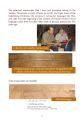
The palm-leaf manuscripts that I have just presented belong to the Tipiṭaka. These texts, or parts of texts, are in Pāli, the lingua franca of the Indochinese Peninsula. The versions in vernacular …
The palm-leaf manuscripts presented belong to the Tipiṭaka, primarily in Pāli, the lingua franca of the Indochinese Peninsula. While the local vernacular translations like Thai emerged only in the ear
29
Exploring the Origins of the Nong Pa Fa Cave Manuscripts
…Fa Cave manuscript, we can read:
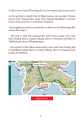
As the writing is clearly that of Dham Lanna, one wonders if some parts of the manuscripts come from Muang Nandaburi, a former name of Nan province, in northern Thailand.…
…ng their writing style as Dham Lanna. It raises questions about their origins, specifically whether part of these manuscripts originate from Muang Nandaburi, now known as Nan province, in Northern Thailan…
33
Reinterpreting Dhammarāya in the Pali Canon
…ature was not accessible at the time of those studies.
The present paper concentrates on overlooked parts of the Pali canon on dhammarāya. It places the use of the term in a distinct context, in a way not…
This paper examines the overlooked references to dhammarāya in the Pali canon, emphasizing a context not previously presented. It critiques the tendency to categorize texts strictly as ‘early Buddhism
34
Understanding Dhammakāya in Early Buddhist Thought
…known to be the earliest Buddhist manuscripts ever found.
To stratify the older and later layers of parts of the canon is also not an easy task and not always perfectly correct.
9 For example, see Dutt, o…
The term 'dhammakāya' in the Pali canon is understood as representing the Buddha's teachings. It is established through several canonical passages that equate the Buddha with dhamma. Notable reference
36
References to 'Dhammakāya' in the Pāli Canon
…n the Apadāna literature.
16 Even though the Apadāna literature is usually viewed as a later added part, its canonical status in all editions of the Pali canon is beyond doubt.
In the Pāli Canon, the term 'dhammakāya' is found four times, significantly in the Aggiāṇā-sutta and Apadāna literature. It serves various roles including a designation for the Tathāgata and associati
38
Understanding the Concept of Dhammakāya in Buddhist Thought
…e two latter compounds are undoubtedly adjectives, as their last component ‘bhūta,’
which is a past participle modifying the subject, indicates. The first two compounds, each
consists of two substantives,…
…ions highlight the significance of dhamma as not just a collection of teachings but as an essential part of the Tathāgata’s being. The complexity of the passage demands a thorough discussion of the compou…
53
Understanding Dhamma and Nibbāna in Buddhism
With regard to dhamma as the 'essence' of the Buddha and Arhat disciples, however, it may be more appropriate to refer to 'Nibbāna,' for once they have attained Buddhahood and Arhatship their spiritua
This text explores the concept of dhamma in relation to the Buddha and Arhat disciples, particularly the notion of Nibbāna as the essence of their enlightenment. It argues that dhamma, especia…
57
The Concept of Dhamma and Kāya in Buddhist Philosophy
… ‘body,’ as the ‘entire structure of an organism,’ consists of organs which are entitled ‘limbs and parts’ (aṅga-pacciṅga). A ‘collection’ also consists of several things which may be either similar or di…
This study examines the terms dhamma and brahma, suggesting that they refer to the highest aspect of Tathāgāta, likely Nibbāna. The term dhamma denotes transcendental realities, transcending the realm
58
Understanding the Concept of Body and Collection in Dhamma
…ll attached to that ‘dead body.’ Thus, in case of a ‘body,’ the functional ability of its limbs and parts depends on the sense of ‘functioning totality’ or the ‘living body.’ In contrast, the word ‘collec…
…analyzes the distinctions between the terms 'body' and 'collection' within the framework of Dhamma, particularly focusing on functional dependence. It argues that while a 'body' maintains essential relati…
61
Exploring the Concept of Dhammakaya
…d, ‘*dhammakāya*’ may be translated as the ‘body pertaining to transcendental *dhamma.*’ Also, as a particular ‘transcend ent *dhamma*’ consists of corresponding constituents, the term ‘*dhammakāya*’ may …
The term Dhammakaya can be viewed in two ways: as a kammadhāra compound translated to mean 'the body that is transcendental dhamma' or as a tappurisa compound meaning 'body pertaining to transcendenta
62
Understanding Dhammakāya and the Tathāgata
… or tappurisa compound) being the dhamma-body with which the Tathāgata is identified.
In the next part, the study will examine another Pāli passage that is related to Paccekabuddhas, the self- Enlighten…
บทความนี้ตรวจสอบแนวคิดของ ‘dhammakāya’ และการเชื่อมโยงกับ Tathāgata ซึ่งหมายถึงร่างกายของธรรมชาติที่ไพศาลหรือ Nibbāna การศึกษาเสนอว่า ‘dhammakāya’ สามารถแปลได้ทั้งในฐานะคุณศัพท์ หรือคำนามที่ชี้ถึงร่าง
67
Understanding Dhammakāya in Relation to Paccekabuddhas and Enlightenment
…g,' but 'transcendental dhamma' relating to spiritual realization.
In conclusion, our study in this part adds further information that dhammakāya is related not only to the Buddha but also to the enlighte…
This study analyzes the term 'dhammakāya' and its relation to enlightenment. Dhammakāya is presented as a singular concept applying to both the Buddha and Paccekabuddhas, emphasizing that 'dhamma' ref
68
Dhammakāya and Noble Disciples
… On the way to the Buddha’s residence, her declaration to female lay supporters who lamented on her parting indicates that Gotamī was an Arhat, who has completely destroyed all fetters (saṃyojanās), and w…
In the context of Pāli texts, the term dhammakāya is linked to noble disciples as evidenced in the story of Gotamī, the great nun and Buddha's foster mother. As she approaches her passing, Gotamī refl
69
The Superiority of Dhamma over Worldly Existence
…ly side is demonstrated. According to the verses quoted above, some points can be made of verses in particular Verse 31 implies that Gotami was ‘spiritually reborn’ to the noble clan through the realizati…
ในบทความนี้เสนอการเปรียบเทียบระหว่างความเป็นแม่ในโลกกับการเป็นบิดาทางจิตวิญญาณ โดยเน้นที่การดูแลร่างกายทางกายภาพและร่างกายทางจิตวิญญาณ รวมถึงประสิทธิภาพในการบรรเทาความกระหายของนมธรรมดาและนมที่เป็น dha
71
Understanding Dhammakāya and Enlightenment
…mmakāya which supports our earlier conclusion from the Āgamaṇa-sutta that the term could refer to a particular transcendental state, and that each state being a ‘whole’ or ‘totality’ of transcendental con…
The term 'dhammakāya' signifies enlightenment and is not exclusive to the Buddha but can also be attained by his disciples, as indicated by Gotami's reference to 'my dhammakāya.' This term is interpre