

RAT : ค้นหาหนังสือธรรมะ หน้า 16 / 27
หน้าหนังสือทั้งหมด
33
Reinterpreting Dhammarāya in the Pali Canon
…ly Buddhism,’ 6 while the Apadāna is usually seen as a later compilation, 7 or that the Apadāna literature was not accessible at the time of those studies.
The present paper concentrates on overlooked pa…
… approach and contrasts it with earlier studies, shedding light on a crucial aspect of Buddhist literature. More information can be found at dmc.tv.
34
Understanding Dhammakāya in Early Buddhist Thought
…t to preserve the Buddhist teachings intact at best of their ability, as may be observed by its separation of Theravaḍa traditional writing in commentarial and postcanonical accounts rather than adding t…
The term 'dhammakāya' in the Pali canon is understood as representing the Buddha's teachings. It is established through several canonical passages that equate the Buddha with dhamma. Notable reference
39
Interpretations of Dhammakāya in Early Pāli Texts
Gombrich, while differently translating the term in this passage as a bahubbiha compound 'dhamma-bodied,' similarly interprets it as an indication that the Buddha's true import is due to 'his teaching
…brich views it as 'dhamma-bodied,' emphasizing that the essence of the Buddha lies in his teachings rather than his personality. Harrison supports this view, while Need expresses uncertainty about the cl…
43
Understanding the Noble Discipleship in Buddhism
…’s ‘true son,’ indicates the person’s state as being a noble disciple who has witnessed the truths, rather than ‘anyone who claim himself a Buddhist.’39
The definitions of ‘true son’ reaffirm his state…
The text discusses the qualities of noble disciples in Buddhism, emphasizing the importance of clear perception of dhamma and the eradication of doubts and fetters. It describes the transformation exp
54
Understanding Dhamma and Brahman in Buddhism
In the case that 'brahma-' refers to the neuter 'brahman'
In the other case in which the term brahma- is translated as 'brahman'63 the ultimate,64 the third parallel65 suggests that the term dhamma in
…interpretation of dhamma in this context does not align with the verbal teachings of the Buddha but rather represents the essential truths of existence that ennoble disciples. The discussion references v…
59
Understanding Dhamma and Nibbāna
…anna) to the Non-returner (anāgāmi) have realised Nibbāna also to their corresponding degrees.
84 Rather than limiting its interpretation to only ‘Nibbāna,’ the present study proposes a broader context…
…us constituent qualities that collectively influence the elimination of defilements. The text illustrates a spectrum of understanding the four noble truths across different levels of realization, asserti…
64
Understanding Paccekabuddhas in Buddhism
…n general sense. Also, their discourses are brief and mainly concerned with the praise of solitude, rather than containing instructions on how to practise oneself in order to gain spiritual realisation. …
The text discusses the distinct nature of Paccekabuddhas, who can guide individuals toward enlightenment but do not teach the masses like Buddhas. Their teachings emphasize solitude and are succinct,
67
Understanding Dhammakāya in Relation to Paccekabuddhas and Enlightenment
early texts that 'dhammakāya' must be singular. 100 In any case, the verse conveys the meaning that a Paccekabuddha has dhamma(s) as his body (or bodies), where 'dhammas' refers to the qualities perta
…g to both the Buddha and Paccekabuddhas, emphasizing that 'dhamma' refers to transcendental aspects rather than mere teachings. This clarifies that both enlightened beings, although differing in roles, e…
71
Understanding Dhammakāya and Enlightenment
1. The term dhammakāya is related to enlightenment. This agrees with our earlier observation regarding the relation of ‘dhammakāya’ to the Buddha and Paccakabuddhas.
2. Dhammakāya is not exclusive to
…iples, as indicated by Gotami's reference to 'my dhammakāya.' This term is interpreted as 'quality' rather than merely 'teaching,' emphasizing that spiritual capacities can belong to anyone who attains t…
75
Dhammakāya and the Previous Buddha
…elation of dhammakāya with the Buddha is found in the Atthasandassakathera-apadāna. But here the narrative relates the term with a previous Buddha. The whole story is the autobiography of the elder Attha…
บทความนี้วิเคราะห์ความสัมพันธ์ของคำว่า Dhammakāya กับพระพุทธเจ้าในพระอัฏฐสังคษา โดยมีการเล่าถึงชีวิตของพระอรหันต์ Atthasandassaka ที่มีความคิดถึงพระพุทธเจ้า Padumuttara และการยกย่องพระพุทธเจ้าในบทกวีส
80
Understanding Dhammakāya and its Significance in Buddhism
…ies it with realities to be
attained or experienced spiritually by noble disciples through the
penetration of the noble paths.130 In one instance, he connects the
term with the Buddha's teachings and dis…
…guiding principle and discusses dhammakāya's association with special qualities like virtue, concentration, and wisdom. The text delves into complex nuances of how these qualities relate to practice and …
81
Understanding Dhammikāya in Buddhist Philosophy
…and eighteen exclusive Buddha’s qualities (atthārasavēnabuddhadhammā). Note that
the qualities enumerated here are similar to those expressed by the Sarvāstivādīn, but the
details of the qualities mentio…
…a's mental qualities and Enlightenment. This term connects the Buddha's teachings and truths, illustrating his purity and extraordinary qualities such as ten powers and six kinds of knowledge. Dhammapāla…
93
Forms of Sa-Paper Manuscripts in Sipsong Panna
…磨说), have been collected by the Xishuangbanna State Ethnic Research Institute. Such manuscripts are rather rare. According to the staff members at the Institute, the manufacturing processes used to produ…
In the Sipsong Panna region, there are three main forms of sa-paper manuscripts. The first, the ordinary wide-breadth manuscript, measures about 18cm x 25cm and has 14 to 20 lines per page. The second
96
The Imminent Extinction of Palm-Leaf Manuscripts in Sipsong Panna
…en lost. According to the abbot, Menghai has an altitude of over 1,400 metres above sea level and a rather cool climate, and is unsuitable for the growth of palm-leaf trees, and palm leaves cannot be obt…
…alm-leaf trees, which are essential for creating the manuscripts. The case of Jingzhen Temple illustrates this decline, with an alarming drop in available scriptures over the years. The future of these m…
102
Wisdom and the Dhammakāya in Buddhist Teachings
…rse), geyya (discourse mixed with verses and songs) gāthā (verses) and jātaka (birth-stories), etc. Rather, the text personifies the dhammakāya as the body of the Buddha, attributing the dhammakāya with …
The text highlights unique qualities of wisdom exclusive to Buddhas, including omniscience and the ten intellectual powers. It discusses the dhammakāya as the embodiment of a Buddha's inner wisdom, di
103
The Historical Significance of Dhammakāya Verse in Thai Buddhism
…nscription of dhammakāya” by the Office of the Prime Minister in 1965. The inscription was transliterated from Khom Thai script into modern Thai script by Professor Cham Thongkhamwan and identified as th…
The dhammakāya verse has been recognized in the Lan Na regions for centuries, with historical inscriptions confirming its existence dating back to the 16th century, specifically at Wat Tham Suea in Ph
104
Historical Significance of the Lan Na Palm-Leaf Manuscript
Bangkok period.
The Lan Na palm-leaf manuscript itself cannot provide an accurate date for the composition of the verse because palm-leaf manuscripts are fragile, and rarely surviv…
The Lan Na palm-leaf manuscript's dating is uncertain due to its fragility, but it has been recited by devout Buddhists since the 16th century, alongside evidence from the Phitsanulok inscription and
120
An Shigao and Early Chinese Meditation Techniques
…nother reason is that his biographies emphasize his adventurous life and his supernatural abilities rather than his Buddhist practice. However, his biographers all mention that he practiced meditation, a…
An Shigao (147-168 CE) significantly influenced the early transmission of Buddhism in China. Despite a focus on his ethnicity and translation style, he is recognized as a respected meditation master.
318
Contributors List
…mstrong
Masaji-คุณกัญญาภัทร Imai
Masato Ito
Melanie Lemberg
Panadda Thanasuansan
Panoat Chuchaisiri
Rattanaporn Ken Jasmine Shipman
Takayuki-Lamai Sato
Teruo-คุณจิระภา โอความว่า
Vanlee Saiseubyat
Yoshihi…
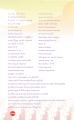
This section provides a detailed account of various contributors related to the project. Each individual plays a unique role, and their contributions are valuable to the overall success. Key figures i
18
การเลือกชีวิตเพื่อความสุขในชาตินี้
…vides the conditions to fulfill all wholesome deeds.
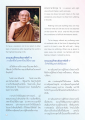
To be happy without any suffering even at moderate rate at the time of departing this world is to lead a new life with well – being and have no suffe…
บทความนี้เน้นการทำใจให้สงบเพื่อไม่ให้เกิดทุกข์ในชาติหน้า และการเลือกชีวิตที่มีความสุขในปัจจุบัน อีกทั้งยังเสนอให้ฝึกจิตให้คุ้นเคยกับความดี เพื่อให้สามารถมีความสุขและปราศจากทุกข์ในขณะใกล้จะจากโลกนี้ไป