

self-discipline : ค้นหาหนังสือธรรมะ หน้า 2 / 35
หน้าหนังสือทั้งหมด
25
The Middle Way: A Path to Liberation
…]
Sometimes the Noble Eightfold Path is summarized in three components, i.e. the Higher Training in Self-Discipline [adhlilasikkhā]; the Higher Training of the Mind [adhicittasikkhā]; and the Higher Training in Wisd…
…, and Right Concentration. This path can also be condensed into three key areas: Higher Training in Self-Discipline, Higher Training of the Mind, and Higher Training in Wisdom. These teachings are instrumental in Pr…
105
Rediscovery of the Dhammakāya Tradition
…he right track if we are practising the Noble Eightfold Path — or more briefly if we are practising self-discipline [sīla], meditation [samādhi] and wisdom [paññā] — then these are also the theoretical essentials of…
…e between sensual indulgence and self-mortification. Practicing the Noble Eightfold Path, including self-discipline, meditation, and wisdom, aligns with the Middle Way and leads to beneficial results for those who e…
135
Understanding the Pathama Magga Sphere
…hama Magga Sphere will enlarge in size
allowing the mind to go through the centre to the spheres of
self-discipline, concentration, wisdom, liberation, knowing-
and-seeing of liberation in that order. These spheres…
…es the necessity of not just resting the mind but going deeper into meditation to uncover layers of self-discipline, concentration, and wisdom. By cultivating these aspects, practitioners can align with the teaching…
225
Metaphors and Teachings on Suffering and Generosity
… in, because of craving for sense-pleasure 80-2
higher knowledge, insight 137-8
higher training: in self-discipline 20; in wisdom 20; of the mind 20
…f sensual indulgence. Key themes include generosity, the realms of existence, and the importance of self-discipline and higher knowledge on the path to enlightenment. It discusses various metaphors related to self-m…
230
Insights into Buddhist Teachings
…irst disciple, Buddha's principle for, 191-3
self, true-, Dhammakaya as 110
self-centred craving 49
self-discipline 103, 105, 106, 107, 116, 132: higher training in 20; sphere of 105, 106, 107, 120
…cepts such as Kondaṇña's role in understanding Right View and the importance of loving kindness and self-discipline in achieving liberation. It highlights examples from the teachings that illustrate mundane and tran…
39
Cultivating Good Habits in Education
Teacher should remind themselves often that only good habits cultivate progress in academic and moral knowledge.
Right Thought — About Human Survival, Livelihood and Interaction
Right thought comes fr
ในบทความนี้กล่าวถึงความสำคัญของการปลูกฝังนิสัยดีในด้านการศึกษาและจริยธรรมสำหรับครูและนักเรียน ครูควรเตือนตัวเองเสมอว่านิสัยดีจะช่วยพัฒนาความรู้ทั้งด้านวิชาการและจริยธรรม การพูดและการกระทำที่ถูกต้องเริ
101
The Process of Learning: Insights from Buddhist Teachings
Suzanne Jeffrey
information for them to know. The teacher must try to make the information relevant for the student, finding some way to make the information vital for their lives, according to the s
This text discusses the importance of relevance in teaching, the need for both teacher and student to exhibit patience and discipline, and a structured approach to inquiry in the learning process. It
7
The Impact of Upbringing on Character Development
One day in first grade, Luang Por brought his best friend to his house. His father asked him what his friend's family name was, and after his friend had left, forbade him to associate or play with tha
This narrative illustrates the importance of a good upbringing as exemplified by Luang Por’s life. His father’s strict but wise teachings shaped his character, guiding him in choosing friends and reso
15
Self-Training and Endurance in Family Life
Those who have full knowledge, ability and goodness
must follow only this path in order to train themselves to keep
up with the world and its people, and not surrender to
defilements.
Surely, if you f
This text emphasizes the significance of self-training and self-control in leading a fulfilling life. By acknowledging the need to change negative habits, individuals can foster a healthier family env
25
The Four Problems in Marriage
Part One: Family Life
These are: Truthfulness (Sacca), Self-Control (Dama),
Endurance (Khanti), and Sacrifice (Caga). When lacking in
any of these principles, conflict or discord will arise in any
hum
Part One: Family Life highlights four essential principles for maintaining healthy relationships: Truthfulness (Sacca), Self-Control (Dama), Endurance (Khanti), and Sacrifice (Caga). Conflict within f
184
Glossary of Key Concepts in Buddhist Philosophy
Part Seven: Appendixes
Glossary
Anattata: Non-self; nothing in the world has implicit
identity
"There is nothing out there, not even our bodies, which
we can control. Thus, it is not distinctly ours.
This glossary provides definitions for key Buddhist concepts such as Anattata (non-self), Aniccata (impermanence), and Bhavana (meditation). It emphasizes the understanding that nothing possesses a pe
142
Self-Responsibility and Social Development in Buddhism
Suzanne Jeffrey
And that’s where we close the circle. We do it for ourselves because we have to develop ourselves before we can develop anything else … but everything about us affects all of the peop
The text discusses the necessity of self-development before aiding others, emphasizing self-responsibility post-birth. It highlights the crisis of independence and the importance of moral boundaries i
78
The Teachings of the Buddha
The Teachings of the Buddha
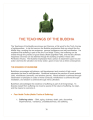
The Teachings of the Buddha are known as Dhamma, a Pali word for the Truth, the law of righteousness. In his first sermon the Buddha emphasized that one should live the Mi
The Teachings of the Buddha, known as Dhamma, emphasize the Middle Way, avoiding extremes of indulgence and self-mortification. Central to Buddha's teachings are the Four Noble Truths, which acknowled
40
The Futility of Self-Mortification
Commentorial Metaphors: Self-mortification:
1. Sugar-cane juice and poison: It can be compared to a mixture of sugar-cane juice and poison. In the end such practices will lead to death, and all for no
This text presents a series of metaphors illustrating the perils of self-mortification. Comparing self-harm to poison, stale excrement, and dangerous leaps, it highlights the futility of such practice
141
Understanding Impermanence, Suffering, and Not-Self
Impermanence [aniccān]: This is the built-in character of objects that are of a nature to change the whole of the time. Such things as the Five Aggregates of the Human Body are changing the whole of t
This text delves into the fundamental Buddhist concepts of impermanence (aniccān), suffering (dukkham), and not-self (anattā) as expressed through the Five Aggregates of the Human Body. It highlights
143
Truth for the Family: Understanding Precepts and Human Nature
…mankind. He
has turned animalistic, like tigers, bears, or crocodiles
Family Day By Day
141
Acts of Self-Discipline
…ans are outlined, emphasizing that to embrace our true nature, we must not kill and should practice self-discipline. Addressing these themes is vital for breaking the cycle of suffering and moral decay. For more inf…
22
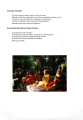
Formation of Good Habits
… from Proper Training
* A penchant for truth, honesty
* A penchant for self-command, a penchant for self-discipline
* A penchant for patience, being fearlessly resolute
* A penchant for being charitable and selfless…
…hlights that good habits are a result of proper training, focusing on virtues such as truthfulness, self-discipline, patience, and selflessness. By cultivating these traits, individuals can develop a positive lifest…
26
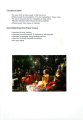
Formation of Habits
… from Proper Training
. A penchant for truth, honesty
. A penchant for self-command, a penchant for self-discipline
. A penchant for patience, being fearlessly resolute
. A penchant for being charitable and selfless…
…s the importance of good habits resulting from proper training, including traits like truthfulness, self-discipline, patience, and charity. By cultivating these habits, one can improve their interactions and mindset…
19
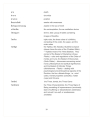
Understanding Buddhism: Key Concepts and Texts
death
chronicle
position
awake with awareness
awake in the sea of merit
fire contemplation; fire as meditation device
shrine; altar; group of tables containing images of Buddha
triple robe; the three
This text delves into crucial Buddhist principles including the Tipitaka, which is a comprehensive scripture forming the foundation of Buddhist teachings. It encompasses three baskets: Vinaya Pitaka,
107
परम ध्यान और आत्मा का केंद्र
…g the mind to a standstill at the centre of the Dhamma n upassanāsatipaṭṭhāṇa Sphere, the Sphere of Self-Discipline [sīla] will be attained. When we bring the mind to a standstill at the centre of the Sphere of Self…
लुआंग फॉ वट पाकनम ने समझाया कि शरीर के केंद्र पर ध्यान लाने की क्षमता को 'मध्यम' कहा जाता है। यह वह बिंदु है जहाँ मन सद्भाव में आता है, और इसे अच्छे या बुरे के संदर्भ में नहीं रखा जा सकता है। इसके द्व