

self-liberation : ค้นหาหนังสือธรรมะ หน้า 5 / 33
หน้าหนังสือทั้งหมด

5
Untitled
3. Politeness
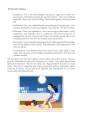
Politeness is shown in the way one sits, lies down, stands and walks. One cannot sit, lie down, stand or walk properly because...
• One’s things are not organized in an orderly fashion
No content provided to summarize.
8
Understanding Artificial Intelligence
8 Universal Goodness
• Cleanliness: One is not self-indulgent, not quick to anger but is always in a good mood. Cleanliness prevents the presence of pests. There is no need for pesticides. There is n
This text delves into the concepts of artificial intelligence, outlining its various applications in today's world, as well as its potential future developments. It covers the basics of machine learni

121
The Four Virtues of Self-Improvement
2. Self-improvement (Dama)
“The second virtue is to always improve oneself. I kept improving myself professionally. From an ignorant person, I kept advancing myself until I was able to be a good provi
This text discusses the four virtues that foster personal development. The first virtue emphasizes continuous self-improvement to advance one's career and resist vices. The second virtue focuses on en
44
Qualities of a Stream-Attainer in Buddhism
mentioned in the canon.40
The title ‘son of the Blessed one’ suggests that, through the
Buddha, the person was (re)born to the same plane (bhūmi) to which
the Buddha belongs, i.e., passing beyond the
This text delves into the characteristics of a Stream-attainer, identified as a noble disciple who is reborn to a transcendental plane through the Buddha's teachings. Key qualities include association

61
Understanding Dhammakaya Knowledge
The Dhammakaya Knowledge is taught by the Buddha to constitute the transcendental, blissful, eternal, and pure Self of the Buddha. Dhammakaya doctrines can be found in the scriptures of all major Budd
Dhammakaya Knowledge is a profound teaching from the Buddha that emphasizes the transcendental, blissful, and pure nature of self. This concept is integral to all major Buddhist schools, including The

31
Dhammacakkappavattana Sutta: The Sermon
Dhammacakkappavattana Sutta:
The Sermon
Something which you will find at the beginning of every sutta are Aṅanda’s words 'Evam.e sutam...': i.e. ‘Thus have I heard (directly from the Lord Buddha)
The Dhammacakkappavattana Sutta begins with Aṅanda's phrase 'Thus have I heard' and recounts the Buddha's teachings delivered at the Isipatana Deer Park. The Blessed One addresses the group of five mo
90
Understanding the Pursuit of Happiness and the Cycle of Existence
Those who search for happiness via sense pleasure only
experience happiness at the moment before suffering mani-
fest itself. As soon as suffering becomes manifest, such peo-
ple are often so shocked
This text discusses the fleeting nature of happiness derived from sense pleasures and the inevitable suffering that follows. It compares individuals ensnared by cravings to a rabbit caught in a hunter
124
Understanding the Inner Bodies and Enlightenment
the centre of the body, in the same way as described earlier, in entering the centre of the Pathama Magga Sphere, successive inner bodies can be attained, going further inside the subtle human body —
This text discusses the progression through successive inner bodies leading to the Dhammakāya, emphasizing the distinction between mundane and transcendental bodies. It highlights that all worldly bod
180
The Life of Koṇḍañña and His Journey to Enlightenment
If you look back at the life history of Koṇḍañña, you will remember him as being the youngest amongst the eight brahmin soothsayers selected to interpret the bodily marks of Prince Siddhattha shortly
The narrative recounts the life of Koṇḍañña, a notable figure among brahmin soothsayers who predicted Prince Siddhattha's future enlightenment. As the only soothsayer to accurately foretell Siddhattha
223
Exploring Dhammakāya and the Eightfold Path
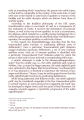
Dhammakāya, Sotāpana: Effort, Right (see Right Effort)
Coarse, 108, 134; defilements of
Eightfold Path: arises internally as 136-7; Subtle, 108, 134
sphere 105; components 20, 117,
Dhammakāya Traditi
This text delves into the Dhammakāya tradition, highlighting key components of the Eightfold Path and its teachings on defilements, enlightenment, and the nature of suffering. Concepts are illustrated
51
The Transformative Power of the Noble Eightfold Path in Buddhism
refer to something which 'transforms' the person into noble states, so that itself is comparable to the creator. At the same time, it must refer also to the shared or same kind of qualities or essence
This text delves into the concept of transformation in Buddhist philosophy, specifically through the Noble Eightfold Path. It highlights how this path aids in the eradication of defilements, enabling
52
Understanding the Noble Eightfold Path and Threefold Path in Buddhism
[Right concentration, again, becomes the basis of right views, right aspirations, and other steps of the noble eightfold path, which is now experienced on a higher level, and this spiral-like progress
This text elaborates on the interrelationship between Right Concentration, Right Views, and Right Aspirations as pivotal elements of the Noble Eightfold Path leading to liberation. It discusses the sp
82
Types of Meditation
78 MEDITATION
TYPES OF MEDITATION
Buddhist texts, such as the Visuddhimagga¹, describe forty different methods of practice. All of them have the same goal: to train the mind to be still and to attain
Buddhist texts, like the Visuddhimagga, outline 40 meditation methods with the same goal of mastering the mind to achieve Buddhahood. Meditation can be categorized into three types: positioning the mi
118
Guided Meditation Through Visualization
114 GUIDED MEDITATION
Visualizing a Meditation Object
The Great Master gave us a good technique for visualization: to imagine a crystal clear sphere that is totally flawless, as clear as a polished d
This guided meditation technique involves visualizing a flawless crystal sphere or any familiar object, such as fruit or jewels, to achieve mental clarity and peace. The method, taught by the Great Ma

51
การวิเคราะห์และความเข้าใจในพุทธศาสนา
วิวัตนหา—ไม่อยากเป็น
วิมาสา
(vimamsa) analysis; understanding;
thoughtfulness; intelligence and common
sense; observation; reasoning; investigation;
analysis and evaluation.
วิมาณ
heavenly abode; heav
บทความนี้สำรวจคำสำคัญในพุทธศาสนา เช่น วิวัช, วิสุทธิธรรม และบทบาทของงานเฉลิมพระเกียรติในวันวิสาขบูชา ซึ่งเป็นวันที่สำคัญที่สุดในพุทธศาสนาที่เฉลิมฉลองการเกิด ตรัสรู้ และดับขันธ์ของพระพุทธเจ้าในวันเพ็ญเ

72
Understanding Nirvana and the Path to Enlightenment
Nirvana
Nirvana (Pali, Nibbanna) is the state of ultimate happiness -- the happy condition of enlightenment -- the highest spiritual attainment. This is not the sense-based happiness of everyday life;
Nirvana, or Nibbanna, represents the ultimate state of happiness in Buddhism, transcending the sense-based joys of daily life. Attaining Nirvana marks the end of the rebirth cycle, granting liberation

89
The Stories of Enlightened Monks
The story of Dharmma (๙)
A few reach the other shore & Those who follow the Dhamma are liberated.
Libertation thoughts & Mind are beyond worldlyness.
1. The story of Monk Jaya (๙)
The story of Monk M
This text narrates the enlightening stories of several monks, including Monk Jaya, Mahakassapa, Bhaisaputra, Anurudh, Sanyasi, Kosambi, Sumpamathera, and Ravantheera. It highlights their journeys towa
30
Vinayapitaka Editions and References
Vinayapitaka vol.IV. 2001. edited by Hermann Oldenberg. Oxford:
PTS. (first printed. 1882)
Vinayapitaka vol.V. 2006. edited by Hermann Oldenberg. Oxford:
PTS. (first printed. 1883)
อ้างอิงอื่น ๆ
PT
Vinayapitaka editions include volumes IV and V, edited by Hermann Oldenberg, published by the Pali Text Society with first prints in 1882 and 1883 respectively. Other important references include Nori
7
The Journey of Siddhartha Gotama Towards Enlightenment
he, himself, didn’t engage in the battle against delusion, there would be no-one else to do it in his place. Thus with anxiety, *not only* for his own lot in life, *not only* for the lot of his family
This text delves into Siddhartha Gotama's profound realization that if he did not confront the battle against delusion, no one would. Motivated by anxiety for himself, his family, and all beings trapp
8
The True Nature of the Buddha's Enlightenment
the Buddha’s enlightenment dealt entirely with meditation focussed outside the body. Then, as now, almost all success was attributed to ideas and strategies — but as a result of countless past lifetim
Siddhattha Gotama's enlightenment was rooted in meditation that transcended mere conceptualization. He recognized that achieving true liberation demanded a harmonious blend of theory and inner virtue.