

Understanding the Pursuit of Happiness and the Cycle of Existence : หน้า 90/263
The Buddha’s First Teaching : หน้า 90/263 Explore the relationship between craving, happiness, and suffering as described in Buddhist philosophy. Discover the path to Nirvana and liberation from suffering.
2 ครั้ง
สรุปเนื้อหา
This text discusses the fleeting nature of happiness derived from sense pleasures and the inevitable suffering that follows. It compares individuals ensnared by cravings to a rabbit caught in a hunter's snare, illustrating the shock of encountering suffering. The unenlightened remain trapped in the Cycle of Existence due to the Ten Fetters, leading to continuous rebirth and suffering. In contrast, the wise seek to eliminate craving and pursue Nirvana, which represents true happiness and freedom from suffering. By cultivating wisdom and aiming for arahantship, they strive for liberation from the cycle of birth, old age, sickness, and death.
หัวข้อประเด็น
-The nature of happiness
-The impact of craving
-The cycle of existence
-The Ten Fetters in Buddhism
-The pursuit of Nirvana
-Wisdom and enlightenment
ข้อความต้นฉบับในหน้า
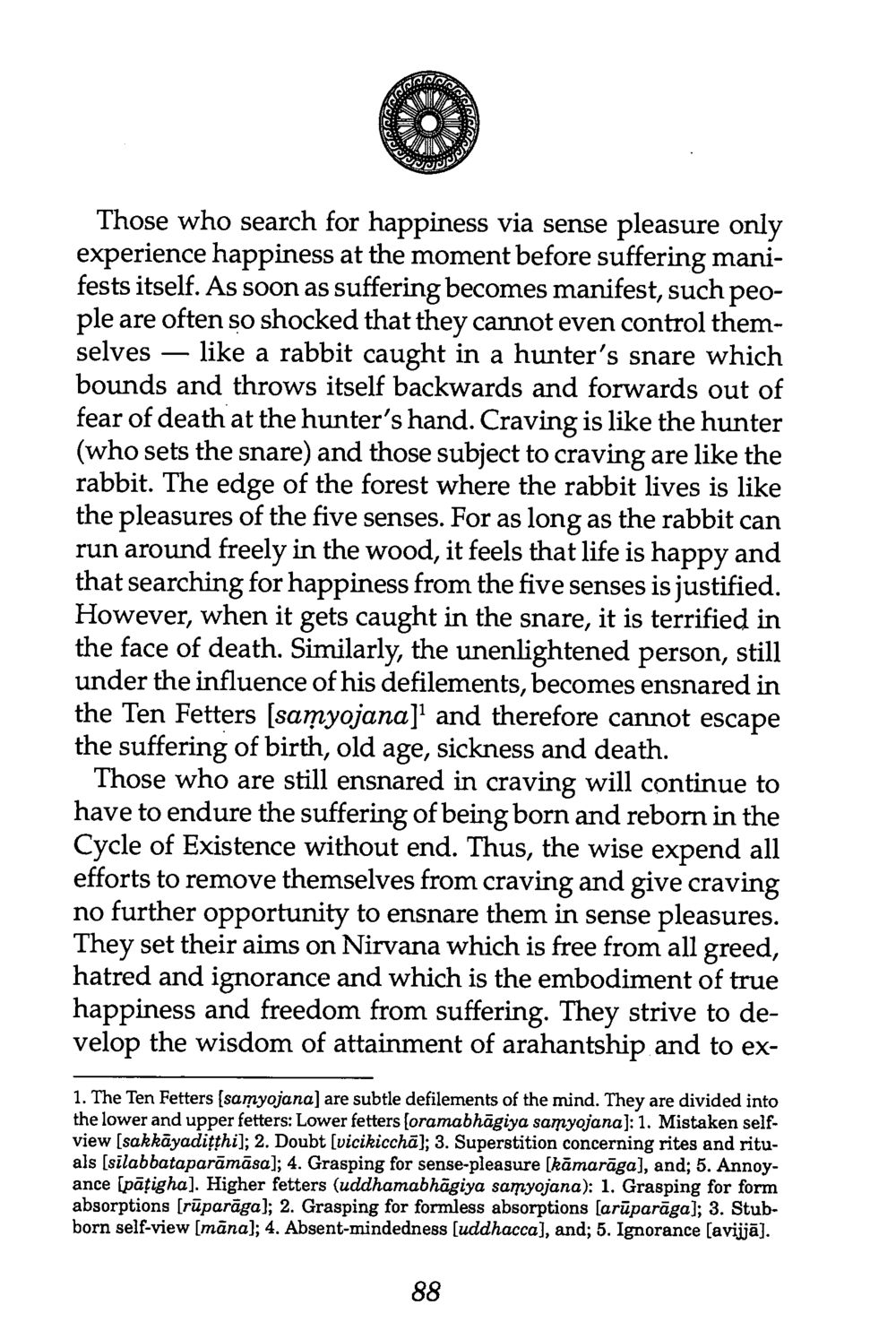
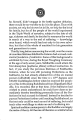
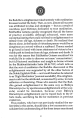
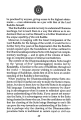
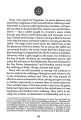
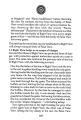
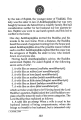
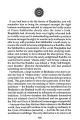
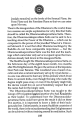
Those who search for happiness via sense pleasure only
experience happiness at the moment before suffering mani-
fest itself. As soon as suffering becomes manifest, such peo-
ple are often so shocked that they cannot even control them-
selves — like a rabbit caught in a hunter's snare which
bounds and throws itself backwards and forwards out of
fear of death at the hunter's hand. Craving is like the hunter
(who sets the snare) and those subject to craving are like the
rabbit. The edge of the forest where the rabbit lives is like
the pleasures of the five senses. For as long as the rabbit can
run around freely in the wood, it feels that life is happy and
that searching for happiness from the five senses is justified.
However, when it gets caught in the snare, it is terrified in
the face of death. Similarly, the unenlightened person, still
under the influence of his defilements, becomes ensnared in
the Ten Fetters [samyojana] and therefore cannot escape
the suffering of birth, old age, sickness and death.
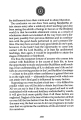
Those who are still ensnared in craving will continue to
have to endure the suffering of being born and reborn in the
Cycle of Existence without end. Thus, the wise expend all
efforts to remove themselves from craving and give craving
no further opportunity to ensnare them in sense pleasures.
They set their aims on Nirvana which is free from all greed,
hatred and ignorance and which is the embodiment of true
happiness and freedom from suffering. They strive to de-
velop the wisdom of attainment of arahantship and to ex-
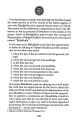
1. The Ten Fetters [samyojana] are subtle defilements of the mind. They are divided into
the lower and upper fetters: Lower fetters [orambhāgiyā samyojana]: 1. Mistaken self-
view [sakkāyadiṭṭhi]; 2. Doubt [vicikicchā]; 3. Superstition concerning rites and ritua-
als [silabbataparāmāsa]; 4. Grasping for sense-pleasure [kāmarāga], and; 5. Annoy-
ance [pāṭigha]. Higher fetters [uddhambhāgiyā samyojana]: 1. Grasping for form
absorptions [rūparāga]; 2. Grasping for formless absorptions [arūparāga]; 3. Stub-
born self-view [mañña]; 4. Absent-mindedness [uddhacca], and; 5. Ignorance [avijjā].
หน้าหนังสือทั้งหมด
1
2
3
4
5
6
7
8
9
10
11
12
13
14
15
16
17
18
19
20
21
22
23
24
25
26
27
28
29
30
31
32
33
34
35
36
37
38
39
40
41
42
43
44
45
46
47
48
49
50
51
52
53
54
55
56
57
58
59
60
61
62
63
64
65
66
67
68
69
70
71
72
73
74
75
76
77
78
79
80
81
82
83
84
85
86
87
88
89
90
91
92
93
94
95
96
97
98
99
100
101
102
103
104
105
106
107
108
109
110
111
112
113
114
115
116
117
118
119
120
121
122
123
124
125
126
127
128
129
130
131
132
133
134
135
136
137
138
139
140
141
142
143
144
145
146
147
148
149
150
151
152
153
154
155
156
157
158
159
160
161
162
163
164
165
166
167
168
169
170
171
172
173
174
175
176
177
178
179
180
181
182
183
184
185
186
187
188
189
190
191
192
193
194
195
196
197
198
199
200
201
202
203
204
205
206
207
208
209
210
211
212
213
214
215
216
217
218
219
220
221
222
223
224
225
226
227
228
229
230
231
232
233
234
235
236
237
238
239
240
241
242
243
244
245
246
247
248
249
250
251
252
253
254
255
256
257
258
259
260
261
262

263
หนังสือที่เกี่ยวข้อง
Load More