

self-satisfaction : ค้นหาหนังสือธรรมะ หน้า 4 / 33
หน้าหนังสือทั้งหมด
20
Formation of Habits
Formation of Habits
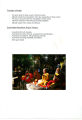
• The work which is done in each of the five rooms
• Attitude toward the consumption of the four necessities in these rooms
• The way to consume the four necessities in these rooms
The text discusses the formation of habits across five key areas of life, emphasizing proper training for cultivating good habits. It highlights attitudes towards necessities and living together, as w
120
Understanding True Divinity and the Inner Self
Because then we need to be aware of this standard before worrying about what true divinity is, how to promote that divinity, and where that divinity resides. How? Not anymore. We are more than enough.
The text emphasizes the importance of recognizing and understanding true divinity, which lies within one's inner self. It suggests that many misconceptions about divinity are rooted in ignorance. To g
10
Exploring the Dhammacakkapavattana Sutta and the Four Noble Truths
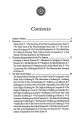
Contents
Author's Preface ............................................................................................................... 9
1 Overview ................................................
This text delves into the Dhammacakkapavattana Sutta, highlighting its key teachings on the paths of sensual indulgence and self-mortification, and emphasizes the Middle Way. The content covers the Fo
24
The Path of Self-Mortification in Buddhism
2. The Path of Self-Mortification
According to the Buddha, the practice of self-mortification [attakilamathānuyoga] is fruitless. He said that it is not a practice in keeping with the tenets of Buddhi
In Buddhism, the practice of self-mortification is deemed fruitless by the Buddha. He elucidates that these practices, such as lying on thorns and severe fasting, do not genuinely rid individuals of d
25
The Middle Way: A Path to Liberation
3. The Middle Way
The Middle Way [majjhima paṭipadā] is a path of practice that avoids the extremes of either sensual indulgence or self-mortification. It is a path of practice that is conducive to ta
The Middle Way [majjhima paṭipadā] serves as a balanced path in Buddhism, steering clear of both sensual pleasures and self-mortification. This approach is aimed at tempering the mind, achieving supre
41
The Noble Middle Way in Buddhism
sense of security, but in the end, he will surely take advantage of us and leave us decapitated in the jungle.
It is for all of these reasons that the Lord Buddha taught that self-mortification is a n
The text discusses self-mortification as a non-Buddhist and dangerous practice, as taught by the Buddha. It emphasizes the importance of the Noble Middle Way, or the Eightfold Path, as the means to un
105
Rediscovery of the Dhammakāya Tradition
mentaries for most people to understand. The knowledge of Dhammakāya is said to have diminished and eventually for some unknown reason, disappeared from Buddhism approximately 500 years after the Pari
The Dhammakāya tradition, once diminished in Buddhism, was revitalized by Luang Phaw Wat Paknam who dedicated his life to its teachings. His outreach efforts led to the tradition being acknowledged in
135
Understanding the Pathama Magga Sphere
the other virtues.
For as long as a meditator cultivates the Noble Eightfold
Path purely, completely and according to the principles of
the Middle Way (i.e. with the mind entering continuously
upon th
This text delves into the Pathama Magga Sphere, an important concept in meditation that arises when the Noble Eightfold Path is fully realized. It explains how the mind can be liberated from external
145
Understanding the Eightfold Path: Right Mindfulness and Right Concentration
fort: doing of evils not yet done, maintainance of evils already done, not doing virtues not yet done and abandoning virtues already mastered.
As for Right Mindfulness, he would immediately and defini
This excerpt explores the significance of the Eightfold Path, specifically focusing on Right Mindfulness and Right Concentration. It emphasizes understanding the aggregates of existence as they relate
225
Metaphors and Teachings on Suffering and Generosity
gardener removing weeds by the house-[metaphor for body 65]: inscure, [metaphor for Buddha's practice 95]
generosity 132
ghosts, hungry 34: realm of the, suffering of birth in 63
gossip, malicious (se
This text delves into various Buddhist concepts, including the metaphor of a gardener removing weeds representing the body, and insights into craving, suffering, and the consequences of sensual indulg
230
Insights into Buddhist Teachings
Kondaṇña 142; abstention from killing 158-60; instilled by loving kindness 141; tool of Right Livelihood 144
Right View 20, 39-40, 115, 117, 118, 141, 197: transcendental 39-40; mundane, 39, 147-51; a
This text discusses various Buddhist concepts such as Kondaṇña's role in understanding Right View and the importance of loving kindness and self-discipline in achieving liberation. It highlights examp
11
Untitled
Universal Goodness : 9
There are three facts in life which are generally overlooked as follows.
1. Human Beings Are Born With No Self-Knowledge
It is rare indeed to find a human being that possesses
No summary can be generated without content.
61
The Importance of Time Management
Universal Goodness : 59
cleaner a person is, the better he will be at writing in a grammatically correct manner.
When cleanliness and orderliness are absent at home and at the office, it will be imp
Time management is essential for achieving goals and maintaining a healthy work-life balance. It involves planning how to allocate time to specific activities, which can lead to increased productivity
97
ไม่มีข้อมูล
Universal Goodness : 95
The Five Aspects of Universal Goodness (UG-5) form the Foundations of the Five Precepts
Cleanliness: One is not self-indulgent, not quick to anger but always in a good mood.
โปรดให้รายละเอียดเพิ่มเติมเพื่อให้สามารถให้คำแนะนำในส่วนนี้ได้
5
Untitled
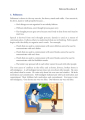
3. Politeness
Politeness is shown in the way one sits, lies down, stands and walks. One cannot sit, lie down, stand or walk properly because...
• One’s things are not organized in an orderly fashion
No content provided to summarize.
8
Understanding Artificial Intelligence
8 Universal Goodness
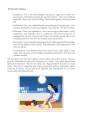
• Cleanliness: One is not self-indulgent, not quick to anger but is always in a good mood. Cleanliness prevents the presence of pests. There is no need for pesticides. There is n
This text delves into the concepts of artificial intelligence, outlining its various applications in today's world, as well as its potential future developments. It covers the basics of machine learni

63
การบรรลุพระนิพพาน
D
DI
อล
goal."
...This is why the Buddha tried to free himself from it, and why He could achieve his
(นี้คือเหตุผลว่าทำไมพระพุทธองค์จึงทรงมีวิริยะอุตสาหะถอนพระองค์หลุดพ้นไปจากทุกข์
และทำไมพระองค์จึงทร
(นี้คือเหตุผลว่าทำไมพระพุทธองค์จึงทรงมีวิริยะอุตสาหะถอนพระองค์หลุดพ้นไปจากทุกข์ และทำไมพระองค์จึงทรงบรรลุพระพุทธประสงค์) “Is that nirvana?” (นิพพานใช่ไหมคะ?") “Yes, that's right. And the goal of Buddh
132
The Reality of Life: Understanding Our Defilements
Suzanne Jeffrey
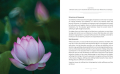
The Reality of Life: We get this picture from our parents. Our birth is the most critical time, and the weakest time, of our life. Because the four elements are impure, we realize tha
In 'The Reality of Life,' Suzanne Jeffrey delves into how our early upbringing shapes our understanding and actions. The text emphasizes how our birth is a vulnerable point characterized by defilement
24
Importance of Human Behaviour and Making Choices
CHAPTER 2
IMPORTANCE OF HUMAN BEHAVIOUR AND MAKING CHOICES
DEFINITION OF BEHAVIOUR
Our behaviour is the result of our thoughts and actions; it is the way we respond to external situations and conditi
บทที่ 2 เกี่ยวกับความสำคัญของมนุษยพฤติกรรมและการเลือก เปิดเผยว่าพฤติกรรมของเราเป็นผลลัพธ์จากความคิดและการกระทำซึ่งส่งผลต่อการตอบสนองต่อสถานการณ์ภายนอก การศึกษาและปฏิสัมพันธ์ทางสังคมมีส่วนในการพัฒนาควา
56
Meditation for Self-Love and Universal Kindness
continuously. Repeat the mantra in your mind gently,
allowing the mantra to slowly echo from the middle
of the bright sun within your abdomen. Repeat the
mantra 'Samma Arahang' repeatedly, which means
This text provides a meditation practice centered around the mantra 'Samma Arahang', focusing on purifying the mind to achieve self-love and universal kindness. The practice involves visualizing a bri