

AF+ : ค้นหาหนังสือธรรมะ หน้า 58 / 94
หน้าหนังสือทั้งหมด
37
U.S. Foreign Policy in the Middle East: Fostering Stability and Addressing Security Challenges
policy in Iraq and of the Palestinian–Israeli peace process. The United States needs to recognize that terrorism is not the result of blind hatred of Western civilization, as the Bush administration i
This text argues that U.S. policies in the Middle East must shift to address underlying political issues to effectively curb terrorism and ensure oil flow. It outlines critical tasks for U.S. engageme
44
Challenges of Democracy Promotion in the Middle East
38 THE NEW MIDDLE EAST
must be clearly defined; in the Middle East, the concept of democracy promotion has fluctuated from aggressive rhetoric of regime overthrow at one extreme to small, little noti
The text discusses the fluctuating concept of democracy promotion in the Middle East, highlighting the confusion between promoting democracy and regime overthrow. It emphasizes the need for the U.S. t
45
Analysis of Geopolitical Issues in the Middle East
Notes
1. See International Crisis Group report, Dealing With Iran’s Nuclear Program, November 2004.
2. See http://usinfo.state.gov/xarchives/display.html?p=texttrans-english&y=2007&m=April&x=200704181
This text discusses various reports and publications relevant to the geopolitical issues in the Middle East, with a specific focus on Iran's nuclear program, negotiations involving al-Qaddafi, and the
46
About the Authors of Carnegie Endowment Publications
About the Authors
MARINA OTTAWAY is a senior associate in the Democracy and Rule of Law Program and director of the Carnegie Middle East Program. Her most recent book, Beyond the Façade: Political Re
This section highlights the contributions of key authors associated with the Carnegie Endowment for International Peace. Marina Ottaway, a senior associate, leads the Democracy and Rule of Law Program
11
Rettung von Mes Aynak - Die Herausforderungen der Archäologie
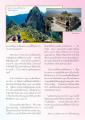
Machu Picchu เมืองโบราณ
ในภูมิประเทศที่ 15
Mes Aynak
ทองแดงที่อยู่ภายในถูกรายได้ทุกสถานแห่งนี้มีมูลค่ากว่า 100,000 ล้านดอลลาร์
บริษัท MCC กล่าวว่าพวกเขาไม่ได้แจ้งถึงการมีอยู่ของสถานที่เป็นโ
Mes Aynak in Afghanistan, ein bedeutender archäologischer Standort, wird von der MCC aufgrund der dort vorhandenen Kupferressourcen unter Druck gesetzt. Trotz des internationalen Drucks und der Forder

11
STOP DESTROYIN' MES AYNAK
CO2... IT CAN'T BE BUILT IN A DAY...
The ancient Buddhist's once is also Afghan's Treasure
Please save Mes Aymak
Save the cultural heritage of Afghanistan
Save Mes Aymak

12
The OCR result from the image is:
"Help save an ancient Afghanistan site for posterity."
There is also some Thai text at the bottom of the image:
"ภาพเครือข่ายชาวพุทธลูกอื่อ ยื่นหนังสือต่อ UNESCO"
33
Reinterpreting Dhammarāya in the Pali Canon
Most of them refer only to the Aggañña-sutta passage, 4 missing out the three Apadāna references. 5 The reason could be either that the scholars concerned have taken the aforementioned text as represe
This paper examines the overlooked references to dhammarāya in the Pali canon, emphasizing a context not previously presented. It critiques the tendency to categorize texts strictly as ‘early Buddhism
41
Understanding Dhammakāya: A Scholarly Interpretation
Points to Consider
It may be observed that the difference in previous scholarly interpretations of the term dhammakāya in this passage mainly pertains to the inter-relatedness of two distinctive meani
This text delves into scholarly interpretations of the term 'dhammakāya', emphasizing the need for a nuanced understanding of 'dhamma' as both a realized reality and a verbal expression. It identifies
47
Implications of Parallel Descriptions of Monks and Brahmins
Implications of Parallel Descriptions of Monks and Brahmins
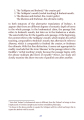
As Gombrich points out, the passage in question is comparable to the Brahmins’ claim:46
brahmanā va brahmuo putṭā orasā mukhato jāta brahma
The text delves into how Gombrich compares the descriptions of Brahmins and Monks, emphasizing the dual interpretations of the term 'brahma-' as both the masculine creator and the neuter ultimate real
49
The Tathāgata and Brahmā: A Semantic Analysis
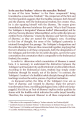
1. The Tathāgata and Brahmā,48 the creator god
2. The Tathāgata's mouth (verbal teaching) & Brahmā mouth.
3. The dhamma and Brahmā, the creator god; or
The dhamma and Brahman, the ultimate reality.
I
This passage delves into the nuanced relationships between the Tathāgata and Brahmā, highlighting the semantic layers present in verbal teachings. It contrasts the Tathāgata's mouth with Brahmā's, ind
50
Understanding the Connotation of Dhamma in Relation to Brahma
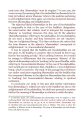
In the case that ‘brahma-’ refers to the masculine ‘Brahma’
In case of the term ‘brahma-’ in the three compounds50 being
translated as a masculine ‘Brahma,’51 the comparison of the first and
the third
In this text, the term 'brahma-' is analyzed in the context of its translation as the masculine 'Brahma.' It discusses how the comparison between the Tathāgata and the Brahma, the creator, illustrates
67
Understanding Dhammakāya in Relation to Paccekabuddhas and Enlightenment
early texts that 'dhammakāya' must be singular. 100 In any case, the verse conveys the meaning that a Paccekabuddha has dhamma(s) as his body (or bodies), where 'dhammas' refers to the qualities perta
This study analyzes the term 'dhammakāya' and its relation to enlightenment. Dhammakāya is presented as a singular concept applying to both the Buddha and Paccekabuddhas, emphasizing that 'dhamma' ref
68
Dhammakāya and Noble Disciples
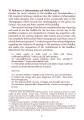
VI. Reference 3: Dhammakāya and Noble Disciples
Besides the term’s relation to the Buddha and Paccekabuddhas, a Pāli canonical reference mentions also the relation of dhammakāya with noble disciples.
In the context of Pāli texts, the term dhammakāya is linked to noble disciples as evidenced in the story of Gotamī, the great nun and Buddha's foster mother. As she approaches her passing, Gotamī refl
69
The Superiority of Dhamma over Worldly Existence
33. You were fed by me the milk that could relieve thirst (only) momentarily; But I was fed by you the dhamma-milk that is perpetually peaceful. In this passage, a comparison is made between worldly m
ในบทความนี้เสนอการเปรียบเทียบระหว่างความเป็นแม่ในโลกกับการเป็นบิดาทางจิตวิญญาณ โดยเน้นที่การดูแลร่างกายทางกายภาพและร่างกายทางจิตวิญญาณ รวมถึงประสิทธิภาพในการบรรเทาความกระหายของนมธรรมดาและนมที่เป็น dha
70
The Essence of Dhamma-Milk in Spiritual Growth
related also to the happiness arisen from the realisation of truths, as
mentioned in the previous verse.
In verse 33, Gotami is said to have been fed on the ‘dhamma-milk.’105 Because it is fed to her
The concept of dhamma-milk represents spiritual nourishment derived from the Buddha's teachings, leading to inner peace and realization of truths. Gotami's declaration signifies the transition from ph
74
Understanding Dhammakāya and Enlightenment
the function of each particular transcendent dhamma.116 The totality of transcendental qualities constituting each transcendental state, which is identified earlier with dhammakāya, denotes a degree o
This text analyses the concept of dhammakāya, highlighting its connection to enlightenment and the associated happiness. It emphasizes the blameless nature of dhammakāya and notes Gotami's insights in
76
Understanding the Terms Kevala and Dhammakāya in Buddhist Texts
Generally, the term ‘kevala’ is translated either as ‘only’ or ‘entirely.’ It is observed that, whenever the term appears together with another word that conveys the meaning of ‘emanating,’ ‘illuminat
This text explores the interpretation of key Buddhist terms such as 'kevala', which denotes 'only' or 'entirely', particularly in contexts associated with illumination. The term 'dhammakāya', often li
78
Understanding Dhammakāya in Early Theravādin Context
The research approach employed in the present study is intended as a more direct, analytical and inclusive one than previous approaches to this question. It is more direct in that it set off by docume
This study analyzes the term dhammakāya through close readings of Pali canonical passages, revealing that it relates not only to the Buddha but also to other noble figures like Paccakabuddhas and disc
80
Understanding Dhammakāya and its Significance in Buddhism
mental qualities128 or purity,129 or identifies it with realities to be
attained or experienced spiritually by noble disciples through the
penetration of the noble paths.130 In one instance, he connec
This text examines the term dhammakāya as articulated by Buddhaghosa, linking it to spiritual realities and teachings of the Buddha. It highlights the role of dhamma-vinaya as a guiding principle and