

Brahmā : ค้นหาหนังสือธรรมะ หน้า 3 / 7
หน้าหนังสือทั้งหมด
106
The Brahma Vệga (Ahat!) - Stories of Monks
The OCR result from the image is:
**Chapter XXVI. The Brahma Vệga (Ahat!).**
**Be A Knower Of The Daughters.**
**(The Story of Thirty Monks)**
1. The story of Thirty Monks.
2. The Story of a
This chapter presents the captivating stories of thirty monks, each with unique experiences and spiritual insights. From the teachings of Monk Anadathera and Monk Anastashera to the adventures of Monk
20
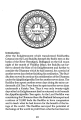
The Journey of Enlightenment: The Buddha's Reflections
…sit beneath the Ajapālanigrodha Tree again. As the Lord Buddha was considering the Dhamma there the Brahmā Sahampati and a retinue of 10,000 bade the Buddha to have compassion and to teach what he had known…
…ent 28 days in contemplation to absorb the bliss and understand the Dhamma. With encouragement from Brahmā Sahampati, he decided to share his teachings for the benefit of all beings. This period marked the …
29
The Enlightenment of Koṇḍañña
…of the ‘Group of Five’ — Enlightenment that is supreme in the human world, angel world, Māra-world, Brahmā-world, animal-world, world of monks, world of brahmins, world of angels or men — Enlightenment from…
This text discusses the pivotal moment when Koṇḍañña achieved enlightenment after listening to the Buddha’s teachings, recognizing the nature of arising and cessation within himself. The earth-sprites
87
The Cycle of Existence and Three Spheres
… she attained the first absorption. Passing away from that lifetime, the princess was reborn in the Brahmā-world. Passing away from the Brahmā-world, she was born continuously in the Cycle of Existence unti…
This text discusses the concept of craving as the root cause of rebirth in the Cycle of Existence, using a story from the Dhammapadathakā to illustrate the journey of a female piglet that was reborn m
137
Understanding the Bodies of Enlightenment
…the mind is sufficiently pure to be released from these three defilements, the mind will attain the Brahmā Body.
The defilements associated with the Brahmā Body are
This content discusses the ten types of Bodies of Enlightenment, including the Arahatta Body and Subtle Arahatta Body, emphasizing the benefits of attaining inner bodies for personal growth. Meditator
139
Understanding the Body of Enlightenment in Buddhism
hatred [dosa] and delusion [moha].
Having attained the Sakidägämi Body of Enlightenment,
the meditator uses this Body of Enlightenment to examine
the Four Noble Truths in the Brahmä Body both forwards
บทความนี้สำรวจระดับต่างๆ ของการตรัสรู้ในพุทธศาสนา โดยเน้นถึงการใช้ร่างกายของการตรัสรู้ เช่น Sakidägämi, Anägämi และ Arahant ซึ่งผู้ปฏิบัติธรรมจะสามารถปล่อยวางข้อผูกพันต่างๆ เพื่อเข้าถึงความรู้สูงและกา
194
Choosing the Right Disciples in Buddhism
…ss in his medi-
tation because he had already attained the subtle human
body, the angelic body, the Brahmā body and the form-
less Brahmā body. He would be almost on the brink of
attaining the Dhammakāya. T…
Through his past lifetimes and pursuit of Perfection, the Buddha dedicated six years to discover the Dhamma. Acknowledging the difficulty others may have in understanding, he chose his first disciples
199
The Buddha's Teachings on Reality and the Middle Way
…t gives rise to supreme knowledge: knowledge that is superior even to that of the angelic body, the Brahmā-body or the formless Brahma-body;
2.3.3 Sambodhāya: It gives rise to knowledge of the Noble Truths;…
This text delves into the teachings of the Buddha regarding the benefits of seeing and knowing according to reality. Although he did not explicitly define the device for achieving this understanding,
203
Buddhist Teachings on Cessation of Suffering
…s of existence;
3.2.2.2 Bhavaṭanāḥ: Craving for the pleasure of the "form-absorptions" or for the Brahmā-world;
3.2.2.3 Vibhaṭanāḥ: Craving for the pleasure of the "formless-absorptions" or for the form…
This text delves into the Buddhist concepts of craving and the cessation of suffering. It describes various forms of craving and how they lead to rebirth, as well as the Noble Truth of cessation where
216
The Proclamation of the Supreme Dhamma
… denied by any priest or
appattvattiyam samane na va contemplative, deity, Mara or god or anyone in
brahmāne va devena va mārena va the cosmos."
215
In this text, we witness the proclamation of the Dhamma that cannot be denied by any priest or god. The text details the reactions of different heavenly deities from the Catummaharajika to the Brahma
217
The Moment of Enlightenment
brahmunā vā kenaci vā lokasminṭi”.
Itīha tena khaṇena tena muhuṭṭena yava brahmalokā saddo abbhuaggacchi. Ayāṅca dasasahassi lokadhātu saṅkampi sampăampi sampa’vedhi. Appamaṇo ca olāro obhāso loke pā
In a significant moment, a cry ascended to the Brahma-world, causing a tremor throughout the ten-thousand-fold cosmos and releasing a vast radiance that surpassed that of the deities. Bhagavā acknowle
220
Exploring the Path to Enlightenment in Buddhism
101; enlightenment mechanism, chanting, Dhammacakkapavattana explained by Dhammakaya 111; Sutta 10-11, 209-16 knowledge arising to reach enlightenment 140-1; practice 94, metaphors: dog and lion 94; g
This text delves into various aspects of Buddhism, focusing on the mechanisms of enlightenment through chanting and the Dhammacakkapavattana Sutta. The practices necessary for attaining enlightenment
222
Understanding Dhammakāya and Defilements in Meditation
deep meditation 114
defilement 122: different, for each
inner body 135; of Angelic Body 135;
of Dhammakāya Anāgāmi 137; of
Dhammakāya Gotrabhu 136; of
Dhammakāya Sakidāgāmi 136,
137; of Dhammakāya Sot
The text provides an in-depth examination of the Dhammakāya concept, explaining various levels such as Dhammakāya Anāgāmi, Gotrabhu, and Sakidāgāmi. It discusses the nature of defilements and how arah
230
Insights into Buddhist Teachings
Kondaṇña 142; abstention from killing 158-60; instilled by loving kindness 141; tool of Right Livelihood 144
Right View 20, 39-40, 115, 117, 118, 141, 197: transcendental 39-40; mundane, 39, 147-51; a
This text discusses various Buddhist concepts such as Kondaṇña's role in understanding Right View and the importance of loving kindness and self-discipline in achieving liberation. It highlights examp
232
Exploration of Metaphors in Buddhist Philosophy
snake, poisonous, mistaken for rope spire, a palace - {metaphor for Mid-
- {metaphor for self-mortification dle Way 38-9} 36}
spouses, categories of 154-6
snake - {metaphor for craving 88}
sprite, ear
This text explores several metaphors used in Buddhist philosophy, including the snake as a metaphor for craving and its relationship to the concept of suffering. It further elaborates on the significa
246
Fundamental Concepts in Buddhist Psychology
rasa-saṅchetana (gasticatory volition: see sense volition)
rasa-saṃnā (gasticatory sense registration: see sense registration)
rasa-tanḥa (gasticatory craving: see sense craving)
rasa vicāra (ga
This text elaborates on significant concepts in Buddhist psychology, including gasticatory and visual perceptions such as rasa (taste) and rūpa (form). It addresses terms like gasticatory volition, se
249
Understanding Key Buddhist Concepts: A Glimpse into Mindfulness and Liberation
feeling: see aggregates) vedanānupassanā-satitapatthā (see mindfulness of feeling in the feeling) Vehapphalā (P. realm of Brahmas with abundant reward: see form Brahma realms) vibhavaṭaṅhā (see cravin
This text provides an in-depth understanding of various important Buddhist concepts. It covers essential terms such as vedanānupassanā (mindfulness of feelings), vipassanā (insight), and viriya (energ
256
Techniques for Effective Meditation
2. Don't crave after seeing something: You should always maintain complete neutrality of mind. Don’t let your mind be distracted from the object of meditation and the mantra. Don’t worry yourself abou
This text discusses key meditation techniques, emphasizing the importance of neutrality and visualization in practice. It advises against craving and worries during meditation, focusing instead on mai
81
Your Book Title
the sphere called the first path (pathama magga).^1 The mind was to be concentrated right there at centre, and the mantra 'Sammā-arahaṁ' recited repeatedly in silence, without allowing the attention t
This book explores various themes and presents an in-depth analysis of its characters and plot. The author's unique perspective brings forth new insights into the underlying messages conveyed through
151
Untitled
2. Don't crave after seeing something: You should always maintain complete neutrality of mind. Don't let your mind be distracted from the object of meditation and the mantra. Don't worry yourself abou
There is no content to summarize.