

C& : ค้นหาหนังสือธรรมะ หน้า 471 / 507
หน้าหนังสือทั้งหมด
29
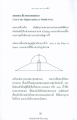
มหาธรรมกายเจดีย์และแนวทางสายกลาง
มหาธรรมกายเจดีย์
แกนกลาง คือ หนทางสายกลาง
(Axis is the Majjim-makka or Middle Way)
มองจากด้านข้าง มัชฌิมมรรคของมหาธรรมกายเจดีย์ยังคงดำเนินต่อไปในส่วนของแนวลาด (Clading) และภายในแกนนี้ยังคงบรรจุหรือม
มหาธรรมกายเจดีย์เป็นสัญลักษณ์ของหนทางสายกลางในพระพุทธศาสนา โดยแกนกลางแสดงถึงหลักการทางวิชาการที่คู่ควรกับเสาแห่งรูปเคารพ ในขณะที่การฝึกสมาธิและการเข้าถึงธรรมกาย โดยการชี้แจงของหลวงพ่อวัดปากน้ำ ทำให้เข
3
The Buddha’s First Teaching
A Dhammakaya Foundation paperback
First edition 2002
Published by the Dhammakaya Foundation
Department of International Relations
23/2 Moo 7., Khlong Sam, Khlong Luang,
Patumthani 12120
Thailand
Tel.
This book, published by the Dhammakaya Foundation, delves into the core teachings of Buddhism as explicated by Phrabhavanaviriyakhun (Phadet Dattajeevo). The text provides an in-depth analysis of the
4
Translator's Preface to Dhammacakkapavattana Sutta
Translator's Preface
This book has been compiled and translated not exclusively from the written Thai version of Phrabhavana-viryakhun’s ‘Dhammacakkapavattana Sutta’, but also from many subsequent re
This preface discusses the compilation and translation of Phrabhavana-viryakhun’s Dhammacakkapavattana Sutta from Thai texts and various teaching sessions. It emphasizes the author's intent to make th
5
Advanced Concepts in Buddhism
which are unnecessarily caught up with Thai culture have been minimized or omitted.
The content of this book is more advanced than the for- going titles in the series 'Buddhism in Plain English'. This
This book, part of the 'Buddhism in Plain English' series, offers advanced insights into Buddhism's higher spiritual training, focusing on the renunciation of mundane life. It discusses the common mis
6
The Awakening of Siddhartha Gotama
people see the signs of receding youth and health and respond with disgust, especially at the sight of a corpse. Siddhatha Gotama’s witness of these events was different, however. Confronted by the in
This text delves into the insights of Siddhartha Gotama as he confronts the inevitable realities of old-age, sickness, and death. Rather than succumb to despair, he considers life like a battle where
7
The Journey of Siddhartha Gotama Towards Enlightenment
he, himself, didn’t engage in the battle against delusion, there would be no-one else to do it in his place. Thus with anxiety, *not only* for his own lot in life, *not only* for the lot of his family
This text delves into Siddhartha Gotama's profound realization that if he did not confront the battle against delusion, no one would. Motivated by anxiety for himself, his family, and all beings trapp
8
The True Nature of the Buddha's Enlightenment
the Buddha’s enlightenment dealt entirely with meditation focussed outside the body. Then, as now, almost all success was attributed to ideas and strategies — but as a result of countless past lifetim
Siddhattha Gotama's enlightenment was rooted in meditation that transcended mere conceptualization. He recognized that achieving true liberation demanded a harmonious blend of theory and inner virtue.
9
Buddhism in Plain English: A Practical Approach
above — delusion, renunciation and the Buddha’s previous meditation experience — before embarking on the remainder of this book.
Finally, it should be mentioned that the aim of books in the 'Buddhism
This book aims to make Buddhist scriptures accessible to beginners by presenting them in plain English while maintaining accuracy. It provides Pali terminology alongside translations and encourages re
11
The Noble Truths of Suffering
4 The Noble Truth of Suffering ........................................... 57
Every Living Being is a Victim of Suffering 57 • Suffering as a result of
Birth 58 • The Suffering of Internment in the Wo
เนื้อหาเกี่ยวกับสัจธรรมทั้งสี่ซึ่งกล่าวถึงทุกข์และวิธีการดับทุกข์ในศาสตร์ของพุทธศาสนา รวมถึงอธิบายความสำคัญของการเข้าใจทุกข์และการพึ่งพาไม่ให้จิตใจเสพติดความสุขชั่วครั้งชั่วคราว การบรรลุถึงสภาวะนิพพาน
13
Dhammacakka Pavattana Sutta for Pursuers of Perfection
Appendix A: Dhammacakka pavattana Sutta for Pursuers of Perfection .. 183
Introduction 183 ● What is the Dhammacakka? 183 ● The Importance of the Dhammacakka pavattana Sutta 189 ● Reason for Teaching
This book explores the Dhammacakka Pavattana Sutta, a pivotal teaching in Buddhism that outlines the Middle Way and the Four Noble Truths. It addresses the extremes of practice and guides practitioner
14
Author's Preface on the Uniqueness of Buddhism
Author's Preface
Buddhism is unique in teaching a way to overcome suffering, with its aim definitely to liberate oneself from the Cycle of Existence [vadda-samśāra] thereby attaining the highest eter
The Author's Preface highlights Buddhism's distinctive qualities in teaching ways to alleviate suffering and attain ultimate happiness, emphasizing its systematic approach to teachings and virtues. It
16
Understanding the Dhammacakka Pavattana Sutta
emonies. This is especially true of the ceremonies held on Asālha Pūjā Day, when it is a traditional duty for Buddhist monks to celebrate the anniversary of the preaching of the Dhammacakka Pavattana
The Dhammacakka Pavattana Sutta holds significant importance in Buddhist ceremonies, especially during Asālha Pūjā Day when monks chant it for laypeople's benefit. Unfortunately, finding unabridged co
17
Dhamma Practice and Understanding in Dhammacakkapavattana Sutta
translation are hampered in their studies both by the scarcity of the original and its archaic language. In spite of the present author's respect for the original use of language, to leave it in its o
This work addresses the challenges of understanding the Dhammacakkapavattana Sutta due to its original language and scarce resources. The author adapts complex passages to modern language while mainta
18
The Heir to the Buddha’s Teaching
This book envisions the student of Dhamma as being an “heir” to the Buddha’s Teaching who has the responsibility to study them to the point where they understand them sufficiently deeply to instil the
This book envisions the student of Dhamma as an 'heir' to the Buddha's Teaching, emphasizing the need to understand and instill these teachings in future generations. The author expresses gratitude to
21
The Inaugural Teaching of the Buddha
He agreed to teach the Dhamma, but remained undecided as to exactly who he should teach first. Eventually, the Bud- dha decided to make the journey to teach the ‘Group of Five’ [pañcavaggiya] who were
The Buddha decided to teach the Dhamma starting with the Group of Five at Isipatana Deer Park. His first sermon, the Dhammacakka pavattana Sutta, serves as a crucial teaching, symbolized by a royal ch
22
Understanding the Dhammacakkapavattana Sutta
For as long as the components were separated, they could not be called a wheel. Just as, a skilled wheelwright can assemble the components to make a strong wheel ready to be put to work, the Buddha, t
The Dhammacakkapavattana Sutta marks the first sermon of Buddha, articulating the foundational teachings that guide practitioners towards liberation. This sermon, unique in its singular delivery, enca
23
Understanding the Path to Nirvana: The Buddha's Teachings
the attainment of Nirvana. In the Dhammacakkapavattana Sutta, further to the clarification of the profitable path of practice, the Buddha stipulates paths of practice that are unprofitable and might e
This text discusses the Buddha's elucidation of the paths to Nirvana as presented in the Dhammacakkapavattana Sutta. It highlights the unprofitable practices, particularly the path of sensual indulgen
24
The Path of Self-Mortification in Buddhism
2. The Path of Self-Mortification
According to the Buddha, the practice of self-mortification [attakilamathānuyoga] is fruitless. He said that it is not a practice in keeping with the tenets of Buddhi
In Buddhism, the practice of self-mortification is deemed fruitless by the Buddha. He elucidates that these practices, such as lying on thorns and severe fasting, do not genuinely rid individuals of d
25
The Middle Way: A Path to Liberation
3. The Middle Way
The Middle Way [majjhima paṭipadā] is a path of practice that avoids the extremes of either sensual indulgence or self-mortification. It is a path of practice that is conducive to ta
The Middle Way [majjhima paṭipadā] serves as a balanced path in Buddhism, steering clear of both sensual pleasures and self-mortification. This approach is aimed at tempering the mind, achieving supre
26
The Noble Truths and the Path to Nirvana
3. The Noble Truth of the Cessation of Suffering [dukkhanirodha ariyasacca];
4. The Noble Truth of the Path to the Cessation of Suffering [dukkhanirodhåkāmıni ariyasacca].
Apart from allowing Prince S
This text delves into the Four Noble Truths, emphasizing the cessation of suffering and the path leading to it. The Middle Way enables Prince Siddhattha to attain enlightenment and Nirvana while alive