

F.N. : ค้นหาหนังสือธรรมะ หน้า 37 / 252
หน้าหนังสือทั้งหมด
7
กขณฺฑ์ - การบริหารและวรรณกรรม
กขณฺฑ์
ที่ปรึกษา : พระมหาสุทธิชัย สุขิญา, พระครูสมุจิรินทร์ รวดฉัตโน
บรรยายกาศบริหาร : พระบุญฑัณณ์ ณฺฐิภัทรญ์
บรรยายกาศบทความ : อัคริพัทธ์ สุทธิกุลมาศ
คอลังนิสต์ : หลงอา, LP’ VOD, Dr. Apiraporn Vasava
กขณฺฑ์ เป็นเอกสารที่รวบรวมความคิดเห็นและบทความจากที่ปรึกษาและคอลัมน์ที่มีชื่อเสียง ซึ่งมีการกล่าวถึงศิลปกรรมและแนวคิดในการบริหารจากผู้เชี่ยวชาญในหลากหลายสาขา รวมไปถึงการขอบคุณบุคคลที่มีส่วนช่วยเหลือใน
36
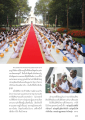
การอบรมสามเณรธรรมทายาทและความสัมพันธ์ในครอบครัว
พระธรรมทายาทและสามเณรธรรมทายายทุกรูปจึงมีความประทับใจที่ได้สมสืบสนิทสนมกันในกองทัพพระฤทธิ์ ซึ่งเป็นผ้าสุดท้ายในสงสารวัจเป็นที่สุดแห่งการแสดงหาความไม่สิ้นดังเก่า จากนั้นไปเหล่าคณะายาททุกๆคนต่างใจหนักอึ
พระธรรมทายาทและสามเณรธรรมทายาทรู้สึกประทับใจในความเชื่อมโยงของการเดินทางเพื่อการพัฒนาจิต โดยการเข้าถึงพระรัตนตรัยภายใน แม้จะห่างเหินจากครอบครัว แต่ความรักในสายเลือดยังคงเรียกร้องให้พวกเขาอยากอยู่กับคร
46
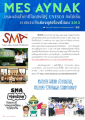
การปกป้องโบราณสถาน Mes Aynak
MES AYNAC
มรดกวันสำคัญในโลกยังไม่รู้ UNESCO ยังไม่เห็น
เราจำเป็นต้องดึงเรื่องนี้ก่อน 2012
http://www.facebook.com/SaveMesAynakTH SPF
SMath (เอส-ม่า-ไทย) หรือ Save Mes Aynak Thailand คือวัยรุ่นไทยกลุ่
กลุ่ม SMath (เอส-ม่า-ไทย) ตั้งขึ้นในปี 2012 เพื่อปกป้องโบราณสถาน Mes Aynak จากการทำเหมืองแร่ที่อาจทำลายมรดกทางประวัติศาสตร์และวัฒนธรรมโลก ทั้งนี้กลุ่มได้จัดกิจกรรมเพื่อเผยแพร่ข้อมูลและเชิญชวนผู้คนร่วม

55
V-PEACE Magazine: วารสารเพื่อความสุขและประโยชน์
วารสาร V-PEACE magazine เป็นวารสารที่อ่านแล้วมีความสุข มากด้วยประโยชน์ มีความสนุกสนาน มีสาระ และน่าติดตามเป็นอย่างยิ่งค่ะ หลังของความสำเร็จจากสมัครรับทุกคนที่ทุ่มแรงใจทำให้บูมๆๆๆๆ แล้วก็เกิดขึ้นสำเร็จ
V-PEACE magazine เป็นวารสารที่มีเป้าหมายให้ประโยชน์และความสุขแก่ผู้อ่าน มีความสนุกสนานและน่าติดตาม โดยมีความสำเร็จจากคนที่ร่วมมือกันทำให้วารสารนี้ลุล่วงไปด้วยดี นอกจากนี้ยังมีการแสดงความคิดเห็นจากผู้อ
17
Exploration of Pāli Manuscripts in Laos
The journal begins with Anatole-Roger Peltier's article on his investigations of a wooden chest containing palm-leaf manuscripts that were recently discovered in a cave in the Khammouan province of La
This journal features an article by Anatole-Roger Peltier on a wooden chest containing palm-leaf manuscripts found in Laos. The texts, dated to the sixteenth century, reveal their roots in the Pāli ca
23
The Tipitaka Manuscripts of the Khammouan Cave in Laos
The Tipitaka Manuscripts of the Khammouan Cave in Laos
Anatole-Roger Peltier
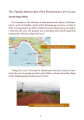
On invitation of the Ministry of Information and Culture (Vientiane, Laos), I went to Thakhek, capital of the Khammouan p
In May 2005, Anatole-Roger Peltier was invited by the Ministry of Information and Culture in Laos to explore the Nong Pa Fa Cave in Khammouan Province. Accompanied by a cultural officer and a local sc
26
Exploring the Tipiṭaka Manuscripts
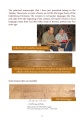
The palm-leaf manuscripts that I have just presented belong to the Tipiṭaka. These texts, or parts of texts, are in Pāli, the lingua franca of the Indochinese Peninsula. The versions in vernacular lan
The palm-leaf manuscripts presented belong to the Tipiṭaka, primarily in Pāli, the lingua franca of the Indochinese Peninsula. While the local vernacular translations like Thai emerged only in the ear
35
Exploring the Concept of Dhammakāya in Pali Canonical Texts
Of the three canonical passages mentioned above, only the first, namely the Aggañña-sutta passage, contains the term dhammakāya, while the other two do not. The reason for which all these passages are
This study reexamines the term dhammakāya in specific Pali canonical passages, notably the Aggañña-sutta, contrasting it with previous scholarly interpretations that often exclusively link the term to
36
References to 'Dhammakāya' in the Pāli Canon
III. References to 'Dhammakāya' in the Pāli Canon
In the Pali canon, the term dhammakāya appears four times: once in the Aggiāṇā-sutta of the Dīgha-nikāya and three more times in Apadāna literature.
In the Pāli Canon, the term 'dhammakāya' is found four times, significantly in the Aggiāṇā-sutta and Apadāna literature. It serves various roles including a designation for the Tathāgata and associati
38
Understanding the Concept of Dhammakāya in Buddhist Thought
D.III.84
Vāsettha and Bhāradvāja, he whose confidence in the
Tathāgata is settled, rooted, established, solid, irremovable by
any ascetic or brahmin, any deva or Māra or Brahmā or anyone
in the world
In this passage, Vāsettha and Bhāradvāja discuss the unwavering confidence in the Tathāgata, stating that those deeply rooted in dhamma can claim to be heirs of dhamma. The term 'dhammakāya' and its i
51
The Transformative Power of the Noble Eightfold Path in Buddhism
refer to something which 'transforms' the person into noble states, so that itself is comparable to the creator. At the same time, it must refer also to the shared or same kind of qualities or essence
This text delves into the concept of transformation in Buddhist philosophy, specifically through the Noble Eightfold Path. It highlights how this path aids in the eradication of defilements, enabling
53
Understanding Dhamma and Nibbāna in Buddhism
With regard to dhamma as the 'essence' of the Buddha and Arhat disciples, however, it may be more appropriate to refer to 'Nibbāna,' for once they have attained Buddhahood and Arhatship their spiritua
This text explores the concept of dhamma in relation to the Buddha and Arhat disciples, particularly the notion of Nibbāna as the essence of their enlightenment. It argues that dhamma, especially in t
54
Understanding Dhamma and Brahman in Buddhism
In the case that 'brahma-' refers to the neuter 'brahman'
In the other case in which the term brahma- is translated as 'brahman'63 the ultimate,64 the third parallel65 suggests that the term dhamma in
This text clarifies that the term 'brahma-' can refer to either the masculine 'Brahmā' or the neuter 'brahman,' ultimately leading to the view that dhamma signifies transcendental realities. It sugges
57
The Concept of Dhamma and Kāya in Buddhist Philosophy
On the whole, it appears that the terms dhamma and brahma constituting four designations of the Tathāgāta are used in the sense of the ‘highest.’ It is most likely that they refer to Nibbāna.
This i
This study examines the terms dhamma and brahma, suggesting that they refer to the highest aspect of Tathāgāta, likely Nibbāna. The term dhamma denotes transcendental realities, transcending the realm
59
Understanding Dhamma and Nibbāna
The parallel usage of dhammakāya and dhammabhūta with brahmakāya and brahmmabhūta suggests further that the term dhamma in the passage should refer to Nibbāna. Indeed, it is possible also to say that
This study delves into the concepts of dhamma and Nibbāna, positing that dhamma refers to transcendental dhamma, which serves as a transformer and defilement eradicator. It explores how the realizatio
64
Understanding Paccekabuddhas in Buddhism
91 While it is possible for a Paccekabuddha to teach an individual which finally leads to that person's enlightenment, he does not teach to a multitude of people in the same way as a Buddha does. Henc
The text discusses the distinct nature of Paccekabuddhas, who can guide individuals toward enlightenment but do not teach the masses like Buddhas. Their teachings emphasize solitude and are succinct,
83
Understanding Dhammakāya in Theravāda Buddhism
In a few passages, however, Sāriputta also refers to the term dhammakāya in the sense of the Buddha’s teaching.150
On the whole, traditional Theravādins interpret the term dhammakāya mostly in the se
This passage examines the term 'dhammakāya' as interpreted in traditional Theravāda Buddhism. It discusses the general view of dhammakāya as reflecting the qualities of the Buddha and the spiritual re
87
Buddhist Manuscripts in China: Theravāda Buddhism in Sipsong Panna
Buddhist Manuscripts in China: A Case Study of Theravāda Buddhist Manuscripts in Sipsong Panna (Xishuangbanna, Yunnan Province, PRC)
Joe Zhou Ya
China, like many other countries in the world, is a c
This article delves into the rich tapestry of Buddhist culture in China, specifically focusing on the Theravāda Buddhism of the Dai people in Sipsong Panna, Yunnan Province. Buddhism's introduction to
94
Buddhist Manuscript Formats in Dai Region
Volume 98 Khuddaka-nikāya (小阿含经) and Volume 99 Majjhima-nikāya (中阿含经) are all in 5-line to 6-line format manuscripts; Volume 100 Digha-nikāya (长阿含经) is in 4-line to 5-line-format. The jäṭaka Wexiandal
Volume 98 Khuddaka-nikāya and Volume 99 Majjhima-nikāya are primarily in 5-6 line formats, while Volume 100 Digha-nikāya is formatted with 4-5 lines per page. The jäṭaka Wexiandala represents a key Bu
125
Meditation Techniques from An Shigao's Teachings
breathing in, and count two at the end of breathing out. If you
count any other number than two when it should be two, start
counting over from one. If you count any other number than
nine when it sho
This text delves into meditation practices from An Shigao’s works, particularly highlighting the Anban shouyi jing, a crucial scripture translated from Sanskrit. The sutra emphasizes mindfulness of br