

Pāli : ค้นหาหนังสือธรรมะ หน้า 12 / 18
หน้าหนังสือทั้งหมด

31
Dhammakāya
in the Pali Canon¹
Chanida Jantrasisalai
38
Understanding the Concept of Dhammakāya in Buddhist Thought
… later
expression of dhammakāya as a ‘collection of Buddhist sūtras’ agrees
with its meaning in the Pāli Nikāya.24 Xing also interprets the term
dhammakāya in this passage as ‘the Buddha’s collective teac…
In this passage, Vāsettha and Bhāradvāja discuss the unwavering confidence in the Tathāgata, stating that those deeply rooted in dhamma can claim to be heirs of dhamma. The term 'dhammakāya' and its i
42
Saddhā: The Criterion of Being the Tathāgata's Son
Saddhā: Criterion of being the Tathāgata's Son
The first point to be looked at is the criterion of being the Buddha’s ‘true son’ which is, in this passage, defined by means of his
irremovable confiden
This text discusses the criterion of being the Tathāgata's son, emphasizing the irremovable confidence (saddhā) in the Buddha. It defines this confidence as settled and unchangeable despite external i
43
Understanding the Noble Discipleship in Buddhism
…wer fetters (samyojanas), including doubt (vicikiccha).38
Therefore, the quality of saddhā in the Pāli Aggāṇa-sutta as a property of the Buddha’s ‘true son,’ indicates the person’s state as being a nobl…
The text discusses the qualities of noble disciples in Buddhism, emphasizing the importance of clear perception of dhamma and the eradication of doubts and fetters. It describes the transformation exp
52
Understanding the Noble Eightfold Path and Threefold Path in Buddhism
… (Cambridge England ; New York: Cambridge University Press, 1990), pp. 70-71.
58 M.I.301.
59 In the Pāli canon, the noble eightfold path is mentioned as the best of all ‘conditioned states.’ A.II.34. The …
This text elaborates on the interrelationship between Right Concentration, Right Views, and Right Aspirations as pivotal elements of the Noble Eightfold Path leading to liberation. It discusses the sp
56
Understanding Brahmabhūta and the Path to Nibbāna
… here is synonymous to Buddhist Nibbāna. He notes also the use of the word ‘brahmapatha’ which in a Pāli manuscript is glossed as ‘amatapatha’ - the way to the deathless. It is expressed explicitly that ‘…
The text discusses how 'brahmabhūta' refers to the state of having eradicated all defilements, allowing one to experience ultimate peace and happiness. It parallels 'dhammacarĺa' and 'brahmacarĺa' as
64
Understanding Paccekabuddhas in Buddhism
…tise oneself in order to gain spiritual realisation. See, for example, Ap.I.7-14.
92 Although the Pāli word ‘khaggavisāṇa’ could mean either the ‘rhinoceros’s horn’ or the animal ‘rhinoceros’ itself, th…
The text discusses the distinct nature of Paccekabuddhas, who can guide individuals toward enlightenment but do not teach the masses like Buddhas. Their teachings emphasize solitude and are succinct,
74
Understanding Dhammakāya and Enlightenment
…d so dhammakāya is said to be pleasurable. Next we shall proceed to a close reading of an ambiguous Pāli reference to dhammakāya.
116 See earlier discussion under the heading 'The Meaning of 'Kāya' in the…
This text analyses the concept of dhammakāya, highlighting its connection to enlightenment and the associated happiness. It emphasizes the blameless nature of dhammakāya and notes Gotami's insights in
75
Dhammakāya and the Previous Buddha
VII. Reference 4: Dhammakāya and Previous Buddha
Another Pāli passage that shows the relation of dhammakāya with the Buddha is found in the Atthasandassakathera-…
บทความนี้วิเคราะห์ความสัมพันธ์ของคำว่า Dhammakāya กับพระพุทธเจ้าในพระอัฏฐสังคษา โดยมีการเล่าถึงชีวิตของพระอรหันต์ Atthasandassaka ที่มีความคิดถึงพระพุทธเจ้า Padumuttara และการยกย่องพระพุทธเจ้าในบทกวีส
79
Understanding Dhammakāya: A Noble Identity
As a noun, the term refers to the new identity of a noble person once he/she is transubstantiated either from the worldly plane to a supramundane plane or from a lower transcendent state to a higher.
The term Dhammakāya refers to the new identity of a noble person following transubstantiation, highlighting different levels of realization. It embodies the reality spiritually identified with the Bud
80
Understanding Dhammakāya and its Significance in Buddhism
mental qualities128 or purity,129 or identifies it with realities to be
attained or experienced spiritually by noble disciples through the
penetration of the noble paths.130 In one instance, he connec
This text examines the term dhammakāya as articulated by Buddhaghosa, linking it to spiritual realities and teachings of the Buddha. It highlights the role of dhamma-vinaya as a guiding principle and
94
Buddhist Manuscript Formats in Dai Region
…a Buddhist manuscripts in Sipsong Panna are written in Daile (this is how the Dai pronunciation of “Pāli” is rendered in Chinese pinyin) using Tai Yuan “Dhamma” script.11 Today, few Dai people can read an…
Volume 98 Khuddaka-nikāya and Volume 99 Majjhima-nikāya are primarily in 5-6 line formats, while Volume 100 Digha-nikāya is formatted with 4-5 lines per page. The jäṭaka Wexiandala represents a key Bu
98
Preserving Palm-Leaf Manuscripts in Southwestern China
…exist in the Dai regions in Southwestern China. These Buddhist manuscripts, copied and inscribed in Pāli and the Dai language using traditional Dai Dhamma script, show the spread of Theravāda Buddhism int…
In Southwestern China, palm-leaf and sa-paper manuscripts are crucial for studying ancient Buddhism, showcasing the influence of Theravāda Buddhism. The recent collection efforts by the local governme
102
Wisdom and the Dhammakāya in Buddhist Teachings
…Buddha (dasabalaññaṇa). All the qualities or forms of wisdom listed in the text can be found in the Pāli Canon and commentaries as the results obtained from meditation practice (paṭipatti-sāsanā). However…
The text highlights unique qualities of wisdom exclusive to Buddhas, including omniscience and the ten intellectual powers. It discusses the dhammakāya as the embodiment of a Buddha's inner wisdom, di
129
Exploring the Center of the Body in Meditation
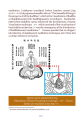
Thus, the phrase 『息中具有四大。心在中』 can be interpreted as: "the mind should be located at the centre of the body while breathing (in and out)." The precise position of the centre of the body where the mind
This text examines the phrase 'the mind should be located at the center of the body while breathing in and out.' It references the teachings of PhraMongkolthepmuni regarding the center's location abov
135
Buddhist Influence on Daoist Visualization Techniques
meditation. Lokakṣema translated Foshou banzhou sanmei jing 佛說般若三昧經 Pratyutpanna Samadhi-sūtra or “The Samadhi of Being in the presence of all the Buddhas”, which is the Visualization of Buddha or Bud
This text discusses the translation of Buddhist sutras like the Pratyutpanna Samadhi-sūtra and their influence on Daoist visualization techniques. It highlights how practices such as Buddhānusmṛti and
82
This Life Next Life
80
13 Apparently at his own cost.
14 The guardian spirits of the four quarters. See the Introduction to the Maha-samaya Suttanta. (Sutta - in Pali)

560
หลักฐานธรรมภายในคัมภีร์พุทธโบราณ
หลักฐานธรรมภายในคัมภีร์พุทธโบราณ 1 ฉบับวิชาการ
Blyth, Reginald Horace. 1974. *Zen and zen classics*. 5 vols. Vol. IV. Tokyo: Hokuseido Press.
Bode, M.H. 1966. *The Pali Literature of Burma*. London:
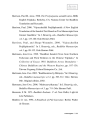
หนังสือเล่มนี้อธิบายและรวบรวมข้อมูลเกี่ยวกับหลักฐานธรรมภายในคัมภีร์พุทธโบราณซึ่งเผยแพร่จากงานวิจัยและบทความที่สำคัญ โดยมีการอ้างอิงแหล่งที่มาอย่างละเอียด เช่น งานศึกษาพระไตรปิฎกและวรรณกรรมปาลีในภูมิภา
565
Buddhist Manuscripts and Translations
…uddhist Kashmir.* 1st ed. New Delhi: Light & Life Publishers.
Hüniber, O. von. 1996. *A Handbook of Pāli Literature.* Berlin: Walter de Gruyter.
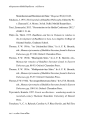
This collection features key translations and studies of Buddhist manuscripts, highlighting the work of scholars like Paul M. Harrison and Jens-Uwe Hartmann. Notable texts include the Pratyutpanna sam
574
หลักฐานธรรมาภายในคัมภีร์พุทธโบราณ 1 ฉบับวิชาการ
หลักฐานธรรมาภายในคัมภีร์พุทธโบราณ 1 ฉบับวิชาการ
Manicheaism and Mazdaism in China." Diogenes 50 (4): 61-68.
Takakusu, J. 1975. The Essentials of Buddhist Philosophy. Edited by W.-t. Chan and C. A. Mo
งานวิจัยนี้สำรวจความสำคัญของคัมภีร์พุทธโบราณและว่ามีการพัฒนาอย่างไรในบริบทของการศึกษาพุทธศาสตร์ โดยนำเสนอคำพิสูจน์และแนวคิดจากนักวิชาการที่เคยศึกษาและทำงานในด้านนี้ รวมถึงมุมมองจากผู้ทรงคุณวุฒิในวงการ