

R&D : ค้นหาหนังสือธรรมะ หน้า 174 / 298
หน้าหนังสือทั้งหมด
21
Exploring Buddhist Manuscripts and Teachings
JDIRI
Contents
The Most Venerable Phrathepyanmahami (Luang Phaw Dhammajayo)
*Homily* I
Garry W. Trompf
Emeritus Professor in the History of Ideas
This text presents a collection of scholarly articles on Buddhist manuscripts and teachings, focusing on contributions from various experts. It includes studies on the Tipitaka Manuscripts of the Kham

22
The Tipitaka Manuscripts of the Khammouan Cave in Laos
Anatole-Roger Peltier
23
The Tipitaka Manuscripts of the Khammouan Cave in Laos
The Tipitaka Manuscripts of the Khammouan Cave in Laos
Anatole-Roger Peltier
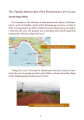
On invitation of the Ministry of Information and Culture (Vientiane, Laos), I went to Thakhek, capital of the Khammouan p
In May 2005, Anatole-Roger Peltier was invited by the Ministry of Information and Culture in Laos to explore the Nong Pa Fa Cave in Khammouan Province. Accompanied by a cultural officer and a local sc

25
Historical Artifacts from Nong Pa Fa Cave
The Buddha images and the wooden box of manuscripts were probably brought to the Nong Pa Fa Cave before or during the Siamese-Lao war (1826-1828 AD), almost 200 years ago.
Most of the manuscripts are
The Buddha images and wooden box of manuscripts discovered in Nong Pa Fa Cave were likely brought there before or during the Siamese-Lao war between 1826 and 1828. Most manuscripts are in poor conditi

26
Exploring the Tipiṭaka Manuscripts
The palm-leaf manuscripts that I have just presented belong to the Tipiṭaka. These texts, or parts of texts, are in Pāli, the lingua franca of the Indochinese Peninsula. The versions in vernacular lan
The palm-leaf manuscripts presented belong to the Tipiṭaka, primarily in Pāli, the lingua franca of the Indochinese Peninsula. While the local vernacular translations like Thai emerged only in the ear
27
Exploring the Manuscripts of Nong Pa Fa Cave
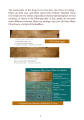
The manuscripts of the Nong Pa Fa Cave have two forms of writing: Dham Lao from Laos, and Dham Lanna from northern Thailand. These two scripts are very similar, especially on manuscripts dating back s
The manuscripts of the Nong Pa Fa Cave showcase two primary forms of writing: Dham Lao from Laos and Dham Lanna from northern Thailand. While these scripts exhibit notable similarities, especially in
28
Historical Influences on Dham Lao and Lanna Scripts
According to research done by many linguists, it seems that the Dham Lao is influenced by the Dham Lanna script, and the latter derives from Mon writing, as Burmese does also.
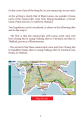
THE FAREWELL OF PHRA MA
Research indicates that Dham Lao is influenced by Dham Lanna, which derives from Mon writing. The historical chronicles reveal that King Tilokaraja organized a significant Buddhist Council in 1477 CE,
29
Exploring the Origins of the Nong Pa Fa Cave Manuscripts
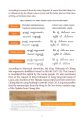
On the cover of one of the Nong Pa Fa Cave manuscript, we can read:
As the writing is clearly that of Dham Lanna, one wonders if some parts of the manuscripts come from Muang Nandaburi, a former name
This text examines the Nong Pa Fa Cave manuscripts, highlighting their writing style as Dham Lanna. It raises questions about their origins, specifically whether part of these manuscripts originate fr
30
Nong Pa Fa Cave Manuscripts: A Historical Insight
The Nong Pa Fa Cave manuscripts are quite old and one of them dates back to 2112 BE (1569 CE), or 441 years, which is extremely rare for a palm-leaf manuscript. The oldest manuscript, however, is kept
The Nong Pa Fa Cave manuscripts are ancient, with one dating back to 2112 BE (1569 CE). The oldest, from 1520 CE, resides in Luang Prabang. These writings in a Lao variant of Dhamma script include a c
32
Dhamma-kāya in the Pali Canon
Dhamma-kāya in the Pali Canon¹
Chanida Jantrasrisalai
I. Why ‘Dhamma-kāya’ in the ‘Pali Canon’?
The term dhamma-kāya/dharmakāya appears in Buddhist literature of different schools. Previous scholars
The study investigates the term dhamma-kāya as presented in the Pali Canon, aiming to provide a comprehensive analysis that has been overlooked in previous studies. While many references have been mad
33
Reinterpreting Dhammarāya in the Pali Canon
Most of them refer only to the Aggañña-sutta passage, 4 missing out the three Apadāna references. 5 The reason could be either that the scholars concerned have taken the aforementioned text as represe
This paper examines the overlooked references to dhammarāya in the Pali canon, emphasizing a context not previously presented. It critiques the tendency to categorize texts strictly as ‘early Buddhism
34
Understanding Dhammakāya in Early Buddhist Thought
II. The Different Approach
A fairly established academic understanding has settled regarding the term dhammakāya in the Pali canon, that it was used merely in the sense of the ‘Buddha’s teachings.’ In
The term 'dhammakāya' in the Pali canon is understood as representing the Buddha's teachings. It is established through several canonical passages that equate the Buddha with dhamma. Notable reference
36
References to 'Dhammakāya' in the Pāli Canon
III. References to 'Dhammakāya' in the Pāli Canon
In the Pali canon, the term dhammakāya appears four times: once in the Aggiāṇā-sutta of the Dīgha-nikāya and three more times in Apadāna literature.
In the Pāli Canon, the term 'dhammakāya' is found four times, significantly in the Aggiāṇā-sutta and Apadāna literature. It serves various roles including a designation for the Tathāgata and associati
37
Exploring the Concept of Dhammakāya in the Aggañña-sutta
IV. Reference 1: Dhammakāya as the Tathāgata’s Designation
The first Pali reference to the term dhammakāya that is well known to all previous works is a passage in the Aggañña-sutta, wherein the term
This text discusses the term 'dhammakāya' as referenced in the Aggañña-sutta, emphasizing its importance in defining an heir of dhamma and the Tathāgata’s true son. The conversation between the Buddha
39
Interpretations of Dhammakāya in Early Pāli Texts
Gombrich, while differently translating the term in this passage as a bahubbiha compound 'dhamma-bodied,' similarly interprets it as an indication that the Buddha's true import is due to 'his teaching
This text delves into various scholars' interpretations of the term 'dhammakāya' within the context of early Pāli suttas. Gombrich views it as 'dhamma-bodied,' emphasizing that the essence of the Budd
40
Understanding Dhammakāya in Aṅgāṇā-sutta
In brief, contemporary academics refer to the term dhammakāya in the Aṅgāṇā-sutta either as a noun or an adjective. As a noun, the term is interpreted mostly as the Buddha’s teachings collected togeth
The term dhammakāya is interpreted in contemporary academia as both a noun and an adjective. As a noun, it denotes the Buddha’s teachings, while as an adjective, it refers to the nature of the Tathāga
41
Understanding Dhammakāya: A Scholarly Interpretation
Points to Consider
It may be observed that the difference in previous scholarly interpretations of the term dhammakāya in this passage mainly pertains to the inter-relatedness of two distinctive meani
This text delves into scholarly interpretations of the term 'dhammakāya', emphasizing the need for a nuanced understanding of 'dhamma' as both a realized reality and a verbal expression. It identifies
42
Saddhā: The Criterion of Being the Tathāgata's Son
Saddhā: Criterion of being the Tathāgata's Son
The first point to be looked at is the criterion of being the Buddha’s ‘true son’ which is, in this passage, defined by means of his
irremovable confiden
This text discusses the criterion of being the Tathāgata's son, emphasizing the irremovable confidence (saddhā) in the Buddha. It defines this confidence as settled and unchangeable despite external i
43
Understanding the Noble Discipleship in Buddhism
Vin.II.192, A.IV.186, 210, 213
Just as a piece of clean cloth that is deprived of dirt would well-absorb the dye, the pure and clear eye of dhamma (dhammacakku) arose to the man, on that current seat
The text discusses the qualities of noble disciples in Buddhism, emphasizing the importance of clear perception of dhamma and the eradication of doubts and fetters. It describes the transformation exp
45
Understanding Dhamma and Spiritual Realization
This corresponds to the set of four activities41 belonging to a Stream-attainer (sotāpattiyānga) which brings about other sets of qualities.
The titles ‘born of dhamma’ (dhammaja) and ‘created by dham
This content discusses the process of spiritual attainment through dhamma, emphasizing four key activities that lead to the emergence of noble qualities. It highlights how listening to the Buddha's te