

TEX : ค้นหาหนังสือธรรมะ หน้า 161 / 176
หน้าหนังสือทั้งหมด
5
Advanced Concepts in Buddhism
which are unnecessarily caught up with Thai culture have been minimized or omitted.
The content of this book is more advanced than the for- going titles in the series 'Buddhism in Plain English'. This
…ation for understanding the Buddha's path for those who may feel disconnected from these ideas. The text encourages deeper reflection on life’s impermanence and the importance of transcending worldly att…
6
The Awakening of Siddhartha Gotama
people see the signs of receding youth and health and respond with disgust, especially at the sight of a corpse. Siddhatha Gotama’s witness of these events was different, however. Confronted by the in
This text delves into the insights of Siddhartha Gotama as he confronts the inevitable realities of old-age,…
7
The Journey of Siddhartha Gotama Towards Enlightenment
he, himself, didn’t engage in the battle against delusion, there would be no-one else to do it in his place. Thus with anxiety, *not only* for his own lot in life, *not only* for the lot of his family
This text delves into Siddhartha Gotama's profound realization that if he did not confront the battle agains…
12
The Noble Eightfold Path: Key Concepts and Insights
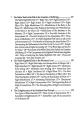
7 The Noble Truth of the Path to the Cessation of Suffering .................... 117
The Noble Eightfold Path 117 • Right View 118 • Right Intention 118 • Right Speech 118 • Right Action 118 • Right L
…eech, Right Action, Right Livelihood, Right Effort, Right Mindfulness, and Right Concentration. The text delves into each component, illustrating how they interconnect and contribute to a deeper understa…
16
Understanding the Dhammacakka Pavattana Sutta
…tasānā (Wās Wasan Mahathera) on 18 March 1989.
The Sāratthasamuccaya itself is a translation of a text composed some 800 years ago.
The original Thai translation appears to have been made during the …
The Dhammacakka Pavattana Sutta holds significant importance in Buddhist ceremonies, especially during Asālha Pūjā Day when monks chant it for laypeople's benefit. Unfortunately, finding unabridged co
22
Understanding the Dhammacakkapavattana Sutta
For as long as the components were separated, they could not be called a wheel. Just as, a skilled wheelwright can assemble the components to make a strong wheel ready to be put to work, the Buddha, t
…ce over 45 years without repetition. Every subsequent teaching he provided expanded on this seminal text, reinforcing the importance of these initial teachings. Scholars recognize it as a crucial touchst…
23
Understanding the Path to Nirvana: The Buddha's Teachings
the attainment of Nirvana. In the Dhammacakkapavattana Sutta, further to the clarification of the profitable path of practice, the Buddha stipulates paths of practice that are unprofitable and might e
This text discusses the Buddha's elucidation of the paths to Nirvana as presented in the Dhammacakkapavattan…
26
The Noble Truths and the Path to Nirvana
3. The Noble Truth of the Cessation of Suffering [dukkhanirodha ariyasacca];
4. The Noble Truth of the Path to the Cessation of Suffering [dukkhanirodhåkāmıni ariyasacca].
Apart from allowing Prince S
This text delves into the Four Noble Truths, emphasizing the cessation of suffering and the path leading to …
27
Understanding the Four Noble Truths in Buddhism
**1. Saccaṇāṇa:** This first cycle of examination of the knowledge of the Four Noble Truths established the knowledge of the Truth of their Existence. Thus he was to find out: 'this is the Noble Truth
This text outlines the process of examining the Four Noble Truths in Buddhism through three cycles: Saccaṇāṇ…
29
The Enlightenment of Koṇḍañña
… lightenment that ‘Whatever is of the nature of arising, has the nature of cessation’ and in his context, he saw that his own aggregates were of such a nature — all of the nature of arising and cessation…
This text discusses the pivotal moment when Koṇḍañña achieved enlightenment after listening to the Buddha’s …

30
The Middle Way: Balancing Sensual Indulgence and Self-Mortification
the harmfulness of the extremes of sensual indulgence and self-mortification, and advocated the following of the Middle Way or Noble Eightfold Path, the ‘group of five’, especially Keṇḍāṇa who was mos
This text discusses the risks associated with extreme sensual indulgence and self-mortification, underscorin…
32
Metaphors of Sensual Indulgence
Commentorial Metaphors: Indulgence in sensual pleasures:
1. A pig content to wallow in dung: Indulging in sensual pleasures is rather like a pig, which spends all its life wallowing in the warm mud an
This text delves into various metaphors that depict the indulgence in sensual pleasures as detrimental and u…
34
Buddhist Teachings on Sensual Pleasures
used to rinse a toilet or the toilet bowl itself, which is soiled with excrement. He also compared the pleasures of the senses to human faces which dogs like to spend their time sniffing.
Thus, the Lo
In this text, the Buddha emphasizes the folly of indulging in sensory pleasures, likening them to dangerous pat…
37
The Dangers of Sensual Indulgence
If it happens that his wealth is taken away in taxes, or stolen by robbers, or damaged by fire or floods, or frittered away by fraudulent enemies then that person will be sorrowful, suffering in body
This text discusses the sorrow and suffering resulting from the attachment to wealth and sensual pleasures, …
38
The Consequences of Attachment to Sense Pleasure
O! Monks! Some warriors go to the trouble to erect defences of brick and mortar to stop their enemies being able to climb over, they fill their arsenals full of weapons. However, if the enemy should p
This text discusses how attachment to sense pleasures leads to various forms of suffering and wrongdoing. It…
39
Understanding Self-Mortification in Buddhism
It is for this reason that the Lord Buddha should want to start his sermon by instructing the ‘group of five’ that indulgence of the senses is unsuitable, base, ignoble, without benefit, unsuitable fo
In this text, Lord Buddha teaches that indulgence of the senses is unsuitable for a Buddhist monk and should be…
40
The Futility of Self-Mortification
Commentorial Metaphors: Self-mortification:
1. Sugar-cane juice and poison: It can be compared to a mixture of sugar-cane juice and poison. In the end such practices will lead to death, and all for no
This text presents a series of metaphors illustrating the perils of self-mortification. Comparing self-harm …
41
The Noble Middle Way in Buddhism
sense of security, but in the end, he will surely take advantage of us and leave us decapitated in the jungle.
It is for all of these reasons that the Lord Buddha taught that self-mortification is a n
The text discusses self-mortification as a non-Buddhist and dangerous practice, as taught by the Buddha. It…
44
Understanding Right Intention and Right Speech in Buddhist Practice
subtle defilements¹ [anusaya].
2.1 Right Intention (mundane): At low level Right Inten- tion means having the wholesome intention to be generous, keep the Five Precepts, renounce the world to become a
This text discusses key aspects of Buddhist practice, specifically focusing on Right Intention and Right Spe…
45
The Buddha's Teachings on Right Livelihood and Moral Conduct
the monk's equivalent of Right Livelihood, by avoiding such evils as fortune telling, sacrifices or interpreting dreams, because these are all 'low arts'[tiracchānavijjā]. The Buddha even prohibited m
This text discusses the Buddha's teachings on Right Livelihood, emphasizing the avoidance of 'low arts' such…