

UN : ค้นหาหนังสือธรรมะ หน้า 119 / 219
หน้าหนังสือทั้งหมด
10
Congratulatory Letter for Dhammachai International Research Institute
**Congratulatory letter**
The 60th Dhammachai Education Foundation of Australia and New Zealand has developed an increasing commitment in recent years to the ac…
The 60th Dhammachai Education Foundation of Australia and New Zealand has strengthened its commitment to studying the Buddhist traditi…

11
…d to its growing success.
Professor Murray Rae
Head of the Department of Theology and Religion
University of Otago, New Zealand
VII
13
Inaugural Volume of Buddhist Research by Dhammachai International Research Institute
Inpirational Message
On the 44th Anniversary of the Ordination of Most Venerable Founder Luang Phaw Dhammajayo on 27th August 2012 and also in the historical year of the Buddhajayanti 2…
… manuscripts in collaboration with institutions in Sri Lanka and ongoing support from international universities, DIRI aims to safeguard and share valuable Buddhist knowledge, aligning its mission with …
16
Launch of the Journal of the Dhammachai International Research Institute
Introduction
This collection of articles marks the launch of the Journal of the Dhammachai International Research Institute (JDIRI). The articles presented…
This collection of articles marks the launch of the JDIRI, showcasing perspectives on Early Buddhism and meditation studies. The journal aims …
17
Exploration of Pāli Manuscripts in Laos
… Pāli canon. It separately investigates the meanings of dhamma and kāya as well as that of the compound itself. The result is a semantic field of possibilities from which she constructs a textual analys…
…l features an article by Anatole-Roger Peltier on a wooden chest containing palm-leaf manuscripts found in Laos. The texts, dated to the sixteenth century, reveal their roots in the Pāli canon and indic…
20
Exploring the Cakras and Early Buddhism
…be shown to any particular Buddhist school or nikai, and to support research that leads to a better understanding of the notion of 'early Buddhism.' Previously undiscovered Buddhist manuscripts are emer…
… focuses on the study of cakras and early Buddhism, emphasizing neutrality across Buddhist schools. Under the direction of Luang Phaw Dhammajayo, the Director of DIRI, Phrakrupladnayokwarawart, is commi…
21
Exploring Buddhist Manuscripts and Teachings
…uscripts in China: A Case Study of Theravāda Buddhist Manuscripts in Sipsong Panna (Xishuangbanna, Yunnan Province, PRC)* 63
Kitchai Urkasame
*The Dhammakāya Verse: a Lan Na Thai manuscript* …
…e in Laos, analysis of Dhammakāya in the Pali Canon, Theravāda Buddhist manuscripts in China, and a unique Lan Na Thai manuscript. Esteemed scholars such as Dr. Anatole-Roger Peltier, Dr. Chanida Jantra…
23
The Tipitaka Manuscripts of the Khammouan Cave in Laos
The Tipitaka Manuscripts of the Khammouan Cave in Laos
Anatole-Roger Peltier
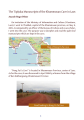
On invitation of the Ministry of Information and Culture (Vientiane, Laos), I went to Thakhek, capital of the Khammouan p
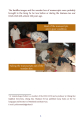
…by a cultural officer and a local scholar, they aimed to decipher important palm-leaf manuscripts found within the cave. The cave, which was discovered in April 2004 by a local farmer, holds significant…
25
Historical Artifacts from Nong Pa Fa Cave
…box
Dr Anatole Roger-Peltier is a member of the EFEO (1970) and a professor at Chiang Mai Rajabhat University, Chiang Mai, Thailand. He has published many books on the Tai languages and literature of M…
…ir preservation. Dr. Anatole Roger-Peltier, a member of EFEO and a professor at Chiang Mai Rajabhat University, has extensively researched Tai languages and literature in Mainland Southeast Asia. His in…
27
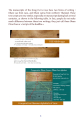
Exploring the Manuscripts of Nong Pa Fa Cave
The manuscripts of the Nong Pa Fa Cave have two forms of writing: Dham Lao from Laos, and Dham Lanna from northern Thailand. These two scripts are very similar, especially on manuscripts dating back s
…written between the years 931-989 Culla Era and include texts such as Pāli Mahāvagga and Ekanipata. Understanding these writings not only sheds light on the rich cultural interplay between Laos and Thai…
30
Nong Pa Fa Cave Manuscripts: A Historical Insight
…g and Lanna had a close relationship in the past, especially in the culture.
These manuscripts are unique materials, both for the knowledge of the Tipiṭaka and the study of the Early Buddhism in the re…
… a copy of the Parivāra and reveal the cultural ties between Lan Xang and Lanna. They are vital for understanding the Tipiṭaka and Early Buddhism in the region. More insights can be found at dmc.tv.
32
Dhamma-kāya in the Pali Canon
…nnual Conference of the Australasian Association of Buddhist Studies (AABS) in December 2007 at the University of Western Sydney and once again in the International Seminar on Early Buddhism (ISEB) in A…
…en overlooked in previous studies. While many references have been made, significant aspects remain unexplored, warranting a closer examination of its occurrences and implications. This research builds …
33
Reinterpreting Dhammarāya in the Pali Canon
…s either as purely representing ‘early Buddhist ideas’ or simply sectarian ‘Theravāda thoughts,’ it understands the function of the Pali canon as something in between that reflects the understanding of …
…exts strictly as ‘early Buddhism’ or sectarian ‘Theravāda thoughts.’ Instead, it offers a middle-ground perspective reflecting early Theravāda communities' understanding of the Buddha’s teachings. This …
36
References to 'Dhammakāya' in the Pāli Canon
…works that refer to the term dhammakāya in the Pali canon, while the latter three seem to have been unknown to them. The present study takes all these references as a whole to reflect the use and unders…
In the Pāli Canon, the term 'dhammakāya' is found four times, significantly in the Aggiāṇā-sutta and Apadāna literature. It serves various roles inc…
37
Exploring the Concept of Dhammakāya in the Aggañña-sutta
…ivitṭhā múla-jāta pattiṭṭhita daḷha asamāhāri ka samaṇena vā brāhmaṇena vā devena vā mārena vā brahmuna vā kenaci vā lokasmiṁ, tass’etaṁ kallam vacanāya: 20 “bhagavato’mhi putto oraso mukhato jato dhamm…
… The conversation between the Buddha and novices Väsetṭha and Bhāradvāja provides insights into the understanding of dhamma and the spiritual lineage of the Tathāgata. It highlights variations in manusc…
38
Understanding the Concept of Dhammakāya in Buddhist Thought
…ense of ‘the Buddha’s teaching(s).’
For example, Dutt interprets the term as being a tappurisa compound
referring to a ‘collection of the Buddha’s teachings and disciplines.’22
Reed interprets it in the…
In this passage, Vāsettha and Bhāradvāja discuss the unwavering confidence in the Tathāgata, stating that those deeply rooted in dhamma can claim to be hei…
39
Interpretations of Dhammakāya in Early Pāli Texts
Gombrich, while differently translating the term in this passage as a bahubbiha compound 'dhamma-bodied,' similarly interprets it as an indication that the Buddha's true import is due to …
…ies in his teachings rather than his personality. Harrison supports this view, while Need expresses uncertainty about the clarity of 'dhammakāya.' Reynolds indicates that the teaching or scripture inter…
40
Understanding Dhammakāya in Aṅgāṇā-sutta
In brief, contemporary academics refer to the term dhammakāya in the Aṅgāṇā-sutta either as a noun or an adjective. As a noun, the term is interpreted mostly as the Buddha’s teachings collected toge…
The term dhammakāya is interpreted in contemporary academia as both a noun and an adjective. As a noun, it denotes the Buddha’s teachings, while as an adjective, it refers to…
41
Understanding Dhammakāya: A Scholarly Interpretation
…easoning, recondite, apprehensible only to the wise. ... Would I preach the dhamma, others will not understand.
In this passage, which is generally regarded as a revelation of the Buddha’s thought after…
… delves into scholarly interpretations of the term 'dhammakāya', emphasizing the need for a nuanced understanding of 'dhamma' as both a realized reality and a verbal expression. It identifies three inte…
42
Saddhā: The Criterion of Being the Tathāgata's Son
… Brahma’ respectively.
According to Buddhist philosophy in the Pali canonical context,
this kind of unshakeable confidence is not merely a ‘strong belief’
or ‘firm faith’ in the ordinary sense, but is a…
…sizing the irremovable confidence (saddhā) in the Buddha. It defines this confidence as settled and unchangeable despite external influences from beings of high status or power. This kind of confidence …